



- Home
- /
- High Courts
- /
- Delhi High Court
- /
- Delhi High Court Flags Possible...
Delhi High Court Flags Possible Conflict Between S.223 BNSS Interpretation And SC Law On Cognizance, Refers Issue To Larger Bench
LIVELAW NEWS NETWORK
25 March 2026 12:10 PM IST
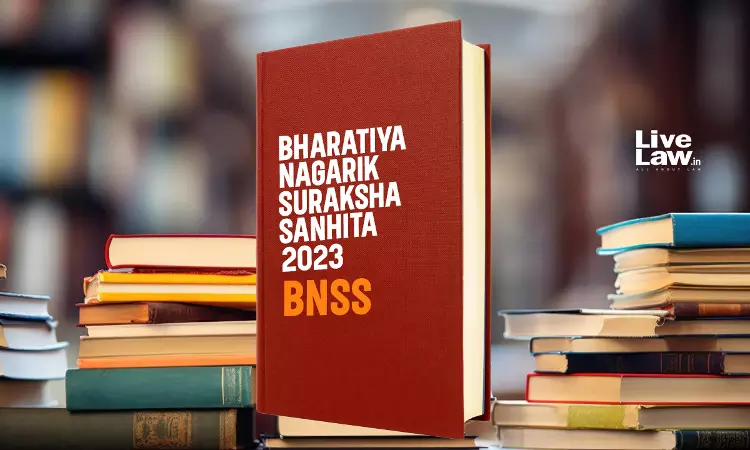
The Delhi High Court has referred to a larger bench the issue relating to the stage of taking cognizance under Section 223 of the Bharatiya Nagarik Suraksha Sanhita, 2023 (BNSS) and the timing of issuance of notice to the accused under its first proviso.For context, Section 223 pertains to examination of the complainant. The provision states that a magistrate having jurisdiction while...
This is a premium content
Available exclusively to
Our subscribers
Subscribe Premium 
INR 1099+GST
Your support helps us to bring you more content at
an affordable subscription scheme !!!
All payment options available
The Delhi High Court has referred to a larger bench the issue relating to the stage of taking cognizance under Section 223 of the Bharatiya Nagarik Suraksha Sanhita, 2023 (BNSS) and the timing of issuance of notice to the accused under its first proviso.
For context, Section 223 pertains to examination of the complainant. The provision states that a magistrate having jurisdiction while taking cognizance of an offence on complaint shall examine upon oath the complainant and the witnesses present, if any. It adds that the substance of such examination shall be reduced to writing and shall be signed by the complainant and the witnesses as well as by the Magistrate. The first proviso states that no cognizance of an offence shall be taken by the Magistrate without giving the accused an opportunity of being heard.
Justice Swarana Kanta Sharma has framed the following questions for consideration by the larger bench:
(i) What is the stage at which a Magistrate can be said to have taken “cognizance” of an offence, in the context of a private complaint, under the provisions of BNSS, and whether the expression “while taking cognizance” as employed in Section 223(1) of the BNSS implies that the examination of the complainant and witnesses on oath is a step prior to taking of cognizance of offence?
(ii) At what stage is the Magistrate required to issue notice to the accused in compliance with the first proviso to Section 223(1) of the BNSS – whether (a) upon perusal of the complaint but prior to recording of the statement of the complainant and witnesses, if any, or (b) after recording such statements but before a formal decision on taking cognizance?
This, after the Court noted that certain High Courts (Karnataka HC in Basanagouda R. Patil v. Shivananda S. Patil, Allahabad HC in Prateek Agarwal v. State of UP, Kerala HC in Suby Antony v. Judicial First-Class MagistrateIII (Deleted) & Ors) and coordinate benches (Brand Protectors India Pvt. Ltd. v. Anil Kumar) have interpreted the BNSS to mean that examination of complainant and witnesses forms part of the pre-cognizance stage, thereby suggesting that cognizance is taken only after recording pre-summoning evidence.
However, this interpretation, the Court said appears to be at variance with several judicial precedents of the Supreme Court which indicate that cognizance is said to be have been taken when the Magistrate applies his mind to proceed under Section 200 of the Cr.P.C., and that the examination of the complainant is a step subsequent to such taking of cognizance.
For instance, in Sarah Mathew v. Institute of Cardio Vascular Diseases (2014), a Constitution Bench of the Supreme Court held that cognizance is taken when the Magistrate applies his judicial mind to the offence with a view to initiating proceedings, and that such stage precedes the commencement of proceedings under the subsequent chapters of the Code (CrPC).
The Court observed that the view now adopted by the High Courts proceeds on the assumption that cognizance is not taken until after recording of statements.
Given this apparent conflict, the Court referred the matter to a larger bench.
Appearance: Mr. Rakesh Malhotra, Mr. Bharat Malhotra and Ms. Smritika Kesri, Advocates for Petitioner; Mr. Raajan Chawla, Ms. Pallavi Yadav and Ms. Lavanya Chadha, Advocates Mr. Manoj Pant, APP for the State along with SI Amisha Kumari for Respondent
Case title: Dr Rita Bakshi v. Seema Bajaj & Anr.
Citation: 2026 LiveLaw (Del) 298
Case no.: CRL.M.C. 2551/2025


