



- Home
- /
- High Courts
- /
- Delhi High Court
- /
- Senior Citizen Can Seek...
Senior Citizen Can Seek Daughter-In-Law's Eviction For Ill-Treatment Without Claiming Maintenance: Delhi High Court
Nupur Thapliyal
1 Oct 2026 12:25 PM IST
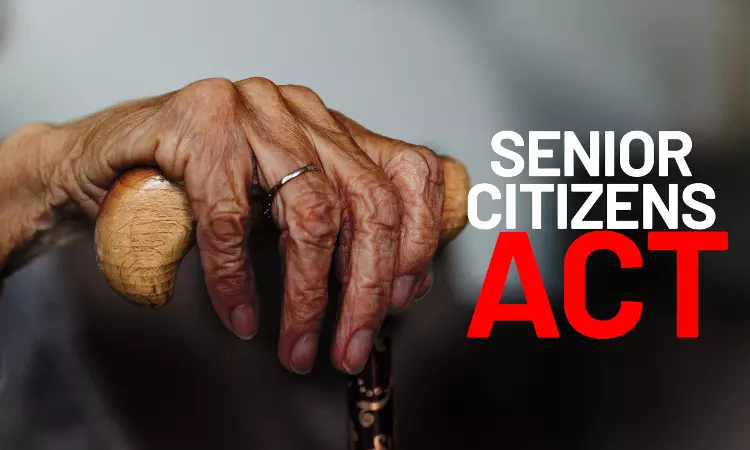
The Delhi High Court has held that the proceedings for eviction under Rule 22(3)(1) of the Delhi Maintenance and Welfare of Parents and Senior Citizens Rules, 2009 are independent of the proceedings for maintenance under the Maintenance and Welfare of Parents and Senior Citizens Act, 2007.A Division Bench comprising Chief Justice Devendra Kumar Upadhyaya and Justice Tejas Karia held that...
This is a premium content
Available exclusively to
Our subscribers
Subscribe Premium 
INR 1099+GST
Your support helps us to bring you more content at
an affordable subscription scheme !!!
All payment options available
The Delhi High Court has held that the proceedings for eviction under Rule 22(3)(1) of the Delhi Maintenance and Welfare of Parents and Senior Citizens Rules, 2009 are independent of the proceedings for maintenance under the Maintenance and Welfare of Parents and Senior Citizens Act, 2007.
A Division Bench comprising Chief Justice Devendra Kumar Upadhyaya and Justice Tejas Karia held that the eviction mechanism contained in Rule 22(3)(1)(i) and (iv) is not ultra vires the Senior Citizens Act.
The Court reasoned that the provisions are traceable not only to the State Government's rule-making power but also to Section 22 of the Senior Citizens Act, which provides for a comprehensive plan for protection of the life and property of senior citizens.
The Court clarified that a senior citizen can invoke the eviction mechanism under Rule 22(3)(1) even without seeking maintenance under Sections 4 and 5 of the Act.
“Thus, these proceedings being independent of each other, even if a prayer for maintenance under section 4 read with section 5 of the Senior Citizens Act by instituting appropriate proceedings has not been made, an application under Rule 22(3)(1) of the 2009 Rules can be maintained,” the Court said.
The Court made the observations while dismissing a petition filed by a daughter-in-law challenging the Divisional Commissioner's order directing her to vacate the property and hand over peaceful possession to her mother-in-law.
She also challenged the validity of Rule 22(3)(1)(i) and (iv), under which a senior citizen or parent may seek eviction of a son, daughter or legal heir from the senior citizen's property on account of non-maintenance and ill-treatment.
Dismissing the plea, the Court said that Section 22(2) of Senior Citizens Act expressly requires the State Government to prescribe a comprehensive action plan for protecting the life and property of senior citizens.
It added that the power to make the provisions as contained in the impugned rules not only flows from Section 32 of the Senior Citizens Act but the said rules also owe their existence to Section 22(2) of the Senior Citizens Act.
Further, the Bench rejected the argument that Rule 22(3)(1) cannot apply to a daughter-in-law because the provision refers to a “son”, “daughter” or “legal heir”.
It also rejected the petitioner's submission that for tgrant of any relief to a senior citizen under the Senior Citizens Act, harassment, ill-treatment, and non-maintenance needs to be proved, and only the relief of maintenance can be granted and not that of eviction.
“We base this conclusion on the reasoning that proceedings for eviction as contemplated in Rule 22(3)(1) of the 2009 Rules are independent of the proceedings for maintenance for parents and senior citizens, which are filed before the Tribunal constituted under section 7, under the provision of section 4 read with section 5 of the Senior Citizens Act, whereas, proceedings as contemplated under Rule 22(3)(1) of the 2009 Rules are instituted before the District Magistrate, appellate authority of which is the Divisional Commissioner,” the Court said.
It accordingly held that the challenge to Rule 22(3)(1)(i) and (iv) failed and also found no reason to interfere with the Divisional Commissioner's eviction order in the case before it.
Tags

Nupur Thapliyal
Nupur Thapliyal is a Principal Correspondent with LiveLaw, based in New Delhi. She reports from the Delhi High Court and trial courts in the national capital

