



- Home
- /
- High Courts
- /
- Delhi High Court
- /
- Delhi High Court Seeks Sonam...
Delhi High Court Seeks Sonam Wangchuk's Medical Reports, To Hear Doctors Before Deciding Plea To Shift Him To Private Hospital
Nupur Thapliyal
20 July 2026 4:52 PM IST
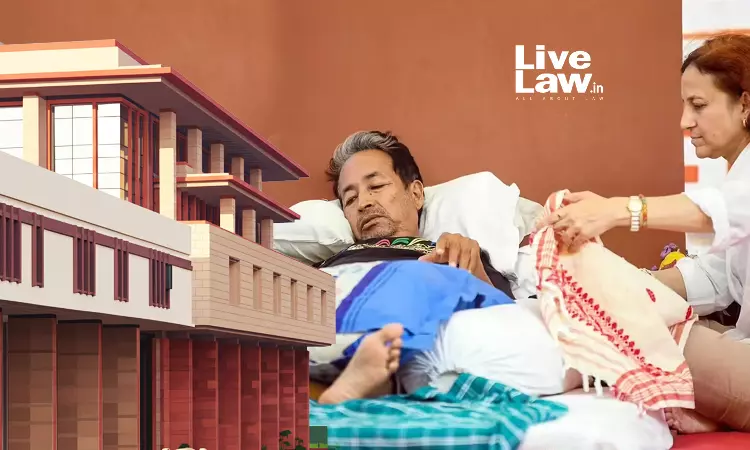
"Our concern is to save his life first; not anything else," Court said.
The Delhi High Court on Monday sought all medical reports relating to activist Sonam Wangchuk and directed doctors from Safdarjung Hospital and AIIMS to assist it before deciding his plea seeking transfer to a private hospital of his choice.A division bench comprising Chief Justice D.K. Upadhyaya and Justice Tejas Karia passed the directions while hearing an appeal filed by Wangchuk's wife,...
This is a premium content
Available exclusively to
Our subscribers
Subscribe Premium 
INR 1099+GST
Your support helps us to bring you more content at
an affordable subscription scheme !!!
All payment options available
The Delhi High Court on Monday sought all medical reports relating to activist Sonam Wangchuk and directed doctors from Safdarjung Hospital and AIIMS to assist it before deciding his plea seeking transfer to a private hospital of his choice.
A division bench comprising Chief Justice D.K. Upadhyaya and Justice Tejas Karia passed the directions while hearing an appeal filed by Wangchuk's wife, Dr. Gitanjali Angmo, against a single judge's order refusing to permit his transfer from Safdarjung Hospital.
The bench directed that all pathological reports based on samples analysed by Safdarjung Hospital, AIIMS and a private laboratory be placed on record by way of an affidavit. It also requested the Director-in-Charge of AIIMS and Dr. Akshay, who heads emergency medicine at the institute, to remain present at the next hearing, along with the doctor consulted by Wangchuk's family.
The matter will now be heard on Tuesday at 12:30 pm.
Wangchuk was taken from Jantar Mantar by the Delhi Police on July 18, where he had been on a hunger strike in solidarity with the Cockroach Janta Party and students protesting the NEET paper leak. He was shifted to Safdarjung Hospital for medical intervention after the same division bench, on July 16, directed the Centre to ensure his daily clinical monitoring and provide treatment, if required.
His wife's interim plea seeking his transfer to a private hospital was rejected by a single judge on Sunday.
Appearing for Angmo, Senior Advocate Akhil Sibal argued that Wangchuk had been removed from the protest site without prior intimation and without any medical reports indicating an emergent situation. "This was done purportedly under cover of your lordships' order," Sibal submitted.
He contended that neither Wangchuk nor his family had been provided copies of the medical reports allegedly showing a drop in his potassium levels. "I say please don't administer anything to him without consent. No reports have been given to us. We are only orally informed of potassium numbers," Sibal said.
Sibal argued that Wangchuk remained conscious and oriented, and that fresh reports indicated that his potassium levels were within the normal range. He further submitted that Wangchuk had written to the hospital seeking permission to leave and participate in the culmination of the month-long protest. However, his request was not acceded to.
Questioning the extent of Wangchuk's autonomy, Sibal argued: "What is the autonomy that an individual who is not under arrest or detention has in terms of deciding whether to accept medical oversight and from which hospital? Is he to be coerced to stay at a place and not allowed to leave? If the person is conscious, able to write and not yet in a life-threatening situation, is such a thing justified?"
Relying on the Supreme Court's judgment in Common Cause, Sibal submitted that bodily autonomy and informed consent could not be overridden when a person was conscious and capable of making decisions.
The Court at this juncture asked, "These are reports prepared by doctors. Should a doctor wait for the patient to be taken to the ICU and only then administer drugs?"
Sibal clarified that the grievance was not against medical treatment per se, but against the lack of transparency surrounding the decision-making process. "There is a trust deficiency," he submitted.
The Court then remarked that the reports ought to have been shared with the family but, it expressed reservations about the family's suggestion that the situation could become life-threatening.
Solicitor General Tushar Mehta, appearing for the Union government, submitted that while bodily autonomy is ordinarily paramount, the State also has a duty to protect Wangchuk's life.
"Normally, it is bodily autonomy of an individual to take or not take treatment. But when deterioration of health may lead to a law-and-order situation, the interest of the State comes in," Mehta argued.
He further informed the Court that blood samples had been tested not only at Safdarjung Hospital but also at AIIMS and a private laboratory, and that the results were substantially similar.
The bench then observed that pathological reports must be assessed alongside the patient's clinical condition. "The pathological reports are to be corroborated with the clinical condition of the patient," Chief Justice Upadhyaya remarked.
The Court also noted that one report prepared by Safdarjung Hospital had shown Wangchuk's potassium level at 2.8, while another report relied upon by the appellant reflected a reading of 3.5.
"The Court's concern is to save his life first. Not anything else," the bench said.
When Sibal reiterated his request for Wangchuk to be shifted to Medanta Hospital and suggested that Wangchuk's reports be shared with Safdarjung Hospital, the Court expressed reservations.
"That goes against the basic medical protocol followed. No hospital permits medical intervention from outsiders," the bench observed.
The Court ultimately directed Safdarjung Hospital to file, on affidavit, all pathological reports and health bulletins issued in respect of Wangchuk's condition. Angmo has also been directed to place on record the reports of tests conducted at private laboratories.
Title: GITANJALI J. ANGMO v. UNION OF INDIA & ORS
Tags

Nupur Thapliyal
Nupur Thapliyal is a Principal Correspondent with LiveLaw, based in New Delhi. She reports from the Delhi High Court and trial courts in the national capital

