



- Home
- /
- High Courts
- /
- Delhi High Court
- /
- Tenant Cannot Claim Ownership On...
Tenant Cannot Claim Ownership On Basis Of Unexecuted Agreement To Sell: Delhi High Court
LIVELAW NEWS NETWORK
18 Jun 2026 5:30 PM IST
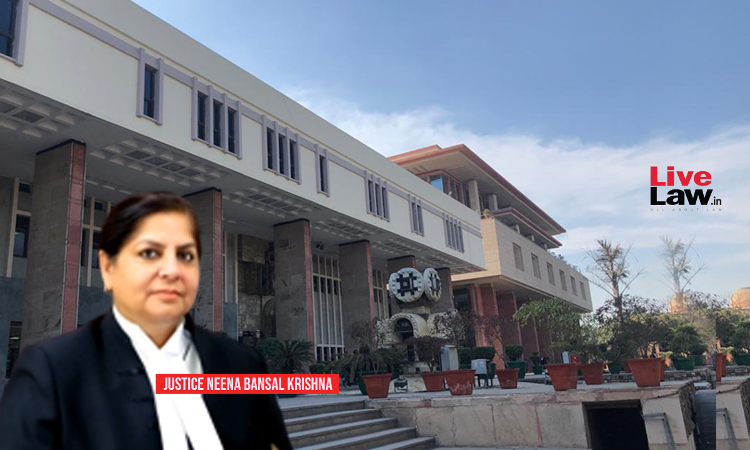
The Delhi High Court has held that a person who enters a property as a tenant cannot subsequently claim ownership rights on the basis of an unexecuted or unconcluded agreement to sell, particularly when the landlord-tenant relationship stands admitted on record.Justice Neena Bansal Krishna observed,“The rights and liabilities of lesser and lessee have been defined under Section 108 of...
This is a premium content
Available exclusively to
Our subscribers
Subscribe Premium 
INR 1099+GST
Your support helps us to bring you more content at
an affordable subscription scheme !!!
All payment options available
The Delhi High Court has held that a person who enters a property as a tenant cannot subsequently claim ownership rights on the basis of an unexecuted or unconcluded agreement to sell, particularly when the landlord-tenant relationship stands admitted on record.
Justice Neena Bansal Krishna observed,
“The rights and liabilities of lesser and lessee have been defined under Section 108 of the Transfer of the Property Act, 1982 wherein it provides that the lessee is bound to hand over the possession of the tenanted premises to the lesser, on the termination of the lease. The mere Agreement to Sell does not create any right in the Property except those stated in the Agreement.”
The bench thus dismissed two appeals filed by Sanjay Dubey and his father Ramesh Chandra Dubey, upholding a trial court's decision decreeing possession in favour of the property owner and rejecting the appellants' suit seeking specific performance of an alleged agreement to sell.
The dispute pertained to a flat owned by Nandlal. The Appellants claimed that Nandlal had agreed to sell the property to them in 2007 and had permitted the family to occupy the premises pending execution of a formal sale deed.
They asserted that substantial amounts had been paid towards the sale consideration and that agreements to sell were prepared in 2008.
Nandlal, however, denied having entered into any agreement to sell and maintained that the property had been let out to the Appellants on a monthly rent of ₹9,000. He contended that the tenancy had expired and the Appellants had become unauthorized occupants liable to vacate the premises.
The High Court noted that the Appellants themselves had admitted making monthly payments of ₹9,000 after entering the property in 2007. It further observed that in earlier proceedings before the High Court, Appellant had described himself as residing in the premises on rent and had produced proof of payment of rent.
Referring to these admissions, the Court held that the trial court was justified in concluding that a landlord-tenant relationship existed between the parties.
“There is no Agreement to Sell admittedly that got formalized in a written document; the question of it being registered therefore, does not arise. In terms of the Stamp Act, Mr. Sanjay Dubey cannot seek any protection under the claim of an alleged Agreement to Sell. The status of Mr. Ramesh Chandra Dubey, his father, with whom he had shifted in the premises, continued to be that of a tenant/permissive user, and he cannot seek protection on the alleged oral Agreement to Sell or a non- concluded Agreement to Sell,” the Court said.
The Court further said that even if negotiations for sale had taken place, such negotiations could not override the admitted tenancy.
Reliance was placed on M/s Jagdambey Builders vs. J.S. Vohra (2016) where the High Court had held that a person, who comes into the property as a tenant, cannot subsequently acquire any right to continue in the premises on the basis of an Agreement to Sell.
The Stamp Act, 1899 provides that an Agreement to Sell of the immovable property, wherein the possession is delivered to the tenant in part-performance, can be done only by way of registered document bearing a Stamp Duty of 90% of the total agreed sale consideration, it was held.
As such, the Court upheld the decree for possession in favour of Nandlal and dismissed the appeals.
Appearance: Mr. Jayant Bhushan, Sr. Advocate with Mr. Tushar Bhushan, Mr. Yojit Mehra and Mr. Amartya Bhushan, Advocates for Appellants; Ms. Priya Kumar, Senior Advocate with Mr. Deepesh Aneja and Ms. Shruti Verma, Advocates for Respondent
Case Title: Ramesh Chandra Dubey & Anr. v. Nandlal
Citation: 2026 LiveLaw (Del) 572
Case no.: RFA 482/2023


