



- Home
- /
- High Courts
- /
- Delhi High Court
- /
- University Can Stall Appointments...
University Can Stall Appointments Pending Enquiry Into Unfair Means In NTA Recruitment Exam: Delhi High Court
Nupur Thapliyal
2 Sept 2026 2:25 PM IST
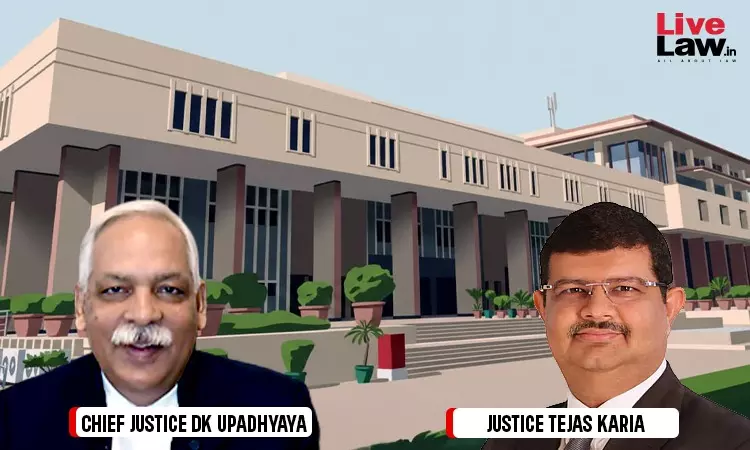
The Delhi High Court has held that a University can keep appointments in abeyance pending an enquiry into suspected use of unfair means in a public recruitment examination, particularly where the material discloses serious doubts as to whether the declared merit list reflects genuine merit. [2026 LiveLaw (Del) 804]A Division Bench comprising Chief Justice Devendra Kumar Upadhyaya and...
This is a premium content
Available exclusively to
Our subscribers
Subscribe Premium 
INR 1099+GST
Your support helps us to bring you more content at
an affordable subscription scheme !!!
All payment options available
The Delhi High Court has held that a University can keep appointments in abeyance pending an enquiry into suspected use of unfair means in a public recruitment examination, particularly where the material discloses serious doubts as to whether the declared merit list reflects genuine merit. [2026 LiveLaw (Del) 804]
A Division Bench comprising Chief Justice Devendra Kumar Upadhyaya and Justice Tejas Karia set aside a Single Judge's order directing the Delhi University to proceed with the appointment of candidates selected for the posts of Laboratory Attendant and Library Attendant in an exam conducted by the National Testing Agency (NTA).
The Court held that where the material created reasonable apprehension that the merit list did not reflect genuine merit, the Delhi University was not only entitled but also duty-bound to pause the process and examine the matter before permitting joining.
The University had constituted committees to examine suspected irregularities after concerns arose regarding the examination results.
The committees found an abnormal concentration of successful candidates at certain examination centres, unusually high scores despite negative marking, similarities in response patterns and commonality in incorrect answers.
The Single Judge had held that the University's subsequent enquiry was an afterthought or amounted to “reverse engineering” to justify its decision to withhold joining.
Not agreeing with the single judge, the Bench observed that the Committee did not proceed merely based on suspicion arising from high scores but also examined the response patterns of successful candidates from the identified centres.
It said that the findings recorded by the Committee indicated a discernible pattern not only in the correct answers, but also in the incorrect answers attempted by the candidates.
“The examination process, particularly where it concerns recruitment to public institutions, has to be conducted in a free, fair, transparent and unimpeachable manner. Public examinations are mechanisms through which public confidence in institutional selection, equal opportunity and merit- based recruitment is maintained,” the Bench ruled.
It added that any conduct which has the effect of compromising the sanctity of such an examination, whether by leakage of material, unauthorised assistance, manipulation of systems, collusion, tampering of data or any other unfair method, strikes at the root of the selection process and is required to be viewed with seriousness.
The Court concluded that the examination conducted by the NTA could not be held to have been conducted in free, fair and transparent manner.
It said that NTA's role did not end with the mechanical declaration of results but once the University raised a serious concern regarding the integrity of the examination process, the NTA was obliged to furnish all relevant documents and data pertaining to the examination process.
“Therefore, where the recruiting institution has a bona fide doubt regarding the sanctity of the examination, the examining agency cannot meet such doubt merely by asserting that standard protocols were followed. It must place complete and verifiable material before the recruiting institution so that the latter can take an informed decision consistent with its duty to ensure fair recruitment,” the Court said.
It also observed that in public employment, the rights of selected candidates must be balanced against the larger public interest in ensuring that appointments are made only through a fair, transparent and credible selection process.
“The University had expressly reserved the right to modify, withdraw or cancel any communication issued to a candidate in the event of any inadvertent mistake or irregularity in the selection process being detected at any stage, including after issuance of an appointment letter,” the Court said.
It added: “In view of the said stipulation, the University was justified in keeping the offers of appointment in abeyance for the purpose of verifying the legality and integrity of the examination process. The issuance of offers of appointment, therefore, did not create any absolute or indefeasible right in favour of the selected candidates. Having regard to its obligation to preserve the purity of the recruitment process and to ensure that appointments are made only on merit, the University was entitled to defer the joining of the candidates pending such verification to safeguard the integrity of the selection process in light of the material which had come to notice of the University.”
The Court upheld the notifications issued by the varsity putting the joining of the selected candidates on hold pending examination of the matter.
It also quashed the single judge's direction requiring the Delhi University to proceed with document verification, appointment and joining of the candidates with consequential benefits.
Title: UNIVERSITY OF DELHI AND ANR v. DEEPAK AND ORS
Citation: 2026 LiveLaw (Del) 804
Tags

Nupur Thapliyal
Nupur Thapliyal is a Principal Correspondent with LiveLaw, based in New Delhi. She reports from the Delhi High Court and trial courts in the national capital

