



- Home
- /
- High Courts
- /
- Delhi High Court
- /
- Yamuna Pollution: Delhi High Court...
Yamuna Pollution: Delhi High Court Sets Aside Jail Term Citing Beneficial Water Act Amendment, Imposes ₹10 Lakh Additional Penalty
LIVELAW NEWS NETWORK
4 Feb 2026 8:20 PM IST
The Delhi High Court has upheld the conviction of a Chandni Chowk-based sweet manufacturing unit for discharging untreated effluent into public sewers leading to the Yamuna river.“This Court is mindful that pollution of water bodies, particularly rivers, has serious and long-lasting consequences…Small eateries, restaurants and food processing units, though individually limited in...
This is a premium content
Available exclusively to
Our subscribers
Subscribe Premium 
INR 1099+GST
Your support helps us to bring you more content at
an affordable subscription scheme !!!
All payment options available
The Delhi High Court has upheld the conviction of a Chandni Chowk-based sweet manufacturing unit for discharging untreated effluent into public sewers leading to the Yamuna river.
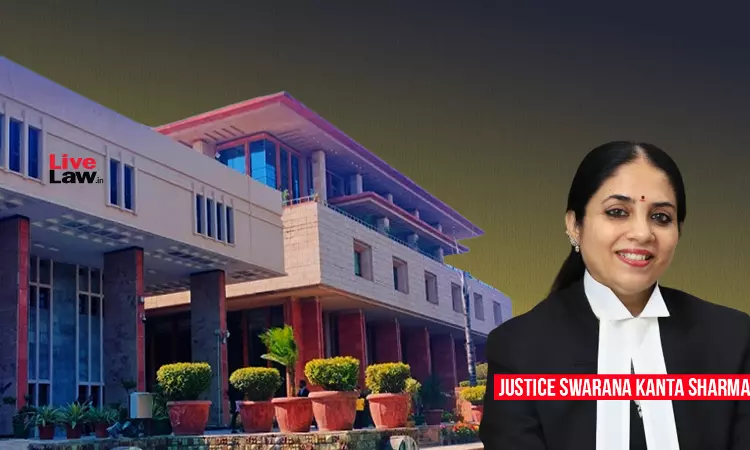
“This Court is mindful that pollution of water bodies, particularly rivers, has serious and long-lasting consequences…Small eateries, restaurants and food processing units, though individually limited in scale, collectively contribute significantly to pollution when untreated effluents are discharged into public sewers and drains leading to rivers. Such establishments cannot be absolved of their responsibility merely on the ground of size or scale of operation. Compliance with environmental norms is a responsibility shared by all, and the need for deterrence remains an important factor while dealing with offences relating to the environment,” Justice Swarana Kanta Sharma.
The bench however set aside the sentence of imprisonment in view of the beneficial amendment to the Water (Prevention and Control of Pollution) Act, 1974, which has done away with custodial punishment.
It modified the sentence awarded to the Petitioner, sole proprietor of the unit, holding that while the offence stood conclusively proved, the subsequent legislative change replacing imprisonment with monetary penalties must be extended to pending cases as well.
“...while Article 20(1) of the Constitution prohibits retrospective application of penal provisions which create a new offence or enhance punishment, there is no bar on applying a subsequent amendment which reduces the punishment prescribed for an offence. Where an amendment is beneficial to the accused, the same can be extended even to cases arising out of prior occurrences and to cases pending adjudication,” it said.
The case arose from an inspection conducted by the Delhi Pollution Control Committee (DPCC) on June 3, 2000, pursuant to directions issued by the Supreme Court in the Maili Yamuna matter.
During the inspection, the unit was found to be operational and discharging untreated trade effluent generated from washing of utensils, moulds and floors directly into the municipal sewer, without installing any effluent treatment facility or obtaining mandatory consent under the Water Act.
Following trial, Petitioner was convicted under Sections 24 and 25 read with Section 26 of the Water Act and sentenced to three years' simple imprisonment along with a fine of ₹2 lakh. The sentence was later reduced to two years by the appellate court, while the conviction was upheld.
Dismissing the challenge to conviction, the High Court held that non-lifting of samples or absence of photographs during inspection did not vitiate the prosecution case. It observed that the offence under the Water Act stood established once discharge of untreated effluent was proved, and sampling was not a mandatory prerequisite.
On the question of sentence however, the Court took note of the Water (Prevention and Control of Pollution) Amendment Act, 2024, which replaces imprisonment with monetary penalties ranging up to ₹15 lakh.
As such, the Court set aside the sentence of imprisonment and directed the Petitioner to pay an additional penalty of ₹10 lakh to DPCC, over and above the ₹2 lakh already deposited.
Appearance: Mr. Ajjay Aroraa Senior Advocate with Mr. Kapil Dutta and Mr. Vansh Luthra, Advocates for Petitioner; Mr. Kush Sharma, Mr. Nishchaya Nigam, Ms. Komal Narula, Ms. Anugya Gupta and Ms. Disha Sharma, Advocates for Respondents
Case title: Mr Raj Kumar Gupta Sole Proprietor Of M/S Kanwarji Raj Kumar v. Delhi Pollution Control Committee & Anr.
Citation: 2026 LiveLaw (Del) 151
Case no.: CRL.REV.P. 1054/2024


