



- Home
- /
- High Courts
- /
- Gauhati High Court
- /
- Earlier Counsel's Negligence In...
Earlier Counsel's Negligence In Conducting Case Can Justify Condoning Delay In Seeking Restoration Of Suit: Gauhati High Court
Aryan Raj
24 Nov 2026 11:50 AM IST
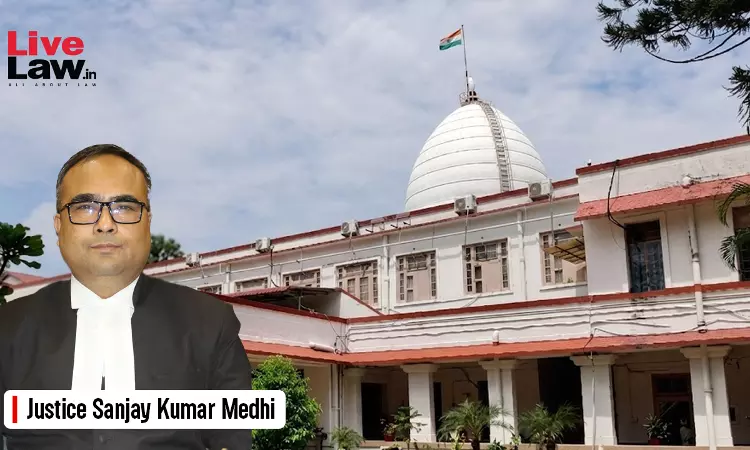
The Gauhati High Court has upheld the condonation of a 148-day delay in seeking restoration of a civil suit after the trial court found apparent negligence on the part of the plaintiffs' previous counsel in conducting the case.Bench comprising Justice Sanjay Kumar Medhi observed:"The principles which would govern while adjudicating an application for condonation of delay is that...
This is a premium content
Available exclusively to
Our subscribers
Subscribe Premium 
INR 1099+GST
Your support helps us to bring you more content at
an affordable subscription scheme !!!
All payment options available
The Gauhati High Court has upheld the condonation of a 148-day delay in seeking restoration of a civil suit after the trial court found apparent negligence on the part of the plaintiffs' previous counsel in conducting the case.
Bench comprising Justice Sanjay Kumar Medhi observed:
"The principles which would govern while adjudicating an application for condonation of delay is that a justice-oriented and pragmatic approach has to be taken. Of course, it would be necessary for the party to plead sufficient grounds to make out a case for such condonation. In the instant case, there was a delay of 148 days in filing the application under Order 9 Rule 9 CPC for restoration of the suit. The learned Trial Court, after hearing the matter, has come to a conclusion that the respondent as plaintiff was able to make out a case for condonation of delay as there was apparent negligence on the part of the earlier counsel in conducting the case".
The Court noted that the trial court had considered the circumstances pleaded by the plaintiffs, their reliance on the previous counsel and the steps taken after they acquired knowledge of the dismissal of the suit.
The High Court was hearing a petition filed by the defendants challenging an order of the Civil Judge (Junior Division), Charaideo at Sonari which had condoned the delay in filing an application for restoration of the suit.
Suit that was instituted in 2021 was dismissed for default on October 31, 2025. The plaintiffs subsequently filed an application under Order IX Rule 9 of CPC seeking restoration of the suit with an application under Section 5 of the Limitation Act seeking condonation of the 148 day delay.
They attributed the delay to negligence on the part of their previous counsel. Accepting their explanation, the trial court allowed the application subject to payment of Rs. 2,000 as costs.
Challenging the order, the defendants argued that negligence on the part of an advocate could not by itself constitute sufficient cause for condonation of delay. They contended that litigants were required to remain vigilant and could not simply shift responsibility onto their counsel.
Defendents relied on the Supreme Court decision in Rajneesh Kumar and Another versus Ved Prakash (2024 INSC 891) and argued that negligence of counsel would not be sufficient in every case to justify condonation of delay.
Rejecting the challenge, the High Court distinguished the Supreme Court decision. It noted that Rajneesh Kumar involved a delay of 534 days in filing an appeal alongside findings of wilful suppression of facts and lack of bona fides on the part of the litigants.
"The facts and circumstances leading to passing of the aforesaid order by the Hon'ble Supreme Court are entirely different from the present case.”
The High Court further noted that the trial court had considered the plaintiff reliance on their counsel, the steps taken after acquiring knowledge of the dismissal and the nature of the relief sought before allowing the application.
The High Court also held that Section 115 of the CPC was the appropriate provision for challenging the impugned order. It observed that the availability of a remedy under the CPC would ordinarily deter the exercise of supervisory jurisdiction under Article 227 of the Constitution.
Finding no error in the trial court order and no ground warranting interference, the High Court dismissed the petition.
Counsel for Petitioners: H.P. Guwala
Counsel for Respondents: None
Tags


