



- Home
- /
- High Courts
- /
- Gauhati High Court
- /
- “Can't Turn Around After...
“Can't Turn Around After Unpalatable Result”: Gauhati High Court Rejects Challenge To Law Officers' Selection By Failed Candidates
Bhavya Singh
15 Sept 2026 1:00 PM IST
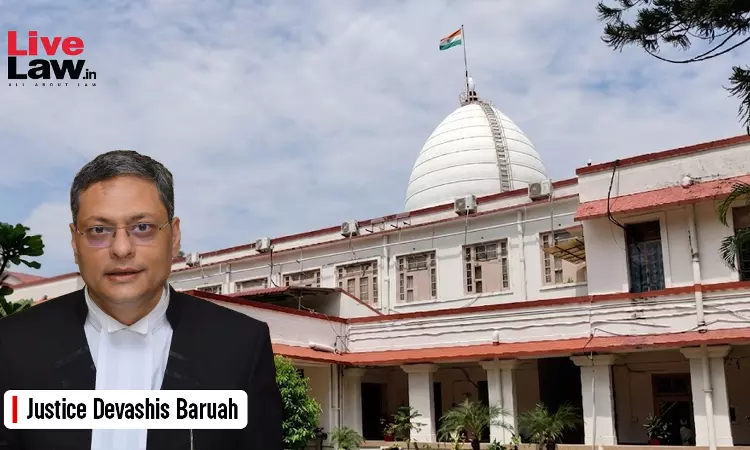
The Gauhati High Court has denied relief to four candidates who had challenged result to recruitment for law officers in Assam State Prosecution Service after finding that the candidates had participated in the selection process, waited for the results and then later challenged the selection process after finding the result "not palatable".Justice Devashis Baruah observed, “In the opinion...
This is a premium content
Available exclusively to
Our subscribers
Subscribe Premium 
INR 1099+GST
Your support helps us to bring you more content at
an affordable subscription scheme !!!
All payment options available
The Gauhati High Court has denied relief to four candidates who had challenged result to recruitment for law officers in Assam State Prosecution Service after finding that the candidates had participated in the selection process, waited for the results and then later challenged the selection process after finding the result "not palatable".
Justice Devashis Baruah observed, “In the opinion of this Court, the case of the Petitioners squarely falls with the general proposition of law well settled by the Supreme Court that a candidate having participated in the selection proceedings cannot be allowed to challenge the proceedings after having found the result of the selection proceedings not palatable.”
The observation came in a writ petition filed by four candidates challenging the Select List for recruitment to the posts of Public Prosecutor, Additional Public Prosecutor and Assistant Public Prosecutor under the Assam State Prosecution Service.
Though the petitioners had initially also challenged the vires of Rule 19(ii) of the Assam State Prosecution Service Rules, 2023, that challenge was being pursued separately in another writ petition. The present proceedings were therefore confined to the selection proceedings and the legality and validity of the Select List.
The recruitment concerned 299 posts, 26 Public Prosecutors, 88 Additional Public Prosecutors and 185 Assistant Public Prosecutors.
The three Selection Boards constituted for the recruitment jointly decided that the viva-voce test would carry 100 marks, comprising 70 marks for requisite qualities, drafting skills, analytical and presentation skills, mental agility, quick grasp of arguments and judicial references; 20 marks for personality and temperament; and 10 marks for overall academic performance.
Candidates were also required to produce pleadings drafted by them and judgments or orders in criminal proceedings in which they had appeared and argued.
The petitioners argued that the selection had been carried out in an opaque and non-transparent manner, that the advertisement did not disclose how the proficiency-cum-skill test would be conducted, that the requirements subsequently contained in the call letters ought to have formed part of the advertisement, and that the documents produced by the candidates had not been retained.
They also questioned the authority of the Selection Boards to devise the marking methodology and contended that the process violated Articles 14 and 16 of the Constitution. The State, however, submitted that the petitioners had participated in the selection without objection and challenged it only after they were unsuccessful.
The High Court noted that the general rule against a candidate challenging a selection after participating in it was subject to certain exceptions.
It said such exceptions arise where the selection proceedings are held contrary to Rules framed under Article 309 of the Constitution or statutory notifications issued under Articles 73 or 162; where the criteria disclosed in the advertisement are not followed or no criteria are disclosed until the results are announced; or where apparent illegalities beyond the prescribed procedure are noticed during the selection process.
The Court, however, said that where such illegality is noticed during the process, the candidate has to assail it at the earliest opportunity and cannot await the results. It clarified that where the exception comes to light only upon the declaration of the result, there would be no bar on challenging the selection proceedings.
Applying the principle to the petitioners, the Court noted that they had not challenged the advertisement dated January 2, 2024 on the ground that the criteria were vague.
It observed that Rule 19(ii) itself disclosed that the proficiency-cum-skill test would assess drafting skills, analytical and presentation skills, mental agility, quick grasp of arguments and judicial precedents and, therefore, the petitioners were aware of the criteria on the basis of which the test would be conducted.
The Court further noted that the petitioners had received the call letters containing the instructions governing the viva voce but had not challenged the proceedings on the ground that those instructions were vague or contrary to the advertisement or the Rules.
The High Court noted that two petitioners had participated twice in the viva voce test and the third petitioner had participated thrice, but none of them challenged the selection proceedings at that stage. The fourth petitioner, despite being issued a call letter, did not appear in the selection proceedings.
The Court observed that the petitioners “waited for the results and finding the results not palatable have challenged the selection proceedings.”
The Court found that there was no necessity to examine the legality and validity of the Select List at the instance of the petitioners; the Court proceeded to deal with the issue since “various allegations have been made to the selection process.”
On the authority of the Selection Boards, the Court noted that Rule 19(ii) “categorically mandates on what basis the proficiency-cum-skill test would be devised and who would devise the proficiency-cum-skill test.”
It held that the Selection Boards constituted under the Rules of 2023 and the Notification dated June 20, 2024 had the “authority and jurisdiction to devise the proficiency-cum-skill test.”
The Court further noted that Rule 19(ii) itself stipulated the criteria for selection, namely substantial experience, drafting skills, analytical and presentation skills, mental agility, quick grasp of arguments and quoting judicial precedents.
For maintaining uniformity, the three Selection Boards decided that candidates would be evaluated out of 100 marks whereby 70 marks on the criteria prescribed under Rule 19(ii), 20 marks for personality and temperament, and 10 marks for overall academic performance.
The Court recorded that “the three selection criteria were applied across each of the candidates who had participated.”
On the allegation that the selection was opaque because the applications, petitions, appeals and judgments produced by candidates were not retained, the Court noted that these documents had been called for “only for evaluation purposes.”
It held that they were used for formulating questions to be put to candidates during the viva voce and that the answers were oral.
The Court therefore concluded that “non retention of the appeals/applications/petitions filed in criminal proceedings as well as the judgments in criminal proceedings would not vitiate the selection proceedings.”
The Court also rejected the allegation of non-transparency on the ground that candidates were unaware of their viva voce marks, observing that “the records maintained reflects the assessment in respect to all candidates.”
It further noted that the candidates could have sought information regarding the marks under the Right to Information Act, 2005.
Referring to the limited scope of judicial review in selection matters, the Court noted that courts cannot substitute themselves for the Selection Committee or assume the role of an appellate authority over the assessment of candidates, except where there are proven allegations of malfeasance, violation of statutory rules or inherent arbitrariness.
The Court accordingly held, “In the light of the aforementioned judgments and the analysis made hereinabove, it is the opinion of this Court that the selection carried out cannot be said to be illegal or in violation to Article 14 and Article 16 of the Constitution.”
It ultimately held that the allegation that the selection proceedings stood vitiated on account of illegalities or infraction of Articles 14 and 16 was “meritless and calls for no interference” and dismissed the writ petition.
Case No.: WP(C) No. 281/2026
Case Title: Devajani Gogoi & Ors. v. State of Assam & Ors.
LL Citation: 2026 LiveLaw (Gau) 165
Tags

Bhavya Singh
Reporter

