



- Home
- /
- High Courts
- /
- Gauhati High Court
- /
- Gauhati High Court Acquits Woman In...
Gauhati High Court Acquits Woman In Infant Murder Case, Says Trial Court Found No Homicidal Death Yet Convicted Her
Bhavya Singh
11 Sept 2026 10:45 AM IST
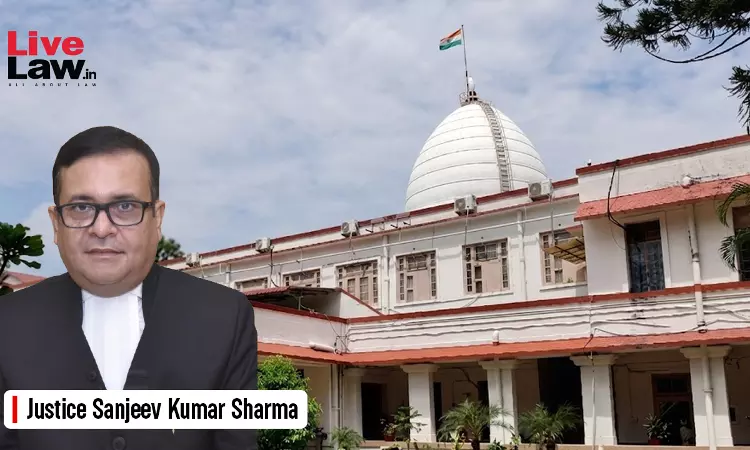
The Gauhati High Court has set aside the conviction of a woman under Section 304(II) IPC for the death of her infant daughter, finding that the Trial Court had relied on inadmissible Section 161 CrPC statements and material which had never been introduced into evidence.Justice Sanjeev Kumar Sharma observed, “The learned trial court also did not record any finding that the death of the...
This is a premium content
Available exclusively to
Our subscribers
Subscribe Premium 
INR 1099+GST
Your support helps us to bring you more content at
an affordable subscription scheme !!!
All payment options available
The Gauhati High Court has set aside the conviction of a woman under Section 304(II) IPC for the death of her infant daughter, finding that the Trial Court had relied on inadmissible Section 161 CrPC statements and material which had never been introduced into evidence.
Justice Sanjeev Kumar Sharma observed, “The learned trial court also did not record any finding that the death of the deceased was homicidal in nature. A perusal of the circumstances relied upon by the learned trial court as indicative of the guilt of the accused, would show that inadmissible evidence in the form of statements of witnesses before the police recorded under Section 161 Cr.P.C, as well as material never introduced into the evidence such as purported photocopy of an affidavit dated 03.01.2014 sworn by PW6 were taken into consideration.”
The observation came in an appeal under Section 374(2)(1) CrPC against the judgment of conviction and sentence passed by the Sessions Judge, Barpeta. The appellant had been sentenced to five years' rigorous imprisonment and a fine of ₹10,000 under Section 304(II) IPC.
The prosecution case arose from an FIR lodged alleging that the appellant, Hanufa Nasrin, along with two other accused persons, had murdered her minor daughter, aged about 11 months. A case was registered under Sections 302/34 IPC and, after investigation, a charge-sheet was filed against the appellant under Section 302 IPC. The prosecution examined 12 witnesses, including the informant, Medical Officer and Investigating Officers.
Counsel for the appellant submitted that the case was one of “no evidence”. He pointed out that although the Medical Officer had opined that the cause of death was organophosphorus poisoning, he admitted in cross-examination that the exhibit numbers mentioned in his report were not related to the case.
The State, on the other hand, submitted that the Trial Court had rightly reached its conclusion upon appreciation of the medical as well as other circumstantial evidence.
The High Court noted that the Trial Court itself had found that the chemical examiner's report was based on toxicology exhibits unrelated to the present case and therefore could not be considered.
Consequently, the cause of death stated by the Medical Officer as organophosphorus poisoning had not been accepted by the Trial Court. The High Court noted that despite this, the Trial Court had found that the appellant killed the deceased “without there being any other evidence to support the same”.
The Court further observed, “Although PW2 had allegedly stated before the IO that the appellant had put a torn up piece of paper into the mouth of the child, who became speechless and was taken to the hospital where she died, the medical evidence does not point towards suffocation as the cause of death. It also cannot be ruled out that even if the injury mentioned above was sufficient to cause death, the same could have been accidental.”
The High Court also noted, “The learned trial court also did not record any finding that the death of the deceased was homicidal in nature.”
In view of the medical evidence and the material relied upon by the Trial Court, the High Court held, “For the aforesaid reasons the impugned judgement must be held to be unsustainable in law and accordingly, the same is set aside.”
The appeal was accordingly allowed and the appellant was directed to be set at liberty forthwith.
Case Title: Hanufa Nasrin v. State of Assam & Anr.
LL Citation: 2026 LiveLaw (Gau) 163
Case No.: CRL. APPEAL NO. 286 OF 2019
Tags

Bhavya Singh
Reporter

