



Merely Producing Voter Lists With Ancestor's Names Does Not Establish Citizenship Without Proof Of Family Linkage: Gauhati High Court
Aryan Raj
11 Nov 2026 8:54 PM IST
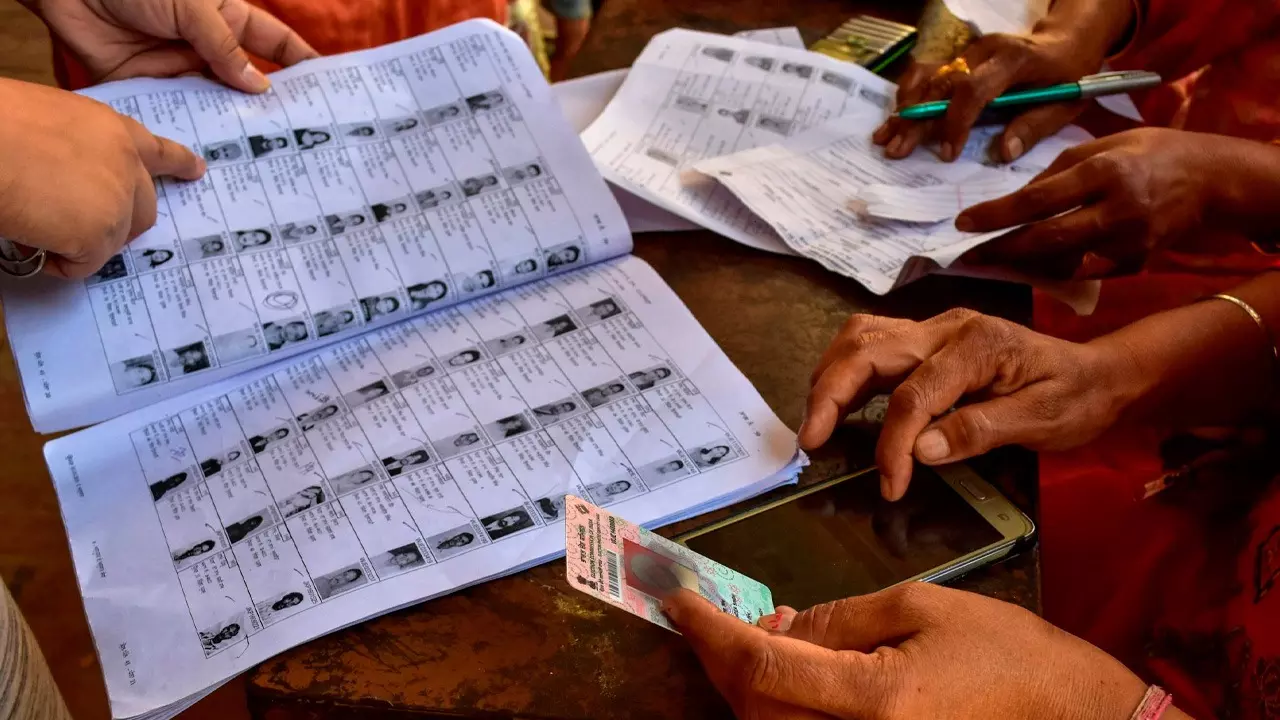
The Gauhati High Court has held that merely producing voter lists and revenue records containing the names of a person's ancestors is insufficient to establish Indian citizenship unless the relationship between the individuals named in those records is also proved through cogent and admissible evidence.
The High Court held that the petitioner had failed to establish his linkage with his father Sadar Ali wand grandfather Jahur Ali. It noted that he had not disclosed his relationship with several other persons whose names appeared alongside his ancestors in the electoral rolls and revenue records.
A Division Bench of Justice Kalyan Rai Surana and Justice Susmita Phukan Khaund dismissed a writ challenging a Foreigners Tribunal opinion declaring him a foreigner who had entered India from Bangladesh on or after March 25, 1971.
"Moreover, most of the voter's lists contain only one or two names, as indicated in the chart given before, and therefore, the entire family of the petitioner is not seen living together, and the exhibited documents show names with whom the petitioner has not linked himself. Accordingly, through the exhibited documents, the petitioner has not been able to prove his relationship with his projected father, Sadar Ali, and there is also no linkage between Sadar Ali with Jahur Ali. There is no statement as to what happened to Jahur Ali after 1970.


It is also noted that the petitioner, apart from not disclosing his relationship with those persons whose names appeared in the jamabandi (revenue record) and in the voter's list, has also not pleaded the name of his grandmother and the name of his mother. It is reiterated at the cost of repetition that the family of the petitioner is not pleaded, and therefore, evidence tendered beyond pleading is liable to be discarded," the court said.
The petitioner claimed that he was born and brought up in Assam. He relied on voter lists of 1966 and 1970 containing his grandfather's name and subsequent voter lists containing his father's name. He also produced a birth certificate, PAN card and Jamabandi records.
A Gaonburah (village level revenue functionary) was examined to support his claim that the petitioner and his family had been residing in the village.
The Foreigners Tribunal rejected his evidence and declared him a foreigner belonging to the post-March 25, 1971 category. His son and daughter were also declared foreigners on the basis of their lineage through him.
Before the High Court, the petitioner argued that the Tribunal had discarded his evidence over minor omissions concerning other family members named in the records. He also contended that the Gaonburah's testimony supported his claim.
Rejecting the submissions, the High Court noted that the petitioner had failed to explain his relationship with several persons named in the 1966 and 1970 voter lists. The Jamabandi also recorded nine persons as sons of his grandfather but the petitioner had disclosed his relationship with only one of them.
The High Court further noted that the Gaonburah had admitted that he had no document establishing his authority to issue the certificate and that he had issued it to help the petitioner in the pending case.
High Court also pointed out discrepancies in the petitioner's age. His evidence on affidavit recorded his age as 31 years in April 2018 indicating that he was born in 1987. However, the 2010 voter list recorded his age as 23 years.
Rejecting the argument that the State's failure to cross exam the petitioner and his witness meant that their evidence should be accepted, the High Court held that Foreigners Tribunal proceedings are civil in nature. A claim can be rejected even in the absence of cross examination if the evidence is not cogent and admissible.
Referring to Section 9 of the Foreigners Act, 1946, the High Court reiterated that the burden lies on the person proceeded against to establish that they are an Indian citizen and not a foreigner.
Finding that the petitioner had failed to establish his family linkage and discharge the burden under Section 9 of the Foreigners Act, the High Court dismissed the writ petition.
Counsel for Petitioner: Mr. N. Haque, Advocate.
Counsel for Respondents: Mr. U.K. Goswami, CGC; Mr. G. Sarma, Standing Counsel, FT & Border; Ms. R.B. Bora, Junior Government Advocate; and Mr. A.I. Ali, Standing Counsel, Election Commission of India.


