



- Home
- /
- High Courts
- /
- Gauhati High Court
- /
- National Highways Act | Reference...
National Highways Act | Reference Court Can Decide Title Dispute While Determining Entitlement To Land Acquisition Compensation: Gauhati High Court
Bhavya Singh
28 Aug 2026 10:30 AM IST
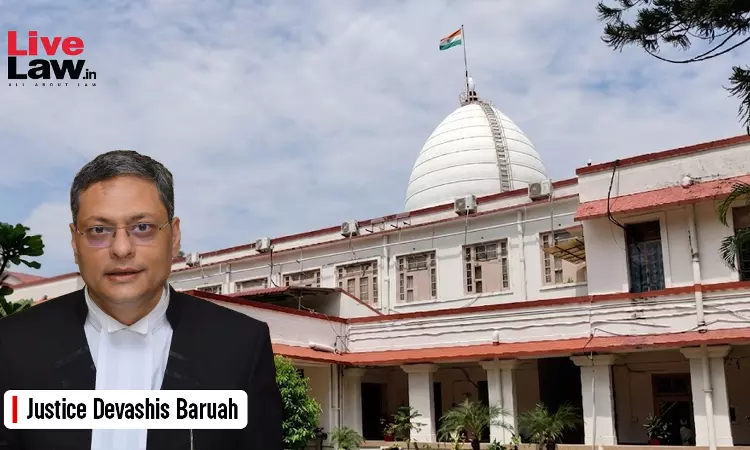
The Gauhati High Court has held that where a dispute arises as to entitlement to compensation or its apportionment under the National Highways Act, 1956, the Reference Court under Section 3H(4) can incidentally decide questions of title.Justice Devashis Baruah observed, “In fact, in a proceedings under Section 3H (4) of the Act of 1956, the Reference Court is equipped with the jurisdiction...
This is a premium content
Available exclusively to
Our subscribers
Subscribe Premium 
INR 1099+GST
Your support helps us to bring you more content at
an affordable subscription scheme !!!
All payment options available
The Gauhati High Court has held that where a dispute arises as to entitlement to compensation or its apportionment under the National Highways Act, 1956, the Reference Court under Section 3H(4) can incidentally decide questions of title.
Justice Devashis Baruah observed, “In fact, in a proceedings under Section 3H (4) of the Act of 1956, the Reference Court is equipped with the jurisdiction to incidentally decide the questions of title for determining entitlement to the compensation or apportionment of the compensation.”
The observation came in a writ petition assailing a Speaking Order passed by the Additional District Commissioner, Cachar, and seeking a direction upon the authorities to dispose of the petitioners' representations.
The dispute arose from acquisition proceedings initiated under the National Highways Act for building, widening/four-laning, maintenance, management and operation of NH-306 in Cachar district. The names of the private respondents and their predecessors appeared in the notification issued under Section 3D, while the petitioners' names did not. The Central Government had already deposited the compensation determined under Section 3G for onward disbursement to the persons interested. The petitioners, claiming rights over the land, approached the Competent Authority disputing the private respondents' entitlement and claiming apportionment of the compensation.
The Competent Authority directed that 50% of the zirat compensation (statutory payment for the loss of produce, trees, or structures, separate from the actual market value of the land itself) be paid to the private respondents, whose names featured in the award and who had been dispossessed from the land, so as to enable them to shift from the site.
The remaining 50% was to be deposited before the District and Sessions Judge, Silchar. The petitioners challenged this action on the basis that they had filed a suit claiming right, title and interest, and therefore no payment should be made to the private respondents. They also submitted that though their land had not been acquired in terms of the Section 3D notification, possession of their land had been taken.
The High Court observed that the National Highways Act is a “self contained code to decide various aspect relating to the acquisition of lands”.
It said that disputes regarding inadequacy of compensation are provided for under Section 3G, while disputes regarding the person entitled, or how much a person is entitled to, in respect of determined compensation are provided for under Section 3H.
“In the opinion of this Court that the provisions of the Act of 1956 is a self contained code to decide various aspect relating to the acquisition of lands. If disputes arise as regards the inadequacy of compensation, Section 3G of the Act of 1956 provides adequate remedies. If there is any dispute as regards the person who is entitled or for that matter how much a person is entitled to in respect to determined compensation, Section 3H of the Act of 1956 provides adequate remedies.”
On the facts, the Court noted that the names of the private respondents were included in the awards made under Section 3G, their names and that of their predecessor-in-interest were also mentioned in the Section 3D notification, and the acquired lands were in their possession.
It further noted that the Competent Authority had ordered release of 50% of the zirat compensation to them and deposit of the remaining 50% before the District and Sessions Judge, Cachar at Silchar.
The Court found that the reasons assigned in the impugned order appeared to be in accordance with the scheme of the Act. However, it said that if 50% of the compensation was released to the private respondents, necessary surety such as an indemnity bond was required so that the amount could be recovered if the proceedings under Section 3H(4) were decided against them.
“It is the opinion of this Court that the reasons so assigned in the impugned order dated 07.01.2025 appears to be in accordance with the Scheme of the Act of 1956.”
The High Court further directed the Competent Authority to forthwith refer the dispute to the District Judge, Cachar, Silchar for adjudication in terms of Section 3H(4).
“It is also the opinion of this Court that the Respondent No.5 should forthwith refer the dispute to the Court of the learned District Judge, Cachar, Silchar for adjudication in terms with Section 3H(4) of the Act of 1956.”
Accordingly, the Court directed release of 50% of the zirat compensation to the private respondents upon an undertaking that they would return the amount if the reference proceedings were decided against them, along with an indemnity bond.
The remaining 50% was directed to be deposited before the District Judge, Silchar and disbursed upon the decision under Section 3H(4). The interim order was vacated.
Case No.: WP(C)/5746/2025
Case Title: Faizur Rahman Laskar v. State of Assam & Ors.
LL Citation: LiveLaw 2026 (Gau) 145
Tags

Bhavya Singh
Reporter

