



- Home
- /
- High Courts
- /
- Gauhati High Court
- /
- Writ Court Under Article 226...
Writ Court Under Article 226 Examines Decision-Making Process, Not Merits: Gauhati High Court Refuses To Interfere With PDS Licence Cancellation
Bhavya Singh
28 Jan 2026 10:15 AM IST
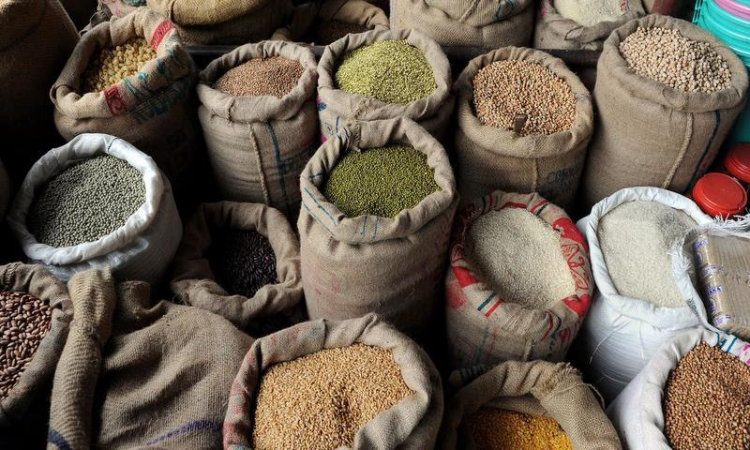
The Gauhati High Court declined to interfere with the cancellation of a fair price shop (PDS) licence, holding that its writ jurisdiction under Article 226 is confined to examining the decision-making process and not the merits of the decision, and finding that no case for interference was made out.Justice Sanjay Kumar Medhi, presiding over the case, said, “The certiorari jurisdiction to...
This is a premium content
Available exclusively to
Our subscribers
Subscribe Premium 
INR 1099+GST
Your support helps us to bring you more content at
an affordable subscription scheme !!!
All payment options available
The Gauhati High Court declined to interfere with the cancellation of a fair price shop (PDS) licence, holding that its writ jurisdiction under Article 226 is confined to examining the decision-making process and not the merits of the decision, and finding that no case for interference was made out.
Justice Sanjay Kumar Medhi, presiding over the case, said, “The certiorari jurisdiction to be exercised by this Court under Article 226 of the Constitution of India is to be confined to the decision making process and not to the merits of the decision. In other words, the examination is on the aspect as to whether the relevant factors have been taken into consideration or as to whether the impugned decision is based on extraneous factors and irrelevant consideration. The aspect of jurisdiction of the authority passing the order may also be examined which is not the case in hand. There are also no allegations of mala fide in passing of the impugned order.”
The above ruling was passed in a writ petition challenging an order issued by the Deputy Director (I/C), Food, Civil Supplies & Consumer Affairs in 2022, by which the petitioners' PDS licence was cancelled.
The petitioners had been issued a Fair Price Shop licence and were running the same in accordance with law. Certain allegations were levelled against them, leading to an enquiry and an order of suspension of licence, followed by a show cause notice issued shortly after. Thereafter, an additional show cause notice was issued by the Additional Deputy Director (I/C), to which the petitioners responded, and upon completion of the proceeding, the impugned cancellation order was passed.
Counsel for the petitioners argued before the Court that they were not given opportunity at the stage of enquiry and argued that the involvement of the Additional Deputy Commissioner (I/C) was unfair, since the Deputy Commissioner is the appellate authority under the Assam Public Distribution of Articles Order, 1982. It was further argued that the allegations were incorrect and that the petitioners were deprived of a fair opportunity to defend themselves.
Opposing the writ petition, the State submitted that all procedural safeguards had been afforded. It was argued that as the impugned order was passed by the Deputy Director, no prejudice would be caused to the petitioners in preferring an appeal before the Deputy Commissioner, and that the additional show cause notice had only been issued to clarify factual aspects, with full opportunity given to respond.
On examining the record, the High Court noted, “due opportunity was granted to the petitioners and they had in fact filed the response on 08.11.2018 which was duly considered by the disciplinary authority as reflected in the impugned order dated 02.09.2022. A perusal of the impugned order would show that the defence of the petitioners was duly considered and all the relevant factors have been taken into consideration.”
After reiterating the limits of certiorari review and placing reliance on the Central Council for Research in Ayurvedic Sciences and Anr. Vs. Bikartan Das & Ors reported in 2023 INSC 733, the Court concluded, “In view of the aforesaid facts and circumstances, this Court is of the considered opinion that no case for interference is made out.”
Accordingly, the writ petition was dismissed.
LL Citation: 2026 LiveLaw (Gau) 13
Case: Hem Bahadur Pradhan @ Newar and Anr. v The State of Assam and 3 Ors.
Case No.: WP(C)/7100/2022
Tags

Bhavya Singh
Reporter

