



- Home
- /
- High Courts
- /
- Gauhati High Court
- /
- Assam Land Policy | Long Possession...
Assam Land Policy | Long Possession Of Govt Land Doesn't Confer Right To Settlement: Gauhati High Court
Bhavya Singh
31 July 2026 3:15 PM IST
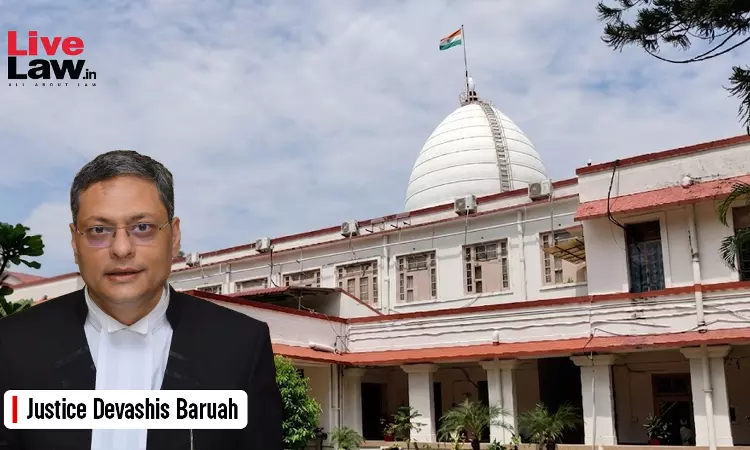
The Gauhati High Court has held that long possession or mere occupation of Government land does not confer any right to obtain settlement of such land under the Assam Land Policy, 2019.Justice Devashis Baruah observed, "This Court also takes note of Clause 14.3 of the Assam Land Policy, 2019 which categorically stipulates that there is no right of the occupier of the land to get settlement...
This is a premium content
Available exclusively to
Our subscribers
Subscribe Premium 
INR 1099+GST
Your support helps us to bring you more content at
an affordable subscription scheme !!!
All payment options available
The Gauhati High Court has held that long possession or mere occupation of Government land does not confer any right to obtain settlement of such land under the Assam Land Policy, 2019.
Justice Devashis Baruah observed, "This Court also takes note of Clause 14.3 of the Assam Land Policy, 2019 which categorically stipulates that there is no right of the occupier of the land to get settlement over the land under his occupation merely because he is in occupation of the Government land."
The observation came while dismissing a writ petition filed by Sudhir Paul challenging the settlement of Government land in favour of a private respondent and seeking allotment of the same land in his own favour.
The petitioner claimed that he had been residing on the land after constructing a dwelling house and had applied for settlement under Mission Basundhara 1.0, which was rejected. He thereafter submitted a fresh application under Mission Basundhara 3.0. According to him, while that application was pending, the authorities settled the land in favour of the private respondent and mutated it accordingly. After his representation against the allotment remained unaddressed, he approached the High Court.
The State, however, informed the Court that the petitioner's application under Mission Basundhara 3.0 had also been rejected in the meantime, a fact that was not disputed by the petitioner.
Rejecting the challenge, the Court noted that the petitioner's sole contention was that he had remained in occupation of the Government land for several years. It held that mere occupation of Government land does not create any vested right to seek settlement and, therefore, no ground was made out to interfere with the allotment made in favour of the private respondent.
Accordingly, the Court dismissed the writ petition while clarifying that the petitioner would be at liberty to challenge the rejection of his application under Mission Basundhara 3.0 in accordance with law.
The petitioner also submitted that he had been dispossessed despite an interim order directing the parties to maintain status quo and had initiated contempt proceedings alleging its violation.
Taking note of the interim order and the fact that the petitioner had been bona fide prosecuting the writ petition, the Court directed that, if the petitioner chooses to file a suit under Section 6 of the Specific Relief Act, 1963, the period between September 3, 2025 and the date of the judgment shall stand excluded while computing limitation.
The Court, however, clarified that it had not recorded any finding that the petitioner had in fact been dispossessed and that the issue would have to be established before the competent civil court.
Case No.: WP(C) No. 5138 of 2025
Case Title: Sudhir Paul v. State of Assam & 5 Ors.
LL Citation: 2026 LiveLaw (Gau) 110

Bhavya Singh
Reporter

