



- Home
- /
- High Courts
- /
- Gauhati High Court
- /
- Earlier Finding Of Paternity...
Earlier Finding Of Paternity Operates As Res Judicata In Maintenance Case; No DNA Test Without Strong Case Of Non-Access: Gauhati High Court
Bhavya Singh
24 Aug 2026 3:00 PM IST
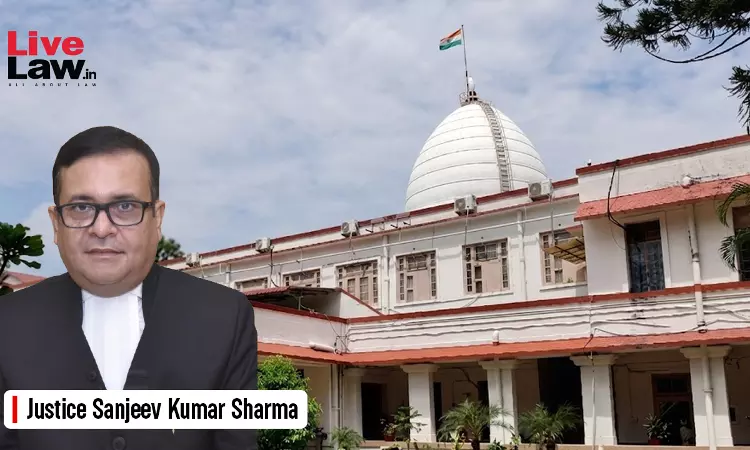
The Gauhati High Court has held that an earlier unchallenged finding that a man had a physical relationship with a woman and that a child was born out of that relationship can operate as res judicata in maintenance proceedings under Section 125 CrPC, so far as question of paternity of the child is concerned.Justice Sanjeev Kumar Sharma observed, “The said issue, having been already decided...
This is a premium content
Available exclusively to
Our subscribers
Subscribe Premium 
INR 1099+GST
Your support helps us to bring you more content at
an affordable subscription scheme !!!
All payment options available
The Gauhati High Court has held that an earlier unchallenged finding that a man had a physical relationship with a woman and that a child was born out of that relationship can operate as res judicata in maintenance proceedings under Section 125 CrPC, so far as question of paternity of the child is concerned.
Justice Sanjeev Kumar Sharma observed, “The said issue, having been already decided in an earlier proceeding as above, the finding therein would operate as res judicata in the proceedings under Section 125 of Cr.P.C. as well.”
The observation came in a petition under Section 482 CrPC challenging the judgment of the Sessions Judge, Hailakandi in a Criminal Revision. By that order, the petitioner was directed to pay monthly maintenance of Rs.3,000 to the minor child of the respondent, along with arrears at the same rate from the date of the Chief Judicial Magistrate's order.
The respondent had filed proceedings under Section 125 CrPC seeking maintenance for herself and her minor child. The revision was partly allowed, directing the petitioner to pay monthly maintenance of Rs.3,000 to the minor child, including the accumulated arrear maintenance at the same rate from the date of the judgment passed by the Chief Judicial Magistrate. Being aggrieved, the petitioner sought the intervention of the High Court in exercise of its inherent jurisdiction.
The petitioner submitted that there were contradictions in the evidence of the respondent which the Revisional Court had failed to appreciate. The respondent, through Legal Aid Counsel, submitted that the maintenance had been awarded for the child and that even an illegitimate child is entitled to maintenance. It was further pointed out that the petitioner had been convicted under Section 417 IPC and that the Revisional Court had held him to be the father of the child and accordingly awarded maintenance.
The High Court noted that in the earlier Sessions Case, the petitioner had been convicted under Section 417 IPC and a categorical finding had been recorded that he had a physical relationship with the respondent and that the child was born out of that relationship. The Court further noted that the finding had remained unchallenged.
The Court said that the issue to be decided in the proceedings under Section 125 CrPC was whether the petitioner was the father of the child so as to entitle the child to maintenance.
It held that the question of physical relationship between the petitioner and the respondent was a “foundational issue” and that the decision on that question led to an answer on the paternity of the child.
It observed, “In the above view of the matter, reliance can very well be placed on the findings of the Sessions Court in the aforesaid Sessions case with regard to the existence of a physical relationship between the parties leading to the birth of the child.”
On the plea for DNA testing, the High Court found that the petitioner had not made out a strong prima facie case of non-access.
“In the instant case, far from making out a strong prima facie case of non-access, it has been established by way of evidence that the petitioner had sexual intercourse with the respondent on multiple occasions and therefore, the submission of the learned counsel made at the bar for DNA test cannot be accepted,” the Court held.
The Court further held, “No doubt the authorities discussed above were in relation to situations where the marriage itself is not denied, but the husband denied paternity of the child on ground of non-access to the wife. Yet, the principles laid down in the aforesaid cases would be applicable even in case where the marriage is itself is denied.”
Finding that no interference in exercise of its inherent powers was called for, the High Court dismissed the petition as devoid of merit.
Case Title: Rafique Uddin Sekh @ Rafique Uddin v. Saina Begum Sheik
LL Citation: 2026 LiveLaw (Gau) 135
Case No.: Crl.Pet./212/2022
Tags

Bhavya Singh
Reporter

