



'Voter ID Or Electors Photo Identity Card Of Individuals Don't Prove Citizenship': Gauhati High Court
Aryan Raj
20 Nov 2026 3:56 PM IST
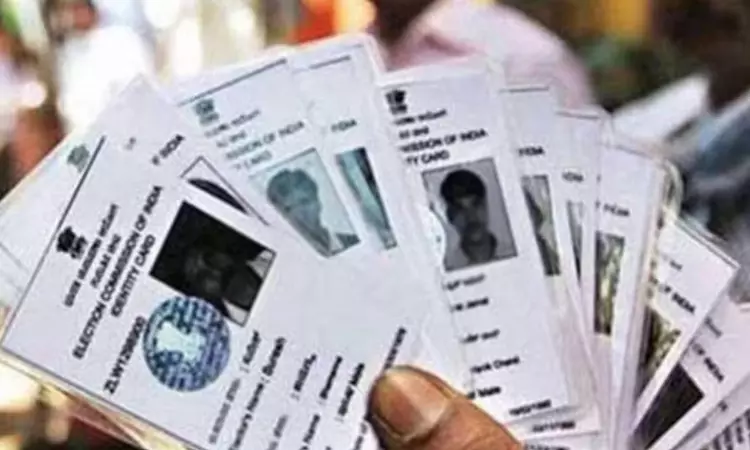
While upholding a Foreigners' Tribunal opinion declaring a woman from Assam a foreigner, the Gauhati High Court has observed that voter identity cards or Electoral Photo Identity Cards (EPIC) of individuals do not establish their citizenship.
A bench of Justice Kalyan Rai Surana and Justice Susmita Phukan Khaund made the observation while dismissing the woman's challenge to the Tribunal's 2022 opinion declaring her a foreigner who entered India illegally on or after March 25, 1971.
The High Court found that the electoral rolls relied upon by the woman failed to establish a reliable connection with her parents and grandparents. It observed:
“It has already been held in the foregoing discussions that the voters list of 1970, 1985 and 1997 reflecting the petitioner's grandfather's and father's names are not at all connected as age discrepancies and name discrepancies have surfaced in the voters lists. It has also been held in the foregoing discussions that the village, starting from the 1970 voters list was not similar to the NRC of 1951. This certificate marked as Exhibit-E was issued relying on the voters lists. Thus this certificate has not been substantiated. The voter identity cards or EPIC of individuals do not at all prove their citizenship.”


The petitioner had relied on a purported 1951 NRC entry, electoral rolls of 1970, 1985 and 1997 and certificates issued by the local Gaon Burah and Gram Panchayat Secretary to establish her Indian citizenship and family lineage.
However, the High Court found discrepancies in the names of her grandfather and father. Her grandfather was recorded as Dukhiya Sk in the 1951 NRC while the 1970 electoral roll mentioned Doila Munshi and showed her grandmother as the wife of Duikha. Similarly, her father name appeared as Matleb in the 1985 electoral roll and Abdul Matleb in the 1997 electoral roll.
The petitioner claimed that Dukhiya, Duikha and Doila referred to the same person. Rejecting this explanation, the Court questioned:
“If the petitioner's grandfather is either Doila or Dukhiya, then how could his name appear as Doila and Dukhiya in the same voters list, i.e., the voters list of 1970.”
The High Court further found that the electoral rolls were produced with gaps of 15 and 12 years and failed to establish continuity of residence. It observed:
“In a scattered manner, a voters list of 1970 and thereafter, after 15 years, a voters list of 1985 and after 12 years, a voters list of 1997 cannot establish lineage of the petitioner with her parents and grandparents when their names appear to be different, and their ages are also not similar. Continuous residency is a sine qua non to prove citizenship.”
The High Court also rejected the certificates issued by the Gaon Burah and Gram Panchayat Secretary, finding that they were not supported by reliable contemporaneous records. It noted that no document or affidavit had been produced to establish that the different names appearing in the records referred to the same individuals.
The Court concluded:
“Due to the discrepancies in the documentary as well as the oral evidence, it is held that the petitioner failed to prove the linkage documents produced by her with cogent, reliable and contemporaneous records.”
Holding that the petitioner had failed to discharge the burden of proving her citizenship under Section 9 of the Foreigners Act, 1946, the High Court upheld the Foreigners Tribunal opinion and dismissed the writ petition. It also vacated her bail order dated October 11, 2023.
Counsel for the Petitioner: Mr. N. Uddin
Counsel for the Respondents: Mr. A.K. Choudhry (CGC), Mr. G. Sarma (FT & Border), Mr. A.I. Ali (Election Commission of India) and Ms. R.B. Bora (Junior Government Advocate)


