



- Home
- /
- High Courts
- /
- Gujarat High Court
- /
- State Can't Mechanically Suspend...
State Can't Mechanically Suspend Municipal Resolutions: Gujarat High Court Stays Govt Order
LIVELAW NEWS NETWORK
25 March 2026 11:40 AM IST
The Gujarat High Court on Tuesday (March 24) questioned the State government and Ahmedabad Municipal Corporation with respect to authority under which the Municipal Commissioner had referred resolutions concerning waiver of late payment charges under advertisement policy to the State.The court further said that "prima facie" the Municipal Commissioner could not have referred the matter to...
This is a premium content
Available exclusively to
Our subscribers
Subscribe Premium 
INR 1099+GST
Your support helps us to bring you more content at
an affordable subscription scheme !!!
All payment options available
The Gujarat High Court on Tuesday (March 24) questioned the State government and Ahmedabad Municipal Corporation with respect to authority under which the Municipal Commissioner had referred resolutions concerning waiver of late payment charges under advertisement policy to the State.
The court further said that "prima facie" the Municipal Commissioner could not have referred the matter to the State as if to seek sanction and even State government without applying its mind had suspended the resolutions. The court thus stayed the state government's order suspending the resolutions.
The court was hearing a batch of petitions under Article 226 wherein the petitioners-advertisers/advertising agencies–had approached the high court for quashing decision dated 21-1-2025 passed by Joint Secretary Urban Development and Urban Housing Department, by which in exercise of power under Section 451 Bombay Provincial Municipal Corporation Act the authority has suspended three resolutions of the Corporation.
As interim relief the petitions seek stay on the operation of suspension order and further to restrain the Corporation from taking coercive steps pending decision on late payment charges.
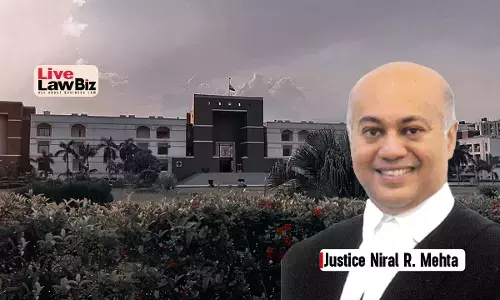
After hearing the parties Justice Niral M Mehta in his order dictated:
"Prima facie, this court feels that Municipal Commissioner Ahmedabad could not have referred the matter to State Government as if seeking approval and or sanction to those resolutions therein. Be that as it may, in turn the State government also without application of mind and in a mechanical manner without adherence to principle of natural justice passed the order suspending those resolutions. Let the Municipal Commissioner Ahmedabad file his personal affidavit explaining the situation and Joint Secretary on next date of hearing so that this court can take further consideration. In the meantime there shall ad-interim relief in terms of (prayer) 11b.".
The counsel for the petitioners argued that the Corporation's Commissioner wrote a letter to the State and entire letter was considered and thereafter only one page order was passed. The court was also informed that no response had been filed by the respondents before the court.
The petitioners' counsel submitted that order by State government was passed without hearing the petitioners and no reasons had been provided.
At this stage the court asked the counsel for State Government as to the provision under which the government had exercised its power. The counsel referred to Section 451 (Power of State Government to suspend action under this Act) Bombay Provincial Municipal Corporation Act.
The provision states that if the State Government is of the opinion that the execution of any resolution, or order of the Corporation or of any other municipal authority or officer subordinate thereto or the doing of any act which is about to be done or is being done by or on behalf of the Corporation is in contravention of or in excess of the powers conferred by the Act or of any other law for the time being in force or is likely to lead to a breach of the peace or to cause injury or annoyance to the public or to any class or body of persons, the State Government may by order in writing suspend the execution of such resolution or order, or prohibit the doing of any such act.
The court then orally asked as to the circumstances under which such a decision was taken. The counsel said that it appears that the consideration was the communication addressed to state government by the corporation.
The court then orally asked the State's counsel, "What consideration you have taken into account? Under which provision was darkhwast sent? So jurisdiction under Section 451 is supervisory power. All resolutions, decisions are to be sanctioned by him ? (Joint Secretary)".
The counsel said under Section 451 BPMC Act the official is to apply his own mind. He said that the official got a darkhwast (request) from the Corporation, but even after that the official ought to have applied his own mind. "That is what, it is not coming out of the order," the counsel said. He however submitted that he maybe permitted to file a reply so that the official's application of mind may be brought on record before the court.
Meanwhile the counsel for the Corporation referred to the correspondence by which matter was referred to the State government.
At this stage the court orally asked, "Why was it referred to state government? Under which provision? You cannot do it. I'll ask your Commissioner to file a personal affidavit explaining how many resolutions he is referring like this. He is so weak that every resolution he has to send before the government? Under which authority your Commissioner is sending this resolution to state government...How many resolutions he is sending to state government? Absolutely illegal order, illegal action and non application of mind. Corporation and State".
As the court was granting interim relief, the counsel for the Corporation stated that while he had no objection on prayer to stay the execution of the state government's order. The court was informed that the resolutions were about late payment charges under the advertisement policy.
He however opposed granting interim relief restraining the Corporation from taking any coercive steps. He submitted, "Late payment charges the standing committee considered to waive provided all outstanding is cleared by April 30. That they (petitioners) did not clear. Thereafter the matter was referred to State and thereafter the impugned order was passed".
However the court asked the respondents to file their response and listed the matter on April 6.
Case title: DIYA ADS PVT. LTD. & ANR. v/s THE STATE OF GUJARAT & ORS. and connected petitions
R/SCA/16922/2025
Tags


