



- Home
- /
- High Courts
- /
- Gujarat High Court
- /
- Gujarat High Court Grants Bail In...
Gujarat High Court Grants Bail In 2021 Mundra Drug Bust Case, Flags 'Inordinate Delay' By NIA In Trial Despite SC Orders
LIVELAW NEWS NETWORK
11 April 2026 11:30 AM IST
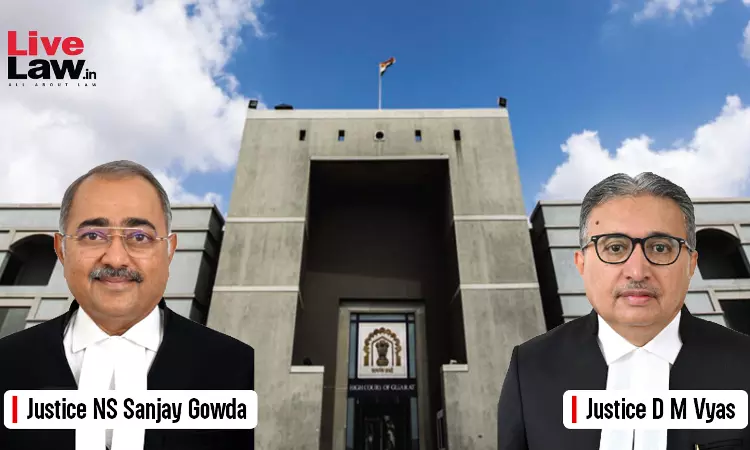
The Gujarat High Court granted bail to a man booked in a case over seizure of 2,988 kg heroin consignment in Mundra port in 2021, observing that despite timeline to conduct the trial given by the Supreme Court the prosecution agency NIA could not ensure deposition of all witnesses relevant to the accused. This, the court said, established that there had been an "inordinate delay" in the...
This is a premium content
Available exclusively to
Our subscribers
Subscribe Premium 
INR 1099+GST
Your support helps us to bring you more content at
an affordable subscription scheme !!!
All payment options available
The Gujarat High Court granted bail to a man booked in a case over seizure of 2,988 kg heroin consignment in Mundra port in 2021, observing that despite timeline to conduct the trial given by the Supreme Court the prosecution agency NIA could not ensure deposition of all witnesses relevant to the accused.
This, the court said, established that there had been an "inordinate delay" in the conduct of the trial despite orders passed by the Supreme Court.
A division bench of Justice NS Sanjay Gowda and Justice DM Vyas in its order said that when the appellant had approached the Supreme Court for bail, on 25.9.2024 the apex court while noting that charges were yet to be framed had thought it fit to issue directions to ensure examination of all witnesses who were relevant as against the appellant.
The bench said:
"The Supreme Court made it clear that it would be the responsibility of the NIA to produce those witnesses and no request for adjournment to produce witnesses should be entertained. Therefore, it is clear that the Supreme Court basically monitored the conduct of the entire case and ensured that the trial commenced and all the vulnerable and important witnesses were examined. It must be borne in mind, the continuance of the appellant in custody facilitated that the witnesses were protected from the likelihood of being put under any kind of influence and consequentially ensure a fair trial. Thereafter, by a series of orders, over a period of nearly eight months from September 2024 till the disposal of the SLP filed by the appellant in May 2025, the Supreme Court closely monitored the trial and thereby ensured that the most vulnerable and important witnesses were examined. This monitoring basically ensured that the trial by the NIA Court was expedited and the witnesses who were vulnerable and who could have been influenced or intimidated were examined and their evidence came on record".
The bench said that after all the vulnerable witnesses were examined, the Supreme Court, "consciously, directed the NIA to furnish an additional list of witnesses which it thought was important and sensitive and at the same time gave the appellant liberty to seek for bail after 6 months or after the trial had progressed substantially".
It said:
"The Supreme Court by directing the NIA to submit an additional list of witnesses basically granted one more opportunity to the NIA to examine those witnesses who were considered as sensitive or material in relation to the role of the appellant. Obviously, those witnesses to be cited in the additional list were required to be examined within the period of 6 months. However, despite the specific directions to ensure that all the witnesses who were considered as sensitive and material were examined, the NIA did not even furnish the additional list of witnesses which it had thought was sensitive or material".
This list, court said, came to be filed 9 months after the earlier order. It thereafter took note of NIA's affidavit which stated that 23 sensitive and material witnesses who were relevant insofar as the role of the appellant is concerned, would have to be examined and that they were requesting the NIA Court to take up the trial on a day-to-day basis. The NIA said it would need 2 months to complete examination of 23 witnesses.
"In other words, 9 months after the order passed by the Apex Court, the NIA is of the view that it required two more months to complete the deposition of the remaining witnesses that it considers sensitive or material in so far as the appellant in concerned. In effect the period of 6 months stipulated by the Apex Court has been extended by a period of 3 months and the NIA states that it required 2 more months. The NIA has thereby virtually doubled the period of time granted by the Apex Court for the examination of the witnesses who were relevant against the appellant. The cumulative effect of these facts leaves no room for doubt that despite specific timelines stipulated by the Apex Court for the conduct of the trial both during the pendency of the SLP and the ultimate timeline of 6 months to conduct the trial while disposing off the SLP, the NIA has not ensured the deposition of all the witnesses against the appellant thereby establishing that there has been an inordinate delay in the conduct of the trial, even in the face of the orders passed by the Apex Court," the bench said.
The court said that just before order was reserved in the appeal the NIA Court examined witnesses on a day to day basis from 17.2.2026 and within one month, the examination of all but one of the 23 sensitive witnesses who were relevant in so far as the role of the appellant were concerned was completed. It also took note of the appellant's affidavit as per which the last witness's examination had also been completed and therefore all the witnesses, thus completing the examination of all sensitive witnesses.
"In view of this fact, it is clear that the question of the possibility of the appellant being in a position to influence the examination of the witnesses would not be possible and the appellant would not be in a position to do any act which can undermine the trial. The objective of the Apex Court to ensure that all the witnesses who were relevant in so far as the appellant is concerned are examined also stands fulfilled and the request of the appellant for grant of bail will have to be considered in this context and in the background of the fact that the apex court had reserved liberty to the appellant to renew his application for bail after 6 months. The completion of the examination of all the witnesses who were relevant in so far as the appellant and who were considered as sensitive or relevant having been completed, the appellant would be entitled for grant of bail," the court said.
The court said that the trial will consume a large amount of time given the fact that there are several numbers of witnesses cited by the NIA who are yet to be examined to establish the role of the other accused in the case.
"The need to keep the appellant in custody till the examination of all the other witnesses would be unfair to the appellant, more so, when all the evidence that the NIA wanted to adduce against him as already come on record. We are therefore of the view that the appellant herein is entitled to be released on bail, and we accordingly grant bail to the appellant on conditions that the trial court may impose which in its view are necessary to secure the presence of the appellant on every date of hearing," the court added.
On the aspect of bail, the court said after the trial commences, the rigours of Section 37 NDPS Act would stand altered and this is because there is a specific provision made under which an under-trial prisoner is entitled for grant of bail i.e., Section 436A Cr.PC. It said that in light of Section 436A Cr.PC, the considerations for grant of bail after the trial has commenced would only be the delay in conclusion of the trial and this would be if the accused is in custody
"It is, thus, the law that the statutory embargo for grant of a bail during the pre-trial stage cannot be pressed into service if the trial has commenced and there has been a prolonged incarceration due to an inordinate delay in the conclusion of the trial," the bench added.
"It is, therefore, clear that if there is an inordinate delay in the conclusion of the trial, the incarceration can be considered as punitive, and Article 21 would come into operation entitling the person incarcerated to be released on bail. Thus, the argument of NIA that even when there is a delay in the conclusion of the trial, the normal consideration for grant of bail as envisaged under Section 37 of NDPS Act or under Section 43(d)(5) of the Unlawful Activities (Prevention) Act, 1967 would be untenable," the bench said.
Notably, Supreme Court had in May 2025 refused to grant bail to the appellant; it had however discarded NIA's allegations that the proceeds of the crime were used for terror financing as "premature and speculative." The NIA had alleged that the drug proceeds were linked to Pakistan-based terrorist organisation Lashkar-e-Taiba (LeT), which is banned in India.
It was alleged by using a legal channel, a consignment of 2988.21 Kgs. of Heroin - was brought from Afghanistan via Bandar Abbas, Iran and was imported in India in the name of M/s. Aashi trading Company and the same was intercepted.
It was alleged that the accused, as part of the conspiracy, used to supply the heroin in India on the directions of co-accused Faridoon Amani @ Javed Amani in order to generate funds for the LeT .
Case title: HARPREET SINGH TALWAR @ KABIR TALWAR v/s THE STATE OF GUJARAT & ANR.
R/CRIMINAL APPEAL (REGULAR BAIL - AFTER CHARGESHEET) NO. 15 of 2026
Counsel for Appellant: Senior advocate Aditya Sondhi, advocates Nipun Katyal, Manan Sharma, Surya Singh Rana and Darshit H Raval.
Counsel for R2: Advocates Ankit Shah, Sandeep K Sadawarte, Dharmesh Singh, Girish Gothwal
Counsel for R1: APP Chintan Dave
Click Here To Read/Download Order
Citation: 2026 LiveLaw (Guj) 112


