



- Home
- /
- High Courts
- /
- Gujarat High Court
- /
- Gujarat High Court Upholds...
Gujarat High Court Upholds Acquittal Of Two Accused Of Setting Electric Fence That Killed 11-Year-Old
LIVELAW NEWS NETWORK
24 Oct 2026 9:00 AM IST
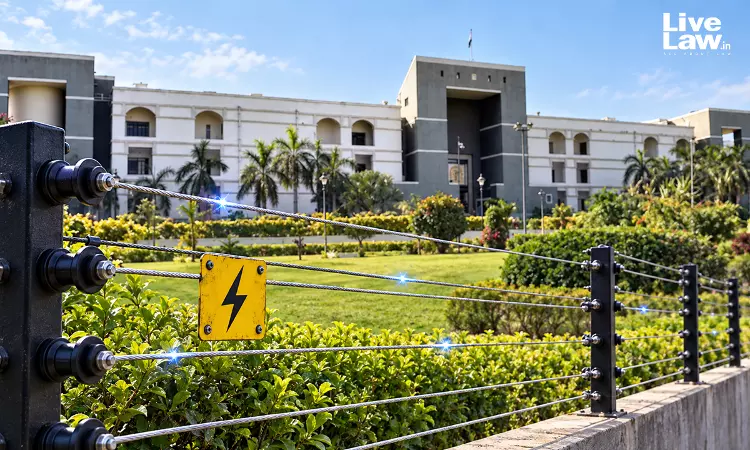
The Gujarat High Court upheld the acquittal of two persons booked for culpable homicide over the electrocution of a minor boy in an agricultural field lined with an electric fence, finding that the foundational fact that the plot was in fact owned by the accused persons could not be established by the prosecution. The court was hearing State's appeal against sessions court's order acquitting...
This is a premium content
Available exclusively to
Our subscribers
Subscribe Premium 
INR 1099+GST
Your support helps us to bring you more content at
an affordable subscription scheme !!!
All payment options available
The Gujarat High Court upheld the acquittal of two persons booked for culpable homicide over the electrocution of a minor boy in an agricultural field lined with an electric fence, finding that the foundational fact that the plot was in fact owned by the accused persons could not be established by the prosecution.
The court was hearing State's appeal against sessions court's order acquitting two who were accused of culpable homicide not amounting to murder.
The complainant said that his 11 year old grandson was found missing one day and was later found lying face down on the ground at the boundary of a maize field belonging to the respondents – accused.
The child's legs were entangled in a fence of thin iron wire tied over wooden poles planted along the boundary of the field. He did not respond when called and was found unconscious. Both his legs had been burnt and blackened due to electric current.
According to the complainant, the respondents – accused, being the owners of the maize fields, had fixed an iron live-wire fence along the boundary. It was alleged that grandson died as a result of electrocution caused by such current.
A division bench of Justice Ilesh J Vora and Justice RT Vachhani noted that offence under Section 304 read with Section 114 of the I.P.C. cannot be sustained merely by showing that the child died from a live wire. The prosecution must prove, by cogent evidence, that the accused erected the fence, charged it with current, and did so with the knowledge required by Section 304 IPC, it said.
"We accept the legal submission of the learned APP that ownership or possession of agricultural land need not be proved exclusively by revenue records, and that credible oral evidence of witnesses with personal knowledge may suffice. To that extent, any observation of the learned Sessions Court suggesting otherwise cannot be sustained. However, the learned Sessions Court did not acquit the accused merely for want of documents. It found that the oral evidence itself was neither consistent nor precise on ownership and possession. On our own appreciation, we find that finding to be a plausible and reasonable view," the court said.
It noted that the the close-relative witnesses–PW-1, PW-6 and PW-7, did not see the accused persons erect the fence or pass current through it. In their cross-examination, the witnesses had admitted that they did not know the survey number of the field or in whose name it stood in the revenue records.
It said that PW-3, the so-called independent witness, had stated that the field belonged to other co-owners, including the accused persons. Another witness had described the place as the field of the accused no. 1 alone, without disclosing the basis of that knowledge.
"Thus the evidence variously attributes the field to accused No.1 alone, to both accused, or to several co-owners. It does not establish that the field was owned or cultivated exclusively by the respondents – accused. The Investigating Officer admitted that the Panchnama did not mention the survey number, that he did not call the Talati to the spot, and that he did not obtain any revenue record or map. In these circumstances, the prosecution cannot claim the benefit of the respondents' failure to examine the Sarpanch or the Talati. The burden lay on the prosecution and did not shift to the accused.
The prosecution has also not established the source or mode of the electric connection. No witness has stated from which pole or line the electricity power was drawn, or who made the connection. The Investigating Officer did not identify the pole, and no evidence of any examination of the electric supply is on record. The two pieces of wire produced by accused No.1 and seized under a Panchnama were not recovered under Section 27 of the Indian Evidence Act from a place disclosed by the accused during custody. There is also no evidence that those pieces were used to carry current to the fence. The seizure therefore has no incriminating value," the court said.
The court said that the evidence that the fence was electrified to protect the crop from wild boar, as stated by panch witnesses, established the existence of a charged fence; however it did not establish that the respondents – accused were the persons who made it so.
The finding that the field was jointly owned by several persons raises the real possibility that someone other than the respondents – accused erected the fence, the court said.
The court further said that as no common intention or abetment has been established against any particular accused, Section 114 of the I.P.C. (abetment) has no application.
"Since the foundational fact of the accused's authorship of the fence is not proved beyond reasonable doubt, the question whether the act falls under Section 304 or Section 304A of the I.P.C., does not arise for decision, and we express no opinion on it," the court said.
Upholding the acquittal the court said that the sessions court had taken a "reasonable" and plausible view and dismissed the State's appeal.


