



- Home
- /
- High Courts
- /
- Gujarat High Court
- /
- 'No Special Circumstances': Gujarat...
'No Special Circumstances': Gujarat High Court Rejects Plea Seeking Direction To Register FIR, Cites Remedy Under BNSS
Amruta Gangajaliwale
29 Oct 2026 3:15 PM IST
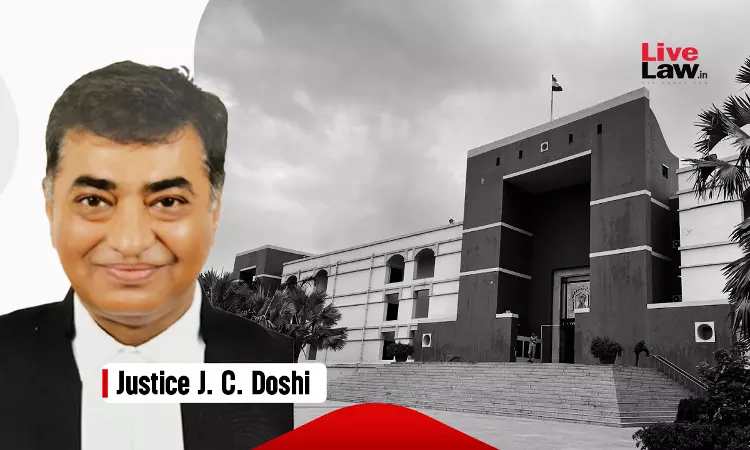
The Gujarat High Court has reaffirmed that a writ petition under Article 226 of the Constitution of India for the registration of a FIR is premature and not maintainable when an efficacious alternative statutory remedy is already available under the Bharatiya Nagarik Suraksha Sanhita, 2023 (BNSS).Consequently, Justice J.C. Doshi dismissed the petition seeking directions to the police to...
This is a premium content
Available exclusively to
Our subscribers
Subscribe Premium 
INR 1099+GST
Your support helps us to bring you more content at
an affordable subscription scheme !!!
All payment options available
The Gujarat High Court has reaffirmed that a writ petition under Article 226 of the Constitution of India for the registration of a FIR is premature and not maintainable when an efficacious alternative statutory remedy is already available under the Bharatiya Nagarik Suraksha Sanhita, 2023 (BNSS).
Consequently, Justice J.C. Doshi dismissed the petition seeking directions to the police to register a case against a former president of Gayatri Nagar Society over alleged illegal possession of a common plot allegedly belonging to the society
The High Court placed reliance on the Supreme Court ruling in Sudhir Bhaskarrao Tambe vs. Hemant Yashwant Dhage and others (2016) and the High Court ruling in Sujal Vishwas Attawar vs. State of Maharashtra (2026).
In the rulings, it was held, “The High Court is not bound to entertain a writ petition merely because a case of alleged inaction or negligence is made out against a statutory authority. Ordinarily, where a statute provides a complete and efficacious remedy, the same must be exhausted before invoking constitutional jurisdiction [See: Sakiri Vasu (supra) and Sudhir Bhaskarrao Tambe (supra)]. In the present facts, the complainant Company, has not exhausted the sequential statutory remedies available under BNSS. There is, therefore, no foundation to invoke the extraordinary jurisdiction of the High Court for the reason that efficacious and efficient alternative remedies exists. Hence, at this stage, we find the instant writ petition to be premature, and, therefore, not fit to be entertained.”
The precedents noted that the BNSS provides a “structured sequential mechanism” for initiating criminal prosecution, and that the complainant can approach the Superintendent of Police and later a Magistrate for registration of an FIR if the officer in-charge of a police station refuses to do so.
Observing that the petition failed to showcase any "special circumstances" to invoke the High Court's extraordinary jurisdiction under Article 226 of the Constitution of India, Justice Doshi dismissed the petition.
Tags


