



- Home
- /
- High Courts
- /
- Gujarat High Court
- /
- Gujarat High Court Calls For...
Gujarat High Court Calls For Central Govt Notification Under Hindu Succession Act To Protect Tribal Women's Property Rights
LIVELAW NEWS NETWORK
15 Sept 2026 1:10 PM IST
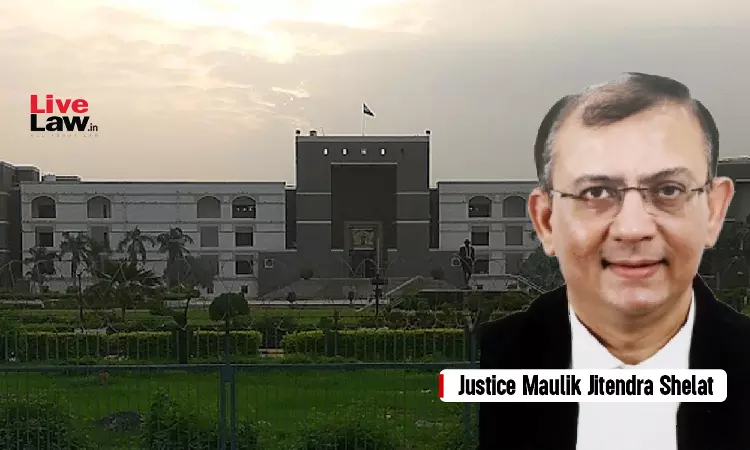
The Gujarat High Court has suggested that a notification be issued under the Hindu Succession Act so as to ensure protection of rights of Scheduled Tribe women as well as clear framework for the devolution of property of ST members who die intestate within the State, especially those who profess Hindu traditions. [2026 LiveLaw (Guj) 244]The court passed the order while hearing an appeal against...
This is a premium content
Available exclusively to
Our subscribers
Subscribe Premium 
INR 1099+GST
Your support helps us to bring you more content at
an affordable subscription scheme !!!
All payment options available
The Gujarat High Court has suggested that a notification be issued under the Hindu Succession Act so as to ensure protection of rights of Scheduled Tribe women as well as clear framework for the devolution of property of ST members who die intestate within the State, especially those who profess Hindu traditions. [2026 LiveLaw (Guj) 244]
The court passed the order while hearing an appeal against a trial court order which dismissed a man's suit challenging a will made by his deceased sister belonging to Scheduled Tribe community, who had bequeathed her inherited property to the defendant.
Justice Maulik J Shelat in his order said:
"Before parting with the matter, I deem it necessary to observe that, in order to prevent such type of disputes and conflicting claims arising upon the death of a member of a Scheduled Tribe, it is imperative that the State Government initiate necessary steps for the issuance of an appropriate notification by the Central Government under Section 2(2) of the Hindu Succession Act, 1956. Such a measure is essential to protect the equal property rights of tribal women and to provide a clear framework for the devolution of property of those dying intestate within the State especially those tribe which are profess Hindu traditions.
The Registry shall send a copy of this judgment to the Office of the Government Pleader, High Court of Gujarat, which, in turn, shall send it to the concerned Department of the State of Gujarat for onward action, as suggested supra, if they so desire".
The appellants are the legal heirs of the original plaintiff, and respondent Nos. 1 and 3 herein are the legal heirs of original defendant Nos.1 and 3, while the remaining respondents are original defendant Nos.2, 4 and 5.
The original plaintiff claimed to be the brother of one Chhaniben, who died issueless on 15.07.1991. Chhaniben was married to one Jivlabhai, who was holding agricultural lands by way of tenancy rights. Since Jivlabhai died issueless prior to Chhaniben, being his wife, she had inherited the suit properties, and her name was accordingly mutated in the revenue records.
Plaintiff claimed his sister Chhaniben executed one registered Will dated 24.07.1972 in favour of his son, Raysangbhai; the will was not brought on record.
Meanwhile Chhaniben executed registered Will dated 01.07.1991 in favour of the defendant and bequeathed her agricultural lands in favour of the defendant. Thus, Plaintiff filed a suit in 2002 seeking relief of declaration and injunction against the defendant.
He claimed that his sister Chhaniben had no right to execute a Will in favour of the defendant and this Will may be declared illegal. It was also prayed that, since the plaintiff happens to be the brother of Chhaniben, as a rule of survivorship, the plaintiff should be declared as the sole owner of the suit properties.
Thus the plaintiff sought a declaration that his sister Chhaniben had no right to execute a Will in favour of the defendant and, being the brother of deceased Chhaniben, as a rule of survivorship, he should be declared as the owner of her properties. The plaintiff had declared in the plaint that, since he belongs to the Scheduled Tribe (Chaudhari Community), exempted from paying any Court fees.
The trial court held that the plaintiff failed to prove the custom of his tribe whereby, he would only be entitled to inherit the property of his sister, Chhaniben, by the rule of survivorship. Accordingly, the Trial Court disbelieved the claim of the plaintiff; it however relied upon the tenets of old Hindu law, as the Hindu Succession Act, 1956 is not applicable to the parties.
According the Trial Court, as per old Hindu law, if any woman (widow) died issueless and had inherited the property from her husband, such property passed to the next heir of the male from whom she inherited it, i.e., the brother of her husband.
The Trial Court held that the plaintiff has admitted in his cross examination that Chhaniben's brother-in-law, namely, Kavlabhai, who happens to be the elder brother of her husband Jivlabhai, was alive at the time of her death. Thus as the reversioner of deceased Jivlabhai was alive at the time of death of Chhaniben, the plaintiff, being her brother, had no right to seek a declaration that he should be declared as the sole owner of the suit property as per the rule of survivorship and has no right to challenge the Will executed by Chhaniben.
The plaintiff claimed that deceased, Chhaniben, was a woman belonging to a Scheduled Tribe and, as per Section 2(2) of Hindu Succession Act the provisions of the Act, are not applicable to Scheduled Tribe.
The high court noted that the plaintiff had not specifically pleaded in the plaint and had failed to lead any evidence to show that any custom prevailing in the community of the parties (Tribal/Adivasi Chaudhari), whereby if a widowed sister dies issueless, her property which was inherited by her from her husband passes only to her brother.
Rather, the court said, defendant No.1's affidavit in examination in chief stated that since their community followed the Hindu tradition and as per tradition, Hindu Succession Act applied to their community, accordingly, Chhaniben became absolute owner of the suit properties.
However as the Act was not applicable to the parties and in absence of any custom under which plaintiff could seek declaration as a rule of survivorship that he should be declared sole owner being deceased's brother, the court said that it will decide the case based on principles of justice, equity and good conscience.
The court noted that admittedly Channiben inherited the property from her husband and she died issueless.
"Scheduled Tribe woman is entitled to inherit an equal share in the property of her ancestor who died intestate. Applying the aforesaid principle to the facts of the case, no gross error of law can be found in the finding of the fact recorded by the Courts below that Chhaniben inherited the suit property from her husband. Rather, it can be safely held that, once Chhaniben inherited the suit property from her husband, it became her self-acquired property. In such circumstances, she was not prohibited from executing the Will, inasmuch as no such custom was brought to the notice of the Courts below and/or this Court by the plaintiff, whereby she was prohibited to execute the Will of her property.
Apart from the aforesaid, it is an undisputed fact that the suit properties were originally acquired by Chhaniben's husband and Chhaniben, being the wife of Jivlabhai, inherited that properties, and both died issueless. In such a situation, the disposition of her property would be through execution of a Will or by the rule of survivorship if any prevailed as per their custom which also prevented her from executing the Will," the court added.
The court said that Channiben's Will in favour of defendant was duly proved before the trial court and effect of it will be that the defendant derived the suit properties by virtue of the Will and, as such, the name of the defendant was mutated in the revenue records without any objection.
The court said that admittedly Chhaniben's brother-in-law, Kavlabhai Chogda, was alive, who happens to be the elder brother of Chhaniben's husband. Since no custom was proved within Jivlabhai's tribe regarding the devolution of an issueless widow's property passes only in favour of her birth family, the plaintiff's prayer for a declaration of sole ownership under the doctrine of survivorship must fail, the court said.
The appeal was dismissed.
Case title: RANCHHODBHAI JESINGBHAI SINCE DEAD THROUGH HIS HEIRS AND LRS & ORS. v/s ANCHHIBHAI KAVJIBHAI CHAUDHARI SINCE DEAD THROUGH HIS HEIRS AND LRS & ORS
R/SECOND APPEAL NO. 500 of 202
Citation: 2026 LiveLaw (Guj) 244


