



- Home
- /
- High Courts
- /
- Gujarat High Court
- /
- Non-Consensus Between Parties Can't...
Non-Consensus Between Parties Can't Justify 7-Year Delay In Filing Appeal: Gujarat High Court
LIVELAW NEWS NETWORK
6 Oct 2026 1:29 PM IST
The Gujarat High Court refused to condone delay of over 7 years in filing an appeal against a trial court order concerning a civil suit, observing that non-consensus between petitioners over filing of appeal as well as Covid-19 pandemic were not sufficient causes to condone delay. [2026 LiveLaw (Guj) 272]The court was hearing a plea challenging an appellate court order which had dismissed...
This is a premium content
Available exclusively to
Our subscribers
Subscribe Premium 
INR 1099+GST
Your support helps us to bring you more content at
an affordable subscription scheme !!!
All payment options available
The Gujarat High Court refused to condone delay of over 7 years in filing an appeal against a trial court order concerning a civil suit, observing that non-consensus between petitioners over filing of appeal as well as Covid-19 pandemic were not sufficient causes to condone delay. [2026 LiveLaw (Guj) 272]
The court was hearing a plea challenging an appellate court order which had dismissed the petitioners appeal noting that it had been filed with an inordinate delay of over seven years.
The petitioners said that the appellate court had taken a very hyper-technical approach while not condoning the delay occurred in filing regular civil appeal by the petitioners, which resulted into miscarriage of justice.
It was submitted that due to COVID-19 and subsequent death in the family, the petitioners could not approach the Appellate Court in time and as such, there was no mala fide intention on the part of petitioners not to file appeal within short period of time.
Meanwhile the respondent submitted that the judgment and decree was passed by Trial Court in 2017, whereas the appeal was filed by the petitioners in 2024. It was submitted that petitioner No.1 is an advocate and despite that the petitioners sat tight over the matter for more than 7 years, which shows sheer negligence on the part of the petitioners not to prefer an appeal without any justifiable reason.
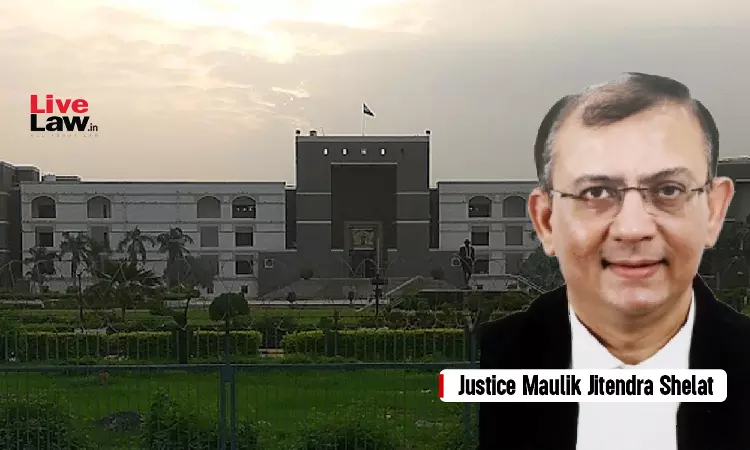
Justice Maulik J Shelat in his order observed that undisputedly the trial court order was passed in 2017 and for over 7 years, the petitioners did not challenge the order before the appellate court. The court after perusing the appellate court order and taking note of the fact that there is no sufficient cause made out, it held that the Appellate Court has correctly not entertained the delay application.
"The Appellate Court has observed that since applicant / petitioner No.1 is a lawyer, he could have preferred the appeal alone by joining other co-plaintiffs as respondents if there was no consensus arrived at between the plaintiffs to prefer an appeal, but this cannot be a reason to delay in filing the appeal. According to me, no fault can be found with the Appellate Court.
So far as the unfortunate death of son of petitioner No.2 is concerned, that was happened on 12.04.2021, after about 4 years from the passing of the decree, and it has no direct bearing for causing delay in filing the appeal. Even after such death also, the petitioners took almost 3 years to prefer the appeal. Likewise, COVID-19 came in the year 2020, whereas the Trial Court's judgement/decree passed in the year 2017," the court said.
Considering the facts and circumstances of the case at hand, the Court was of the view that "due to sheer negligence" on the part of petitioners, they could not prefer the appeal in time. It said that the petitioners filed the appeal without any sufficient cause after an "inordinate delay", i.e., after more than 7 years.


