



- Home
- /
- High Courts
- /
- Gujarat High Court
- /
- 'Tactic To Delay Trial': Gujarat...
'Tactic To Delay Trial': Gujarat High Court Rejects Rape Accused's Objection To 'Leading' Question Put To Victim
LIVELAW NEWS NETWORK
15 April 2026 6:00 PM IST
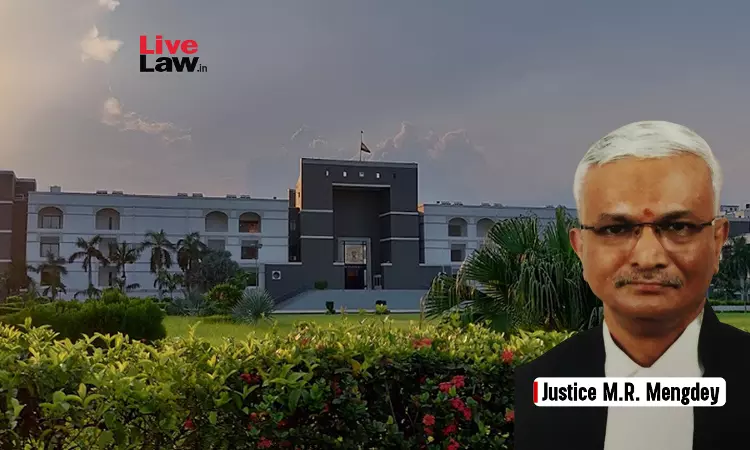
The Gujarat High Court upheld a trial court order which dismissed a rape accused's objection to a question posed by the prosecution to the victim during trial, claiming it was a leading question. In doing so the court found that the question was not a leading question after noting that the victim's answer could have been anything. It further agreed with the State's submission that the...
This is a premium content
Available exclusively to
Our subscribers
Subscribe Premium 
INR 1099+GST
Your support helps us to bring you more content at
an affordable subscription scheme !!!
All payment options available
The Gujarat High Court upheld a trial court order which dismissed a rape accused's objection to a question posed by the prosecution to the victim during trial, claiming it was a leading question.
In doing so the court found that the question was not a leading question after noting that the victim's answer could have been anything. It further agreed with the State's submission that the accused's plea was nothing but a "tactic to delay the trial".
The petitioner–accused of rape–had challenged a trial court order rejecting his objection raised to a question posed by the public prosecutor to the victim during her examination-in-chief, which the accused claim was a leading question.
Meanwhile the State argued that the present petition was nothing but a tactic to delay the trial, adding that the questions which were put by the prosecution to the witness were not leading questions, and thus the objections raised by the petitioner were rightly discarded.
Perusing the deposition of the victim before the trial court, Justice MR Mengdey noted that the deposition was not recorded in 'Question-Answer' form.
"In reply to the questions put to her by the public prosecutor, the victim had replied that Deep, i.e. the petitioner herein, had promised her of marriage and had established physical relations with her, she was knowing Deep, because he was studying in her college in third year B.Sc. Thereafter, she was asked, “as to what had happened thereafter”, to which, she had replied that, “Deep had also gone to her house, where they were sitting together, where, Deep insisted”. Thereafter, the public prosecutor asked the victim, “he insisted for what?”, to which she replied, “he insisted for physical relations”. After giving this reply, she had stopped, and therefore, the public prosecutor had put the next question to her about her reply to the petitioner.
It was only after the victim had given her reply that the question was objected by the petitioner. This court is at a loss to understand as to how the question put by the public prosecutor to the victim, can be said to be a leading question. The reply to the question could be anything. The answer favouring prosecution was not the only possible answer and this fact was also known to the defence and therefore, the objection was raised only after the witness had replied to the question. Had the question been, “as to whether she agreed for it or not”, then it could, arguably, be said to be a leading question, as the question itself would have prompted the reply. The question, which is put by the public prosecutor to the victim, cannot be said to be of a nature, which would enable the witness to give the evidence, which the public prosecutor wishes to elicit from the witness".
The court said that the Supreme Court in Varkey Joseph v/s State of Kerala (1993) had held that the question shall not be put to enable the witness to give evidence which the prosecutor wishes to elicit from the witness nor shall the prosecutor put into witness's mouth the words which he hoped that the witness will utter.
In the present case, the court found that there was no such eventuality which appeared to be arising out of the question put by the public prosecutor to the victim.
"Learned APP appears to be right in contending that the present petition appears to be a tactics to further delay the trial of the offence. Having regard to these aspects, no case is made out," the court said.
During the course of trial before the Sessions Court, the public prosecutor had during the victim's examination-in-chief had asked “what happened thereafter”, to which she replied, “Deep also came to his house at Dandiabazaar, where they sat together and Deep insisted”. The public prosecutor put another question, “insisted for what?”, to which the victim had replied, “for physical relations”. Thereafter, the public prosecutor asked the victim, “what did you tell him?".
The petitioner's objected to the last question contending that it sought to ask a leading question which cannot be asked by the prosecution to a witness. At that time, the Sessions Court said that the decision regarding the admissibility of the question shall be decided at the time of final disposal of the case.
Against this the petitioner moved the high court which had asked the Sessions Court to decide the aspect of admissibility of the question within 7 days, in view of Criminal Trials Guidelines regarding Inadequacies and Deficiencies v. State of Andhra Pradesh and Others.
Pursuant to this, the Sessions court has disallowed the objection raised by the petitioner on 13.02.2026; against this the petitioner moved the high court.
The petitioner's counsel submitted that the question posed by the prosecution to the victim amounted to a leading question which is not permissible under Sections 141, 142 and 145 Indian Evidence Act.
He further submitted that, by putting the question the prosecution wanted to elicit a reply, desired by it, from the witness, which is not allowed. Further while disallowing the objections raised by the petitioner, the Sessions Court did not provide any cogent reasons.
The petition was dismissed.
Case title: DEEP JAYESHBHAI INDRAVADAN SONI v/s STATE OF GUJARAT
R/SPECIAL CRIMINAL APPLICATION (QUASHING) NO. 4123 of 2026
Click Here To Read/Download Order
Citation: 2026 LiveLaw (Guj) 122
Tags


