



- Home
- /
- High Courts
- /
- Gujarat High Court
- /
- Adani Defamation Case: Gujarat High...
Adani Defamation Case: Gujarat High Court Closes Ravi Nair's Plea Against NBW After Regular Bail Granted By Sessions Court
LIVELAW NEWS NETWORK
30 Sept 2026 12:23 PM IST
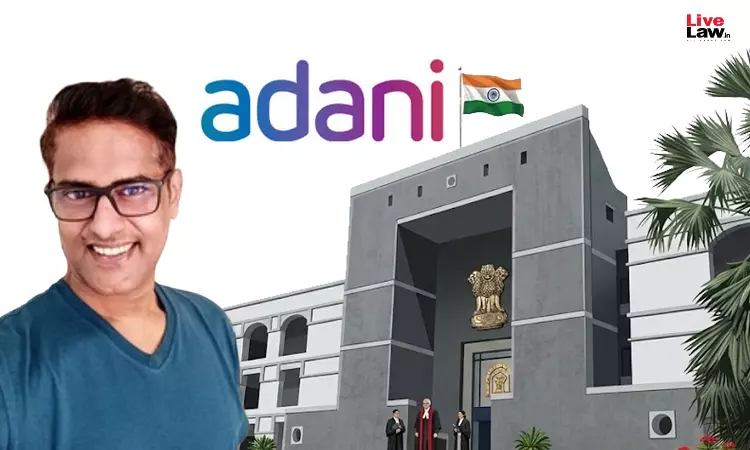
The Gujarat High Court on Wednesday (September 30) closed journalist Ravi Nair's plea challenging his arrest on the strength of a non-bailable warrant was issued by a sessions court for non-appearance in a defamation case filed by Adani Enterprise. [2026 LiveLaw (Guj) 265]This, after the court noted, that the sessions court had last week granted regular bail to Nair. For context,...
This is a premium content
Available exclusively to
Our subscribers
Subscribe Premium 
INR 1099+GST
Your support helps us to bring you more content at
an affordable subscription scheme !!!
All payment options available
The Gujarat High Court on Wednesday (September 30) closed journalist Ravi Nair's plea challenging his arrest on the strength of a non-bailable warrant was issued by a sessions court for non-appearance in a defamation case filed by Adani Enterprise. [2026 LiveLaw (Guj) 265]
This, after the court noted, that the sessions court had last week granted regular bail to Nair.
For context, Adani Enterprises Ltd filed the criminal defamation case alleging that Ravi Nair published and disseminated a series of tweets containing false and defamatory statements intended to damage the reputation of AEL and the Adani Group.
Notably, a Sessions Court in Gandhinagar on September 24 had granted regular bail to Nair.
Before the high court, Nair had challenged a September 17 order by the appellate court i.e. sessions court which rejected his plea for cancellation of NBW and directed that he be sent to jail. He had also challenged a September 3 order by which the appellate court held that Nair is an absconder and is absconding himself to avoid arrest in any offence.
He also sought restoration of a March 9 order wherein his sentence was suspended and he was released on bail.
Justice MK Thakker had however noted that Nair failed to disclose that he had simultaneously filed a bail application before the session court.
While dictating the order the judge said:
"The conduct of the learned advocate gives an impression that petitioner had attempted to adopt hide and seek approach and to pursue pick and choose matter before this court. As settled law by the Hon'ble Apex Court...a party invoking extra ordinary jurisdiction of this court is expected to approach the court with utmost candour, frankness and openness. Party is under obligation to disclose all material facts without any reservation even if such facts are adverse to its case. Suppression or concealment or distortion of material fact would seriously impede proper exercise of writ court and would render adjudicatory process difficult.
During course of hearing it was sought to be contended that no prejudice was caused to this court on account of non-disclosure of above facts. Such a submission cannot be expected. It is not for the learned advocate or the party to decide whether particular fact is material or immaterial for adjudication of the proceedings. It is for the court to determine the relevancy of facts before it. The duty of candour requires full disclosure of all material facts. Suppression or concealment of material facts is not an aspect of advocacy rather amounts to attempt at manipulation and misrepresentation of the judicial process which can have no place in exercise of equitable, extraordinary jurisdiction"
The court during pronouncement said that decision of Inder Mohan judgment was considered where Supreme Court had held that NBW should only be issued when summons is unlikely to have desired results.
It further in its order said, "Matter was being considered on merits. However it was informed by the learned advocate for petitioner that after matter was kept for dictation, there has been subsequent development where learned court has released the petitioner on regular bail while allowing the application under Section 483 BNSS vide order dated 24-09-2026 and has also restored order...dated 09-03-2026. In view of above subsequent development this court refrains from passing any order on merits of the matter and making any observation with regard to the impugned order. Hence this petition is disposed of accordingly".
On 10.02.2026, the Judicial Magistrate First Class, Mansa held Nair guilty of the offence of defamation, convicted and sentenced him to undergo simple imprisonment for a term of one year and to pay a fine of Rs. 5,000. Against which Nair had moved an appeal before the sessions court. On March 9 order his sentence was suspended by the sessions court and he was released on bail.


