- Home
- /
- High Courts
- /
- Gujarat High Court
- /
- Suo-Motu Land Proceedings By...
Suo-Motu Land Proceedings By Revenue Authorities After 11-Year Delay Arbitrary, Can't Annull Sale Deed: Gujarat High Court
Ananya Tangri
8 March 2026 2:05 PM IST
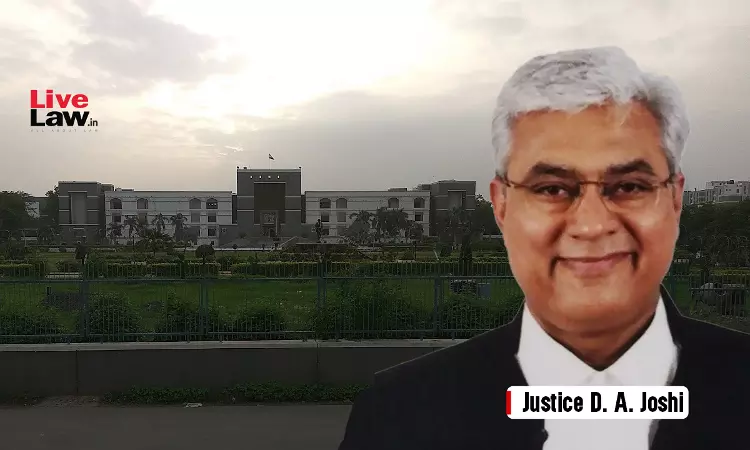
The Gujarat High Court quashed orders of revenue authorities vesting agricultural land in the State, holding that initiation of suo motu proceedings after an unexplained delay of 11 years was arbitrary and beyond the scope of the powers under the Bombay Land Revenue Code.Justice Divyesh A. Joshi observed that the revenue authorities had exercised powers in a manner contrary to settled...
This is a premium content
Available exclusively to
Our subscribers
Subscribe Premium 
INR 1099+GST
Your support helps us to bring you more content at
an affordable subscription scheme !!!
All payment options available
The Gujarat High Court quashed orders of revenue authorities vesting agricultural land in the State, holding that initiation of suo motu proceedings after an unexplained delay of 11 years was arbitrary and beyond the scope of the powers under the Bombay Land Revenue Code.
Justice Divyesh A. Joshi observed that the revenue authorities had exercised powers in a manner contrary to settled legal principles governing delayed exercise of revisional jurisdiction.
Quoting Supreme Court's ruling in Dehri Rohtas Light Railway Co. Ltd. v. District Board, Bhojpur (1992), the Court noted the law as under,
“… delayed exercise of revisional jurisdiction is frowned upon because if actions or transactions were to remain forever open to challenge, it will mean avoidable and endless uncertainty in human affairs, which is not the policy of law… even when there is no period of limitation prescribed for exercise of such powers, the intervening delay may have led to creation of third-party rights that cannot be trampled by a belated exercise of discretionary power, especially when no cogent explanation for the delay is in sight.”
The high court thus held that the case before it was also similar in facts and the same legal reasoning would apply to it. It said,
"In the present case also there is delay of 11 years in initiating suo-motu proceedings after the certification of Entry No.650 in the year 1992 in favour of the writ applicants. Therefore, facts in the present case and facts of the aforequoted decisions of the Apex Court are similar in nature so far as the nature of the dispute and the extent of delay are concerned. Hence, even in this case, it can safely be said that exercise of power by the Assistant Collector tantamounts to arbitrary and illegal exercise of such power".
Background
The case concerns a land at Village Ghanshyampur, District Surendranagar, which was originally recorded in the name of one Raja Bechar in the revenue records. In 1990, the writ applicants purchased the land from the legal heirs of Raja Bechar through a registered sale deed. Pursuant to the transaction, revenue records were accordingly mutated on 21 September 1991 and the entry was certified on 24 May 1992.
More than a decade later, in January 2003, the Assistant Collector issued a notice of default (“Sharat Bhang”) to the writ applicants, contending that the land was new tenure land and that its transfer without prior permission was illegal. By order dated 30 November 2006, the Assistant Collector declared the transaction to be in breach of conditions and ordered the land to vest in the State Government.
The purchasers challenged the order before the Collector, Surendranagar, who dismissed their appeal. A revision filed before the Special Secretary (Appeals), Revenue Department (SSRD) was also rejected by order dated 30 May 2012, leading the petitioners to approach the High Court through the present writ petition.
Appearing for the petitioners, Advocate Pitambar Abhichandani argued that the proceedings were initiated after an inordinate delay of almost eleven years, which itself rendered the action illegal. It was argued that the land originally belonged to Raja Bechar and was old tenure land, and therefore no permission was required for its transfer. The advocate also submitted that the revenue record, including the Form 7/12 extracts, nowhere indicated that the land was of new tenure.
The petitioners further argued that Section 79A of the Bombay Land Revenue Code does not empower authorities to confiscate land or annul registered transactions, but merely permits summary eviction of unauthorized occupants. In this regard, reliance was placed on decisions of the High Court holding that “Section 79A does not provide for forfeiture or vesting of land in the State.”
It was also submitted that the petitioners were bona fide purchasers holding title under a valid registered sale deed, and unless such deed was set aside by a competent civil court, the revenue authorities could not declare them unauthorized occupants.
Opposing the petition, Assistant Government Pleader Advocate Surbhi Bhati submitted that the land was originally Government waste land allotted to Raja Bechar on 'Santhni' basis, which by its nature was new tenure land. The State relied on precedent observing that “a 'santhani' land owned by the Government cannot be transferred to any other person”, and contended that the authorities had rightly treated the transaction as a breach of conditions.
After hearing both sides, the Court held that the delay of 11 years in initiating suo motu proceedings was fatal, observing that settled legal positions cannot be unsettled after long periods of inaction. The Bench noted that the mutation entry in favour of the petitioners had remained on record since 1992, and the revenue authorities had full knowledge of the entry during that period.
The Court further held that the Assistant Collector had exceeded the scope of powers under the Bombay Land Revenue Code by ordering vesting of the land in the State. The Court observed that ordering land purchased through a registered sale deed to vest in the State would effectively amount to annulment of the sale deed, which revenue authorities have no power to do.
Emphasising this limitation, the Court noted, “The revenue authorities cannot unilaterally annul sale deeds even if fraud is alleged; such matters must go to a civil court.”
The Court also found that the revenue records did not reflect that the land was new tenure land, and that the petitioners had purchased the land after verifying the revenue entries.
Accordingly, the High Court quashed and set aside the order dated 30 May 2012 passed by the Special Secretary (Appeals), Revenue Department which had confirmed the orders of the Collector and Assistant Collector.
Case Title: Koli Parshottambhai Narsinhbhai & Anr. v. State of Gujarat Through Secretary (Appeals) & Ors.
Case No.: R/Special Civil Application No. 253 of 2013
Appearance: Ms. Kitty S. Mehta for the Petitioners; Ms. Surbhi Bhati, Assistant Government Pleader for the Respondents.
Click Here To Read/Download Order
Citation: 2026 LiveLaw (Guj) 78
Tags