



- Home
- /
- High Courts
- /
- Gujarat High Court
- /
- Waqf Tribunal Can't Exercise...
Waqf Tribunal Can't Exercise Supervisory Powers Over Waqf Board: Gujarat High Court
LIVELAW NEWS NETWORK
14 Oct 2026 4:20 PM IST
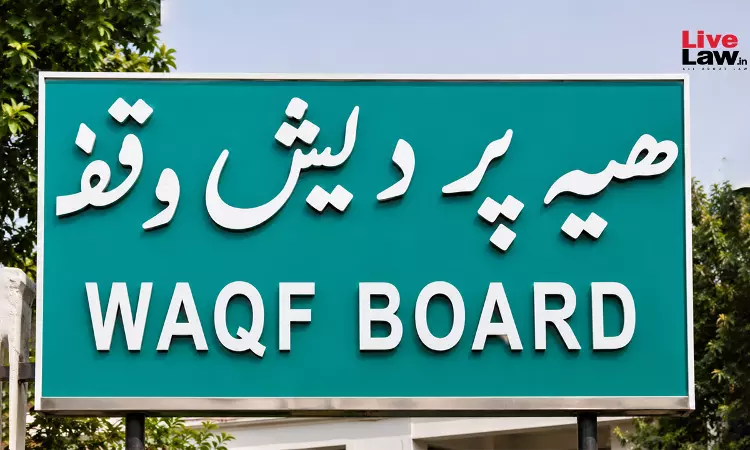
The Gujarat High Court has held that State Waqf Tribunal's powers are adjudicatory in nature and thus it cannot exercise supervisory powers over the State Waqf Board concerning the management of a Waqf trust. [2026 LiveLaw (Guj) 284]The court was hearing the Muttawali (manager) of Junagadh Suryawad Memon Jamat, a Trust, who had challenged an order of the Gujarat State Waqf Tribunal...
This is a premium content
Available exclusively to
Our subscribers
Subscribe Premium 
INR 1099+GST
Your support helps us to bring you more content at
an affordable subscription scheme !!!
All payment options available
The Gujarat High Court has held that State Waqf Tribunal's powers are adjudicatory in nature and thus it cannot exercise supervisory powers over the State Waqf Board concerning the management of a Waqf trust. [2026 LiveLaw (Guj) 284]
The court was hearing the Muttawali (manager) of Junagadh Suryawad Memon Jamat, a Trust, who had challenged an order of the Gujarat State Waqf Tribunal issuing directions for taking possession of the books of accounts, records, movable and immovable properties of the Waqf.
The Tribunal also directed the Waqf Board and its Chief Executive Officer to initiate criminal proceedings against the appellant and six other members. Against this the appellant had moved the high court.
Justice Mool Chand Tyagi perused the directions issued by the Waqf Tribunal and observed that at first blush the directions appear to have been issued in the interest of the Trust to ensure proper management of the Trust, its properties and accounts.
The court however said that it cannot lose sight of the fundamental principle that the Waqf Tribunal is a creature of the statute and derives its jurisdiction and powers therefrom; thus it has to act strictly within the four corners of the Waqf Act and cannot assume unto itself powers which have not been conferred upon it by the Legislature.
"The jurisdiction vested in the learned Tribunal is essentially adjudicatory in nature. It is not a supervisory authority over the Waqf Board nor has the Act conferred upon it any general power of superintendence over the functioning of the Waqf Board or its statutory authorities. The supervisory and administrative powers contemplated under the Act are vested in the Waqf Board, whereas the learned Tribunal is required to exercise the jurisdiction specifically conferred upon it by the statute. Consequently, however well-intentioned a direction may be, the same cannot be sustained merely on the ground that it is intended to secure proper administration of the Waqf, if such direction travels beyond the statutory jurisdiction vested in the learned Tribunal," the court held.
The court referred to the scheme of the Act and said that the primary power and responsibility for the management, administration and control of the affairs of a Waqf are vested in the Waqf Board.
The Waqf Board is empowered to take appropriate measures for remedying mismanagement and maladministration and, where warranted in accordance with law, to issue appropriate directions, including orders of supersession. The Act further empowers the Waqf Board to issue such directions as may be necessary for the proper, effective and smooth administration of the Waqf.
"In particular, Sections 32 and 67 of the Act deal with the powers of the Waqf Board in relation to the administration, management and control of Waqfs. Section 70 of the Act specifically empowers the Waqf Board to conduct an inquiry into the administration of a Waqf. Where a complaint is received regarding the administration of a Waqf, the Waqf Board may initiate an inquiry and, upon being satisfied that there are reasonable grounds for believing that the affairs of the Waqf are being mismanaged, may take such action as it deems appropriate in accordance with the provisions of the Act. Thus, the statutory scheme itself draws a clear distinction between the adjudicatory jurisdiction of the Waqf Tribunal and the supervisory, administrative and regulatory powers vested in the Waqf Board," the court said.
The high court said that the Tribunal, while exercising its jurisdiction under Section 83 ( to adjudicate waqf disputes) cannot assume to itself the powers which the Legislature has specifically entrusted to the Waqf Board.
With respect to the present case the court noted that despite the provisions contained in the bye-laws of the Wakf requiring elections to the office of Trustees to be conducted every year, no such elections were conducted since 1996. Further, numerous complaints were submitted to the Waqf Board by respondent Nos.5 to 9 as well as by other independent persons concerning the administration and management of the Waqf. However, the Waqf Board did not take any effective steps.
"The aforesaid circumstances do not present a satisfactory picture with regard to the functioning of the Waqf Board. The material on record prima facie indicates that the Waqf Board has not discharged its statutory functions in the manner contemplated by the Act, particularly in relation to the proper administration, management and protection of the Waqf and its properties. At the same time, the aforesaid lapses on the part of the Waqf Board cannot, by themselves, confer upon the learned Tribunal a jurisdiction which is otherwise not vested in it by the statute. The failure of a statutory authority to discharge its duties in accordance with law cannot be a ground for another statutory authority to assume powers which have not been conferred upon it. The remedy for such failure must necessarily be worked out within the statutory framework," the court said.
This Court said that it expects and trusts that the Waqf Board shall henceforth discharge its statutory functions with due diligence and strictly in accordance with the provisions of the Act and the Rules framed thereunder. At the same the court said that the Tribunal, while exercising its adjudicatory jurisdiction, could not have assumed the supervisory and administrative powers specifically vested in the Waqf Board under the Act.
It thus set aside the Tribunal's order. It further remanded the matter back to the Gujarat State Waqf Board with a direction to undertake and complete the requisite proceedings in accordance with law within three months.
The court directed the board to conduct an inquiry into the complaints received by it strictly in accordance with the procedure prescribed under the Waqf Act, 1995 and the Rules framed thereunder, after affording due opportunity to all concerned persons. Thereafter the Waqf Board shall take appropriate action as necessary for the proper administration, management and protection of the Waqf.


