



- Home
- /
- High Courts
- /
- Himachal Pradesh High Court
- /
- Co-Employee Cannot Challenge...
Co-Employee Cannot Challenge Colleague's ACR Grading Merely Because It Led To Supersession In Promotion: HP High Court
LIVELAW NEWS NETWORK
7 Sept 2026 2:05 PM IST
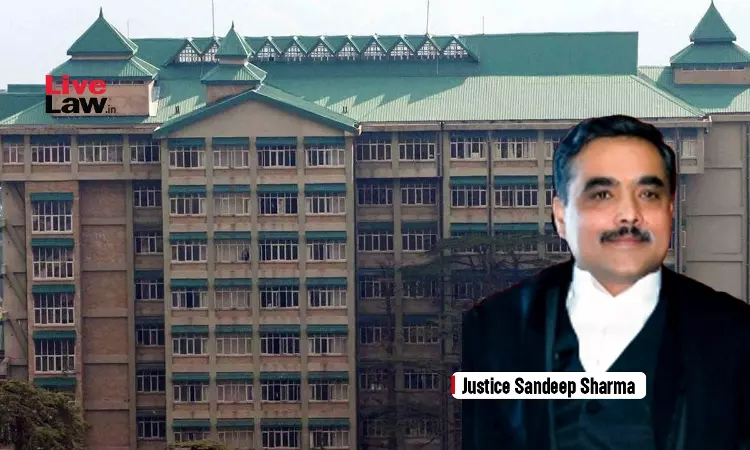
The Himachal Pradesh High Court has held that a co-employee has no locus standi to challenge the ACR grading of a colleague merely because the latter's higher grading has resulted in his or her supersession in promotion. The Court observed that where the colleague had been graded “Outstanding” by the competent authorities, a rival employee cannot seek interference with such ACRs in...
This is a premium content
Available exclusively to
Our subscribers
Subscribe Premium 
INR 1099+GST
Your support helps us to bring you more content at
an affordable subscription scheme !!!
All payment options available
The Himachal Pradesh High Court has held that a co-employee has no locus standi to challenge the ACR grading of a colleague merely because the latter's higher grading has resulted in his or her supersession in promotion.
The Court observed that where the colleague had been graded “Outstanding” by the competent authorities, a rival employee cannot seek interference with such ACRs in the absence of any legally enforceable right to question the assessment.
Justice Sandeep Sharma remarked that: “Once respondent No.7 has been graded as 'Outstanding', keeping in view the 'Very Good' given in the rating by the reporting authority as well as by the reviewing authority, no interference is called for by this Court at the instance of the petitioner who has no locus to challenge the ACRs of his colleagues.”
Background:
The petitioner, Dr. Mukesh Surya, challenged the promotion of respondent No.7, Dr. Shikha Sood, to the post of Assistant Professor in Radiology at IGMC Shimla. He alleged that her ACRs had been upgraded from “Very Good” to “Outstanding”, enabling her to supersede him despite his seniority. The petitioner sought quashing of the upgraded ACRs and the 2015 DPC proceedings, along with a direction for convening a review DPC.
In the 2015 DPC, four eligible doctors were considered for two posts. While the petitioner was assessed as “Very Good”, Dr. Sood was assessed as “Outstanding” and placed above him, resulting in her promotion.
The Court held that the petitioner had no locus standi to challenge the ACRs of his colleague. It observed that Dr. Shikha Sood had been graded “Outstanding” after taking into account the “Very Good” assessments recorded by the Reporting and Reviewing Authorities, and there was no basis for the Court to interfere with her ACRs at the instance of the petitioner.
The Court further rejected the allegation of mala fides or collusion between the authorities and respondent No.7, noting that the petitioner had failed to place any material on record substantiating such allegations. In the absence of supporting material, the Court held that an inquiry could not be ordered merely at the asking of the petitioner.
The Court also found the petition to be barred by delay and laches. It did not accept the petitioner's claim that he became aware of his supersession only in September 2020, particularly when the relevant information was available to another similarly situated doctor as early as 2017.
Accordingly, the Court dismissed the writ petition on the grounds of locus standi as well as delay and laches, with no order as to costs.
Case Name: Dr.Mukesh Surya v/s State of H.P. & ors.
Case No.: CWP No.5569 of 2020
Date of Decision: 05.08.2026
Tags


