



- Home
- /
- High Courts
- /
- Himachal Pradesh High Court
- /
- Claim To Be 'Sole Hereditary...
Claim To Be 'Sole Hereditary Pujari' Of Temple Can't Be Decided In Writ Petition: HP High Court Upholds Rejection Of Man's Plea
LIVELAW NEWS NETWORK
7 April 2026 11:30 AM IST
The Himachal Pradesh High Court upheld an order rejecting a man's writ petition to be declared the sole hereditary pujari/priest of a temple to the exclusion of the co-priests noting that such a claim cannot be decided in a writ jurisdiction and can only be decided by a civil court. The court was hearing a man's appeal challenging a single judge's order which had rejected a petition by...
This is a premium content
Available exclusively to
Our subscribers
Subscribe Premium 
INR 1099+GST
Your support helps us to bring you more content at
an affordable subscription scheme !!!
All payment options available
The Himachal Pradesh High Court upheld an order rejecting a man's writ petition to be declared the sole hereditary pujari/priest of a temple to the exclusion of the co-priests noting that such a claim cannot be decided in a writ jurisdiction and can only be decided by a civil court.
The court was hearing a man's appeal challenging a single judge's order which had rejected a petition by the appellant's predecessor in interest i.e., his father (writ petitioner).
Before the single judge, the appellant's father sought be declared as the "sole Pujari" of the Shri Shiv Mandir Nayas, Mahakal Tehsil Baijnath in District Kangra, while seeking exclusion of his brothers (respondents No. 5 to 7) based on custom and a Will, claimed to have been executed by the father of the petitioner and his brothers.
The single judge had held that this claim cannot be determined in writ jurisdiction under Article 226.
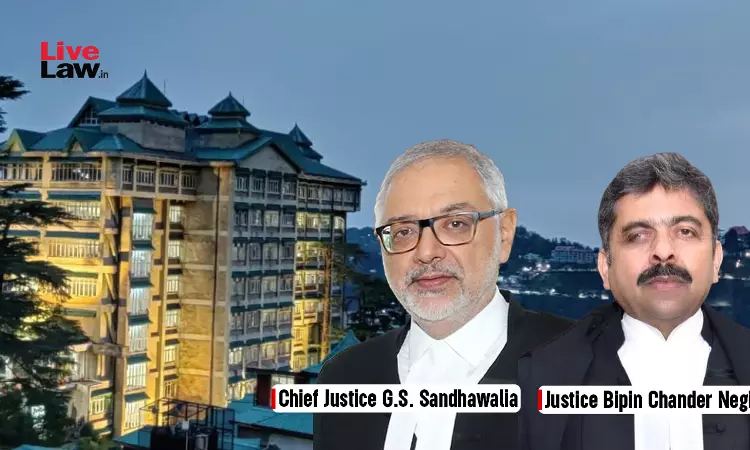
A division bench of Chief Justice GS Sandhawalia and Justice Bipin Chander Negi noted that the appellant's father (writ petitioner before single judge) cannot now lay claim to being the Mohtamin (manager) as it was clearly barred by the law of limitation.
The bench noted that the temple was taken over by the State Government in 2006 and thereafter the revenue entry of "Mohtamin and Pujari" was deleted from the revenue records and replaced by “Shri Mahakal Mandir Nayas”.
The bench said:
"The plea of being a Mohtamin could have only been taken within 12 years of the same having been denied in terms of Article 107 of the Limitation Act. Besides the aforesaid, as correctly noticed by the learned single judge the claim of being the sole hereditary pujari and the exclusion of respondents 5 to 7 as co-pujaris raised in the case at hand can be only tried by a Civil Court (alternate remedy) and disputed questions of fact cannot be raised or decided in a writ petition. Now at this belated stage the attempt made to raise a claim of the writ petitioner being a Mohtamin of the temple in question, for the reasons mentioned hereinabove, cannot be allowed.In the aforesaid backdrop a reference to the nature of office of a mohtamin and the provisions of the Himachal Pradesh Hindu Public Religious Institutions and Charitable Endowments Act, 1984 made by the appellant shall be an academic exercise in futility, of no relevance and a sheer waste of judicial time"
Background
The duty roster of the hereditary Pujaris–the writ petitioner and his brothers (respondents No. 5 to 7) had been fixed which was the subject matter of challenge in a 2016 writ petition.
The father of the petitioner and respondents No. 5 to 7 had been recorded as vahetman Mohtamin. Subsequent to his death, the writ petitioner, being the elder son, was appointed as Mohatmim/Manager of the temple by the Deputy Commissioner vide letter dated 11.10.1983. Accordingly, mutation was also attested in the revenue record dated 23.10.1991 in favour of the writ petitioner.
Thereafter on 09-03-2006 the State Government through a notification under the Himachal Pradesh Hindu Public Religious Institutions and Charitable Endowments Act took over the temple and a temple trust was formed for the smooth functioning of the temple and thereafter the Pujaris were being given an equal share. The aforesaid revenue record pertaining to Mohatmim and Pujari was deleted from the revenue records and replaced with “Shri Mahakal Mandir Nayas”.
A Committee (constituted after high court's decision in 2016 writ petition) recommended to continue with the system of month-wise rotation of Puja by all the stakeholders as per the orders issued by the Assistant Commissioner (Temple-cum-SDO Civil, Baijnath) dated 2.11.2013. The recommendations were accepted vide order dated 26.6.202. Thereby, the hereditary claim of the writ petitioner along with his brothers i.e. respondents No. 5 to 7 as being Pujaris in terms of Section 21 of the Act has been recognized.
The appellant's father filed a writ petition before single judge challenging the minutes of the meeting dated 28.3.2024 and the subsequent order accepting the same dated 26.6.2024. The writ petitioner claimed himself to be the sole Pujari and sought entitlement to the entire 40% of the collection being distributed amongst the writ petitioner and respondents No. 5 to 7. From the affidavit filed, it was evident that the writ petitioner claimed himself to be the Pujari of the temple and the claim as such was only limited to that of being a Pujari.
The court dismissed the appeal.
Case title: Hari Ram (deceased) through LRs v/s State of HP and others
LPA No.488 of 2024


