



- Home
- /
- High Courts
- /
- Himachal Pradesh High Court
- /
- Parole Cannot Be Denied Merely...
Parole Cannot Be Denied Merely Because Convict Is Citizen Of Nepal When Family Residing In India For Decades: HP High Court
LIVELAW NEWS NETWORK
15 Sept 2026 10:45 AM IST
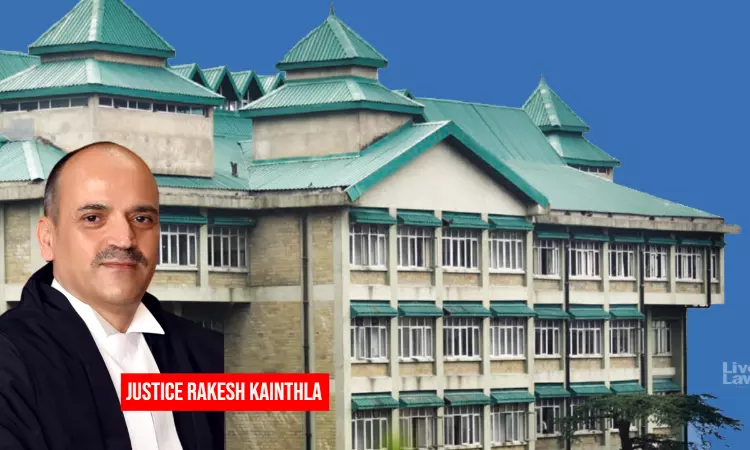
The Himachal Pradesh High Court has held that a convict's Nepalese citizenship, by itself, cannot be a ground to deny parole when his family has been residing in India for several decades. The Court observed that where the prisoner's family has established long-standing residential and social ties in India, and his conduct in custody is satisfactory, apprehensions of absconding to Nepal...
This is a premium content
Available exclusively to
Our subscribers
Subscribe Premium 
INR 1099+GST
Your support helps us to bring you more content at
an affordable subscription scheme !!!
All payment options available
The Himachal Pradesh High Court has held that a convict's Nepalese citizenship, by itself, cannot be a ground to deny parole when his family has been residing in India for several decades.
The Court observed that where the prisoner's family has established long-standing residential and social ties in India, and his conduct in custody is satisfactory, apprehensions of absconding to Nepal cannot justify rejection of parole.
Justice Rakesh kainthla remarked that: “the parole could not have been rejected on the ground that the petitioner is a citizen of Nepal when his family members are residing at Nanital for 30-35 years.”
Background
The petitioner, Vicky Rana, a life convict in FIR No. 10 of 2013 registered at Police Station Bagga, Himachal Pradesh, challenged the order dated 23 June 2026 rejecting his application for parole. He sought temporary release to meet his family members, who had been residing in Nainital for 30–35 years.
The State opposed the plea, contending that the petitioner was a citizen of Nepal, had been convicted of a heinous offence and could abscond to Nepal if released. The petitioner, however, relied on the fact that his parents had constructed a house and purchased property in Nainital, and that his conduct in custody had remained satisfactory.
The Himachal Pradesh High Court set aside the rejection of parole, holding that the petitioner's Nepalese citizenship could not, by itself, justify denial of temporary release. The Court relied on its earlier decision in Arjun v. State of H.P., which held that parole can be refused only on the statutory grounds of release being likely to endanger the security of the State or prejudice the maintenance of public order.
The Court also emphasised the reformative and rehabilitative purpose of parole. Relying on the Supreme Court's decision in Asfaq v. State of Rajasthan, it observed that parole enables a prisoner to maintain family and social ties and facilitates rehabilitation. The petitioner's custody certificate also recorded his conduct and behaviour as satisfactory.
The Court found that the circumstances relied upon by the authorities to apprehend that the petitioner would abscond to Nepal were not sufficient. The record showed that his family had been residing at Nainital for 30–35 years, had a house and property there, and his wife, minor daughter, father and other relatives were residing in India. The Court therefore held that the earlier rejection orders, based on the petitioner's Nepalese nationality and the absence of family ties in Himachal Pradesh, could not be mechanically relied upon in the present case.
Accordingly, the Court held that parole could not have been rejected merely because the petitioner was a citizen of Nepal, and directed his release on parole for four weeks, subject to a ₹1 lakh personal bond, two surety bonds of the same amount and an undertaking to maintain good conduct and surrender after the expiry of the parole period.
Case Name: Vicky Rana v/s State of H.P. & Ors.
Case No.: CWP No.11238 of 2026
Date of Decision: 07.08.2026


