



Dispute Over Second Marriage Dispute No Ground To Deny Family Pension To Woman: Himachal Pradesh High Court
LIVELAW NEWS NETWORK
17 Nov 2026 3:55 PM IST
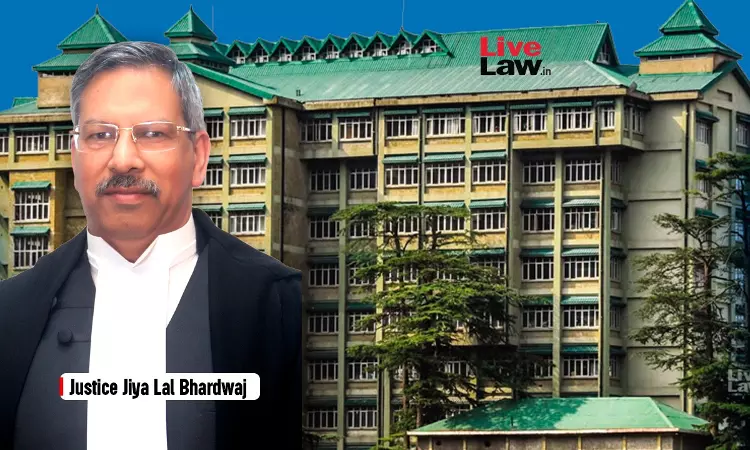
The Himachal Pradesh High Court has held that a woman cannot be denied family pension merely because her marriage with the deceased government employee took place during the subsistence of his first marriage or her name was not recorded in his pension documents.
The Court observed that where long-term cohabitation as husband and wife is supported by documentary evidence, including the birth certificate of a child from the relationship, the woman's claim to family pension cannot be rejected solely on these grounds.
The Court accordingly set aside the order rejecting her claim and directed the authorities to grant family pension.
Justice Jiya Lal Bhardwaj remarked that: “The petitioner cannot be deprived of her right to pension only for the reason that the marriage was solemnized with her by late Sh. Charan Dass during the subsistence of first marriage and further, in the pensionary documents, her name was not mentioned as wife of deceased.”


The petitioner, Gulshan Devi, claimed to be the wife of late Charan Dass, a former Deputy Superintendent of Police in the Himachal Pradesh Police Department. She submitted that they had lived together as husband and wife and had a son from their relationship in 1978. To establish their relationship, she relied upon the son's birth certificate and Scheduled Caste certificates issued in 1986 and 1993, which recorded Charan Dass as her husband.
After Charan Dass's death in 2010, the authorities rejected her claim for family pension on the grounds that her name was not mentioned in his service and pension records, she had not produced a marriage certificate, and her marriage had taken place during the subsistence of his first marriage. Aggrieved by the rejection, she approached the Himachal Pradesh High Court.
The Court observed that long and continuous cohabitation as husband and wife raises a presumption of marriage. It noted that the petitioner had produced documentary evidence, including her son's birth certificate and Scheduled Caste certificates, establishing her relationship with the deceased employee.
The Court held that the petitioner could not be denied family pension merely because her name was absent from the pension records or her marriage took place during the subsistence of the first marriage.
Accordingly, the Court quashed the rejection order and directed the authorities to grant family pension, restricting arrears to three years preceding the filing of the petition. It further directed payment of 6% interest if the arrears were not released within six months or regular pension was not paid.
Date of Decision: 03.11.2026


