




High Court of J & K and Ladakh
Once Prosecution Establishes Facts, Accused Must Explain Circumstances Within His Knowledge Or Face Adverse Inference: J&K&L High Court
The High Court of Jammu & Kashmir and Ladakh has held that although the prosecution bears the primary burden of proving guilt, courts are entitled to draw an adverse inference under Section 106 of the Evidence Act where the accused fails to explain facts especially within his knowledge after the prosecution has established foundational circumstances.The Court made this observation...

Jammu & Kashmir And Ladakh High Court Weekly Roundup March 2 - March 8, 2026
Nominal Index:Muzzafar Farooq Mir Vs UT Of J&K 2026 LiveLaw (JKL) 77Abdul Salam Dar v. High Court of J&K and others 2026 LiveLaw (JKL) 78Shabir Ahmad Dar Vs UT Of J&K 2026 LiveLaw (JKL) 79Noushad Ahmad Vs Union of India 2026 LiveLaw (JKL) 80Anoop Uppal Vs Jammu Municipal Corporation 2026 LiveLaw (JKL) 81State Of J&K Vs Javaid Ahmad Ganai 2026 LiveLaw...
Man Electrocuted From High-Tension Line While Removing Bird Loses Both Hands; J&K&L High Court Orders ₹54.49 Lakh Compensation
The High Court of Jammu & Kashmir and Ladakh held that a victim who suffers permanent disability due to electrocution caused by negligence of electricity department officials is entitled to compensation, and that such liability can arise under public law jurisdiction where negligence is established.The Court was hearing a writ petition seeking compensation for injuries suffered due...
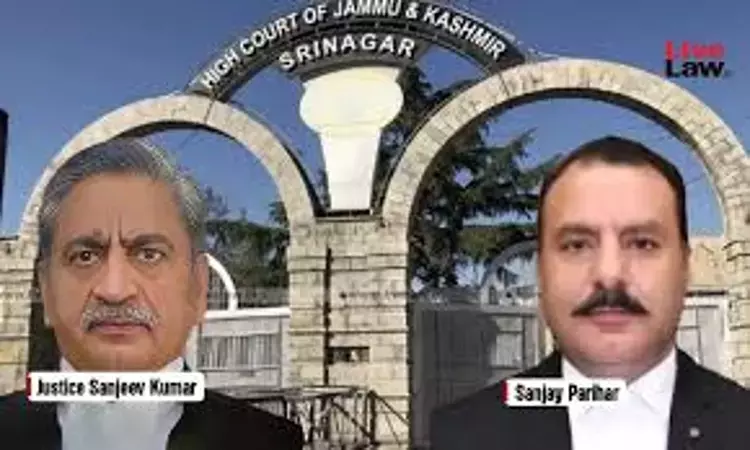
BSF Court Of Inquiry Can Proceed Alongside Criminal Trial : J&K high Court
A Division Bench of the Jammu & Kashmir High Court comprising Justice Sanjeev Kumar and Justice Sanjay Parihar held that preliminary Court of Inquiry under BSF Rules is merely a fact-finding exercise and it can proceed during pendency of a criminal trial. It does not amount to parallel departmental proceedings or cause prejudice to the accused employee. Background Facts...
Preventive Detention Under PITNDPS Act Valid Only If Activities Fall Within Statutory Definition Of 'Illicit Traffic': J&K&L High Court
The Jammu and Kashmir and Ladakh High Court has held that preventive detention under the Prevention of Illicit Traffic in Narcotic Drugs and Psychotropic Substances Act (PITNDPS) can be ordered only when the activities of a detenue fall within the statutory definition of “illicit traffic”.The Court held that a person cannot be preventively detained under Section 3 of the Prevention...
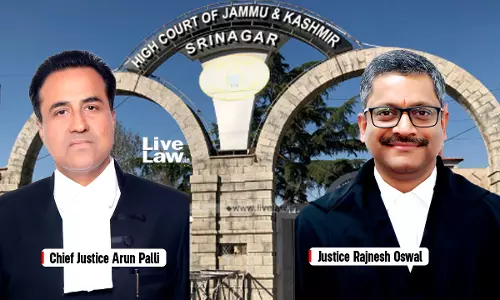
“Appalled” That PIL On Illegal Constructions In Patnitop Has Lingered For Nearly A Decade; J&K&L High Court Directs CEO To Join Proceedings
Expressing serious concern over the prolonged pendency of a public interest litigation relating to alleged illegal constructions in the tourist destination of Patnitop, the High Court of Jammu & Kashmir and Ladakh observed that it was “appalled that even though the matter is pending for nearly a decade, but the same is not being pursued in the right earnest,” and consequently directed...
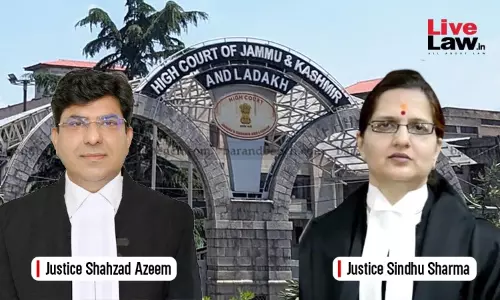
Appointment To Higher Post On Compassionate Grounds Not Matter Of Right, Purely Discretionary Power: J&K&L High Court
The High Court of Jammu & Kashmir and Ladakh has held that appointment to a higher post on compassionate grounds cannot be claimed as a matter of right and that the power to grant such appointment lies exclusively with the Government and is purely discretionary.The Court observed that while the rules permit the Government in the General Administration Department to appoint a dependent of...
J&K&L High Court Orders Probe Against JMC Officials For Ignoring Court-Mandated Structural Report; Says Compensation To Be Levied From Salaries
The High Court of Jammu and Kashmir and Ladakh has directed the Chief Secretary of Jammu & Kashmir to conduct a probe into the role of officials of the Jammu Municipal Corporation after finding that a fresh structural safety audit was ordered despite an earlier engineering report obtained pursuant to court directions declaring the premises safe. Holding that such conduct amounted to...
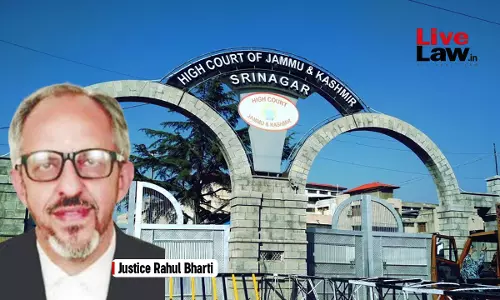
'Procurement Not By Fair Means': J&K&L High Court Flags Practise Of Filing Uncertified Photostat Copies As Annexures
The High Court of Jammu & Kashmir and Ladakh has expressed serious concern over the growing practice of filing uncertified photostat copies of court records as annexures in petitions, observing that such a practice points towards an improper and impermissible mode of procurement of judicial records.A bench of Justice Rahul Bharti made these observations while hearing a plea wherein the...
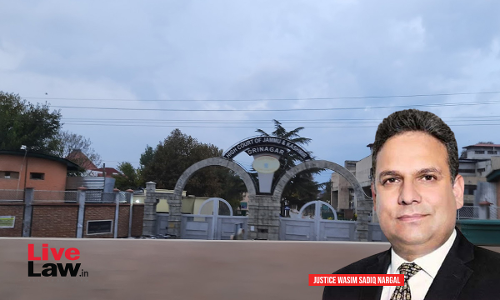
'Cause Of Action' Cannot Be Read Liberally To Choose Convenient Forum; Encourages Forum Shopping: J&K&L High Court
Holding that territorial jurisdiction is a matter of law rooted in the essential facts of a dispute and not a mobile privilege dependent upon a litigant's convenience, the High Court of Jammu & Kashmir and Ladakh has ruled that the expression “cause of action” cannot be interpreted liberally to allow parties to indulge in forum shopping. A bench comprising Justice Wasim Sadiq...
Jammu & Kashmir And Ladakh High Court Monthly Digest: February 2026
Nominal Index:Mohd. Ashraf Dar vs UT of J&K 2026 LiveLaw (JKL) 33Malika Vs UT Of J&K 2026 LiveLaw (JKL) 34UT Of J&K Vs Gulzar Ahmad Khan 2026 LiveLaw (JKL) 35New Convent High School Vs Union of India 2026 LiveLaw (JKL) 36Huzaif Ahmad Dar Vs UT Of J&K 2026 LiveLaw (JKL) 37Mushtaq Ahmad Bakshi 2026 LiveLaw (JKL) 38State Of J&K Vs Dhanwanter Singh and ors 2026 LiveLaw...
Jammu & Kashmir And Ladakh High Court Weekly Roundup February 22 - March 1, 2026
Nominal Index:Mazeed Ali Vs UT Of J&K 2026 LiveLaw (JKL) 62Joginder Singh & Anr Vs UT of J&K & Ors 2026 LiveLaw (JKL) 63Altaf Hussain & Anr. Vs Union of India & Ors 2026 LiveLaw (JKL) 64Mumtaz Ahmad Vs Collector Land Acquisition Rajouri 2026 LiveLaw (JKL) 65Shabnam Akhter vs UT of J&K 2026 LiveLaw (JKL) 66The Oriental Insurance Company Ltd. Vs Prem Gupta & Ors...