



- Home
- /
- High Courts
- /
- High Court of J & K and Ladakh
- /
- Alleged ₹90 Lakh Embezzlement,...
Alleged ₹90 Lakh Embezzlement, Irregular Land Allotments: J&K&L High Court Refuses To Quash Graft Probe Against Ex-DIC GM
LIVELAW NEWS NETWORK
13 Aug 2026 9:20 AM IST
The Jammu & Kashmir and Ladakh High Court has refused to quash an Anti-Corruption Bureau FIR against a former General Manager of District Industries Centre (DIC), Pulwama, in a case involving allegations of embezzlement of over ₹90 lakh from the Government treasury and irregular allotment of industrial land even after the concerned estates had been transferred to the State...
This is a premium content
Available exclusively to
Our subscribers
Subscribe Premium 
INR 1099+GST
Your support helps us to bring you more content at
an affordable subscription scheme !!!
All payment options available
The Jammu & Kashmir and Ladakh High Court has refused to quash an Anti-Corruption Bureau FIR against a former General Manager of District Industries Centre (DIC), Pulwama, in a case involving allegations of embezzlement of over ₹90 lakh from the Government treasury and irregular allotment of industrial land even after the concerned estates had been transferred to the State Industrial Corporation of India (SICOP).
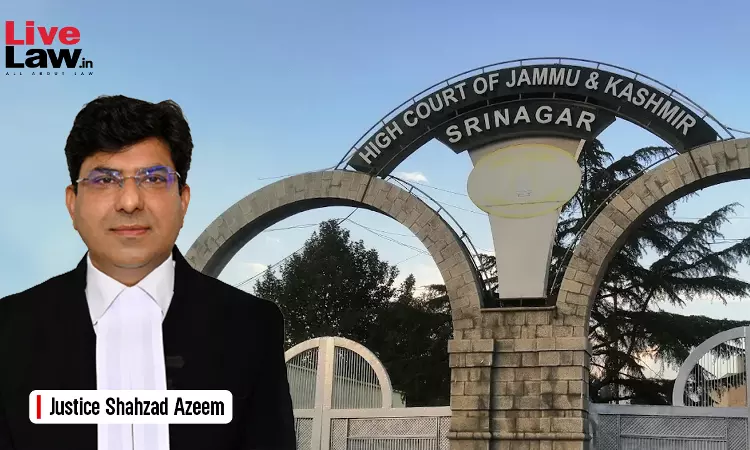
Declining interference Justice Shahzad Azeem observed, “To stifle investigation would amount to putting a premium on the alleged acts when the investigation has been carried into different aspects involving a huge chunk of land earmarked for establishment of the industries.”
The Court was hearing a petition seeking quashing of FIR registered by ACB South Kashmir under Section 5(1)(d) read with Section 5(2) of the J&K Prevention of Corruption Act, Svt. 2006 and Section 120-B RPC. The investigation concerns alleged abuse of official position in allotment of industrial land and alleged conferral of undue benefits upon beneficiaries.
The petitioner had served as General Manager, DIC Pulwama from June 2017 to February 2018. Following his retirement, the ACB issued him a questionnaire alleging that he had entered into a conspiracy with unit holders, abused his official position and conferred undue benefits upon them for personal monetary gains.
The proceedings originated from a complaint alleging that DIC Pulwama had become a “hub of corruption with fixed rates of bribes under the patronage of General Manager.”
The petitioner contended that the Industrial Policy, 2016 authorised the General Manager, DIC to allot land to MSME units having investment in plant and machinery up to ₹5 crore and to execute lease deeds. He therefore challenged the criminal proceedings on the ground that the alleged acts were within his official authority.
The ACB, through Sr AAG Mohsin Qadri submitted that the petitioner had made 48 land allotments despite the estates having been transferred to SICOP, in violation of the Industrial Policy and Procedural Guidelines, with irregularities found in about 62 units.
He further submitted that the investigation was ongoing, including FSL examination of documents relating to 42 units and scrutiny of beneficiaries and other officers, warranting dismissal of the petition and allowing the investigation to proceed.
Court's Observation:
The Court examined the Industrial Policy, 2016 and the relevant Procedural Guidelines and found that the General Manager's authority to process allotment applications could not be treated as an unfettered power to independently make final allotments. The prescribed procedure, including consideration by the competent committee and subsequent action by SICOP/SIDCO, was also relevant, it noted.
A significant circumstance was that, according to the case diary, 48 allotments were made in respect of industrial estates which had already been handed over to SICOP.
The Court observed that the distinction sought to be drawn by the petitioner between land available with DIC and land under SICOP/SIDCO control became “wholly irrelevant” in view of the allegation that allotments continued even after transfer of the estates.
The investigation had also examined the role of beneficiary unit holders and officers of SICOP/SIDCO. Documents concerning 42 units had been sent for forensic examination, while the investigation was also examining whether the petitioner acted alone or in concert with others.
“…Once it is found that as many as 48 allotments of industrial estates, possession whereof had already been handed over to SICOP, were made by the petitioner, the questions whether particular plots were already under SICOP control and whether SWCC clearance preceded or followed the orders are matters for investigation and record”, Justice Azeem remarked.
The Court held that the allegations formed an interconnected chain, observing, “When conspiracy is alleged, the role of the petitioner, the beneficiaries and the officers of SICOP/SIDCO form part of the same chain of events.”
According to the Court, the investigation had to determine whether undue benefit was actually conferred, whether there was concerted action, whether the petitioner acted alone or in league with others and whether Corporation officials had remained silent or facilitated the alleged process.
The Bench rejected the argument that the FIR was based merely on a vague complaint observing,
“…The FIR is not founded merely on a vague complaint. It is the culmination of a formal verification, the report of the Departmental Enquiry Committee, the Expert Committee findings pointing irregularity in approximately 62 units, and the admitted fact that the industrial estates at Pulwama and Chatpora had already been transferred to SICOP on 20 April 2017. Despite this transfer, the petitioner made as many as 48 allotments”.
On the plea that the material did not establish mens rea, the Court emphasised that quashing proceedings cannot become a substitute for investigation or trial. The Court observed,
“At the stage of quashing, the court does not conduct a mini trial” and held that the Court was required to examine whether the FIR and accompanying material disclosed the ingredients of the alleged offences.
The Bench held that questions concerning the petitioner's authority after transfer of the estates, compliance with SWCC clearance, selective benefits and alleged undue advantage required collection and evaluation of evidence and could not be conclusively determined at the threshold.
The Court further held that quashing the proceedings against the petitioner while the investigation into the beneficiaries and SICOP/SIDCO officers continued could result in an incomplete investigation. It observed,
“When the roles are interwoven, quashing the proceedings against one accused while investigation against others continues would lead to incomplete and truncated investigation.”
Holding that the material available at the present stage disclosed sufficient circumstances warranting continuation of the investigation the court said that it was premature to conclusively determine the existence of mens rea or dishonest intention. Finding the petition “bereft of merit,” Justice Shahzad Azeem dismissed it.
Case Title: Laiq Parvez v. Union Territory of J&K through Anti-Corruption Bureau, South Kashmir
Citation: 2026 LiveLaw (JKL) 347
Appearances
R.A. Jan, Senior Advocate with Safa Aziz, Advocate for the petitioner; Mohsin Qadiri, Senior AAG with Maha Majeed, AC and Haris Khan, Advocate for the respondents.


