



Accused Claiming Grave Illness Cannot Absent Himself From Scheduled Procedure; Medical Bail Not Open-Ended Liberty: J&K&L High Court
LIVELAW NEWS NETWORK
4 Nov 2026 7:25 PM IST
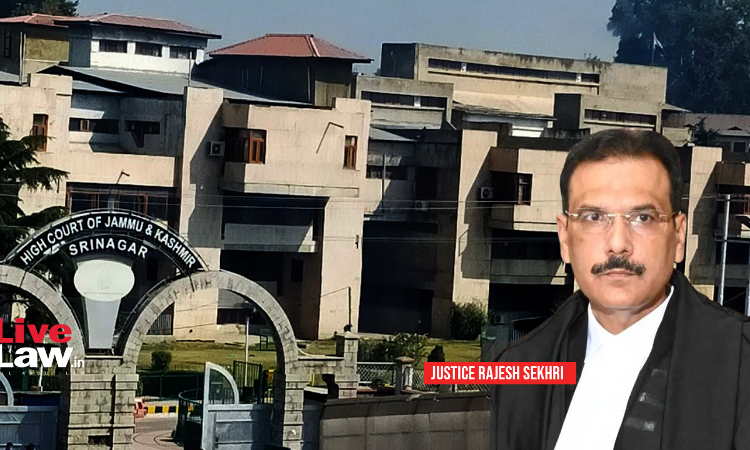
The High Court of Jammu & Kashmir and Ladakh at Srinagar has held that an accused claiming grave illness cannot be permitted to blow hot and cold by seeking release on medical grounds while simultaneously absenting himself from a medical procedure scheduled by the Medical Board.
The Court held that medical bail is not an open-ended liberty to be retained while allowing the medical purpose for which it was granted to lapse. The Court dismissed a petition seeking extension of medical bail in a case under the Narcotic Drugs and Psychotropic Substances Act, 1985, holding that the existence of illness by itself does not entitle an accused to bail.
The Court was hearing a bail application challenging an order passed by the learned Special Judge, NDPS Cases, Srinagar, whereby the petitioner's application for extension of medical bail was rejected. The petitioner was an accused in an FIR registered for offences under the NDPS Act involving the recovery of a commercial quantity of manufactured drugs.
The petition was heard by Justice Rajesh Sekhri, who observed,


“The petitioner cannot be allowed to blow hot and cold in the same breath by urging on the one hand that his cardiac condition was so grave which requires immediate attention and his consequent release from custody and on the other hand absented himself for the procedure, scheduled by the Medical Board for the condition.”
Background
As per the prosecution case a Naka party intercepted three persons travelling in a vehicle, and upon their search, 36 bottles of Codril-T containing Codeine Phosphate, a manufactured drug under the NDPS Act, were recovered. An FIR came to be registered at Police Station Chanapora for offences under the Act.
The petitioner approached the High Court for medical bail on the ground that he was suffering from a serious cardiac condition, Type-2 Diabetes Mellitus, hypertension, and fatty liver. The High Court, vide an order, granted limited indulgence on medical grounds, leaving it open to the trial court to examine further extension based on his medical condition.
Upon the expiry of the bail period, the petitioner approached the trial court for extension, contending that his cardiac stent was required to be replaced, but the procedure could not be carried out because his pulse rate was above average. He argued that the prison facility was not equipped to provide specialized care and that failure to provide timely treatment could lead to irreversible complications.
The prosecution opposed the plea, contending that the case involved a commercial quantity, attracting the bar under Section 37 of the NDPS Act. It was argued that the medical record did not indicate any acute emergency requiring release, and that the petitioner failed to utilize the bail granted earlier, as the prescriptions related only to scattered visits and disclosed no fixed date for surgical intervention.
The trial court rejected the bail plea, relying on the reports of the Standing Medical Board, which had examined the petitioner and recorded that he could be kept in custody subject to safeguards of close medical supervision and regular cardiology follow-up. Aggrieved, the petitioner challenged the order, contending that the medical reports revealed continuous deterioration and that he required coronary angiography and specialized treatment.
Court's Observation
The Court observed that the right to personal liberty under Article 21 requires that an accused in custody receives proper medical care. However, the Court held,
“The existence of illness, by itself, does not, entitle an accused to bail.”
The Court noted that a bail application on medical grounds must be decided by balancing the health and dignity of an accused against the requirements of a criminal proceeding, and that it primarily depends upon the nature of the illness, available medical facilities, and the necessity for specialized treatment.
The Court perused the two reports of the Standing Medical Board. The first report recorded that the petitioner complained of chest pain and was advised coronary angiography, but stated he could be kept in custody under supervision. The subsequent report clarified that the clinical examination revealed only angina on effort, and that the reference in the earlier report to the petitioner having undergone stenting was a result of miscommunication. The Board certified that the petitioner could be kept in custody under close medical supervision.
The Court further noted that the petitioner was scheduled for coronary angiography on 25.02.2026, but he did not report to the hospital for the procedure. The Court held,
“The petitioner neither in his application before the trial Court, nor in the present petition has given any explanation for failure on his part to report for the procedure on the date given by the Medical Board.”
The Court agreed with the trial court's observation that the petitioner could not claim his condition was so grave as to require immediate release while simultaneously absenting himself from the scheduled procedure. The Court held,
“Medical bail is not an open-ended liberty to be retained and the medical purpose for which it was granted is allowed to lapse.”
The Court relied on the judgments of the Hon'ble Supreme Court in Pawan alias Tamatar v. Ramprakash Pandey (2002), State of UP v. Gayatri Prasad Prajapati (2020), and Ajit Singh v. State of Uttarakhand (2025), to hold that every sickness does not ipso facto entitle an accused to medical bail if appropriate treatment can be provided during custody.
Finding no illegality in the trial court's order, the Court dismissed the petition. However, the Court directed the Jail Authorities to provide regular medical treatment to the petitioner as and when required, and granted the petitioner liberty to apply for regular bail if he so desired.


