



- Home
- /
- High Courts
- /
- High Court of J & K and Ladakh
- /
- Past Employment With Party Does Not...
Past Employment With Party Does Not Make Arbitrator Ineligible: J&K&L High Court Reaffirms
Kirit Singhania
23 Dec 2025 9:43 PM IST
The Jammu and Kashmir and Ladakh High Court on Monday reiterated that an arbitrator does not become ineligible merely because he was employed by one of the parties in the past. The court held that past government service, by itself, does not indicate bias under the Arbitration and Conciliation Act unless it is shown that the arbitrator has a continuing business relationship or had advised...
This is a premium content
Available exclusively to
Our subscribers
Subscribe Premium 
INR 1099+GST
Your support helps us to bring you more content at
an affordable subscription scheme !!!
All payment options available
The Jammu and Kashmir and Ladakh High Court on Monday reiterated that an arbitrator does not become ineligible merely because he was employed by one of the parties in the past.
The court held that past government service, by itself, does not indicate bias under the Arbitration and Conciliation Act unless it is shown that the arbitrator has a continuing business relationship or had advised a party in connection with the dispute.
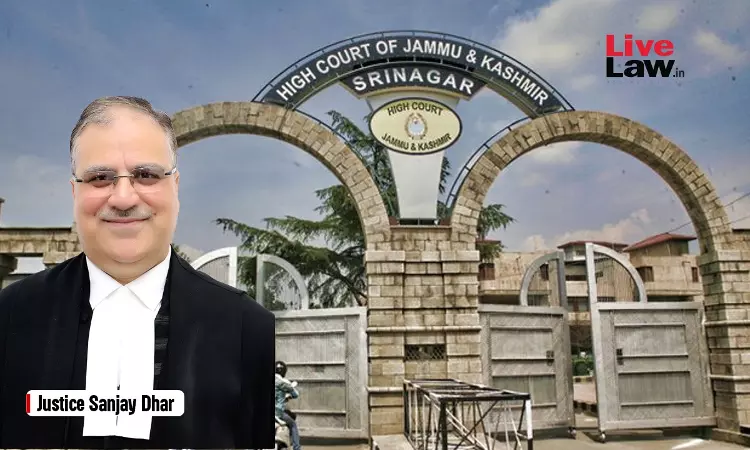
Justice Sanjay Dhar delivered the ruling on December 22, 2025, while dismissing a petition filed by the Union Territory of Jammu and Kashmir. The UT had taken appealed an order of the Additional District Judge, Srinagar, which had refused to terminate the mandate of an arbitral tribunal.
The court, relying on apex court's ruling in Government of Haryana PWD Haryana (B and R) Branch Vs. G. F. Toll Road Private Limited and others (2019) observed, “Thus, merely because a person has been in employment of either of the parties in the previous past does not make him ineligible to be appointed as an Arbitrator.”
The dispute arose from a road upgradation contract awarded to SRM Contractors under the Jhelum Tawi Flood Recovery Project. A formal agreement for the same was executed on January 6, 2021.
When disagreements emerged during execution of the work, the contractor invoked the arbitration clause in the agreement.
After the UT failed to appoint its nominee arbitrator, SRM Contractors turned to the Institution of Engineers (India), which had been named in the contract as the authority to make such appointments. The Institution then constituted a three‑member arbitral tribunal, with former government employee Khalid Muzaffar serving as one of the arbitrators.
The government objected to Muzaffar's appointment on the ground that he was a former Director of the J&K Economic Reconstruction Agency. It argued that his previous government employment rendered him ineligible under Section 12(5) read with the Seventh Schedule of the Arbitration and Conciliation Act.
It also alleged bias pointing to certain procedural decisions taken by the tribunal.
The High Court rejected these objections. It held that the statutory bar applies only to persons who are current employees, consultants, advisors, or those who have a business relationship with a party. A person who has merely served the government in the past does not fall within these categories.
The court noted that the government had not alleged that the arbitrator had any continuing relationship with it or had rendered any advice connected to the dispute. Addressing this specifically, the court observed:
“Er. Khalid Muzaffar is admittedly a former employee of the petitioner but he is neither a consultant nor an advisor of any party nor he has any past or present business relationship with the petitioner. Therefore, he does not fall either in Entry-1 or Entry-15 of the Seventh Schedule of the Act so as to be ineligible to act as an Arbitrator. The contention of the petitioner is, therefore, without any substance.”
On the allegations of bias and procedural irregularities, the court held that such grievances had already been raised before the arbitral tribunal and could only be examined at the stage of challenging the final arbitral award.
It reiterated that past service with the government, by itself, does not prove bias or render a person statutorily ineligible to act as an arbitrator.
Finding no substance in the challenge to the tribunal's mandate, the High Court dismissed the petition. It also made it clear that its observations on the allegations of bias or on the tribunal's procedure were confined to the present challenge and should not be read as expressing any view on the merits of the arbitration itself.
Case Title: Union Territory of J&K vs SRM Contractors Ltd
Citation: 2025 LiveLaw (JKL) 339
Case Number: CM(M) No. 568/2025, CM No. 8559/2025, Caveat No. 2540/2025
For Petitioner: Dpeuty Advocate General Syed Musaib
For Respondent: Senior Advocate Syed Faisal Qadiri with Advocates Manik, Sikander Hayat Khan


