



- Home
- /
- High Courts
- /
- High Court of J & K and Ladakh
- /
- GREF Personnel Can Face...
GREF Personnel Can Face Disciplinary Action Under Army Act Or CCS (CCA) Rules, Choice Lies With Authority: J&K&L High Court
LIVELAW NEWS NETWORK
12 Aug 2026 8:15 PM IST
The Jammu & Kashmir and Ladakh High Court has held that members of the General Reserve Engineer Force (GREF)/Border Roads Organisation (BRO) are subject to a dual disciplinary framework, under which disciplinary proceedings may be initiated either under the Army Act and the Rules framed thereunder or under the Central Civil Services (Classification, Control and Appeal) Rules, 1965, with...
This is a premium content
Available exclusively to
Our subscribers
Subscribe Premium 
INR 1099+GST
Your support helps us to bring you more content at
an affordable subscription scheme !!!
All payment options available
The Jammu & Kashmir and Ladakh High Court has held that members of the General Reserve Engineer Force (GREF)/Border Roads Organisation (BRO) are subject to a dual disciplinary framework, under which disciplinary proceedings may be initiated either under the Army Act and the Rules framed thereunder or under the Central Civil Services (Classification, Control and Appeal) Rules, 1965, with the choice resting with the competent Disciplinary Authority.
The Court clarified that the nature and gravity of the alleged misconduct may determine the disciplinary route. While grave matters such as offences relating to an enemy, offences committed while on active service, mutiny, desertion or disobedience may warrant proceedings under the Army Act and even a Court Martial, less grave disciplinary matters may be dealt with under the Rules of 1965.
The Court was hearing a writ petition challenging a Memorandum of Charges issued against a GREF officer under Rule 14 of the Central Civil Services (Classification, Control and Appeal) Rules, 1965. The petitioner had also questioned the legality of a Court of Inquiry conducted before framing of the charges, alleging non-compliance with Rule 180 of the Army Rules, 1954.
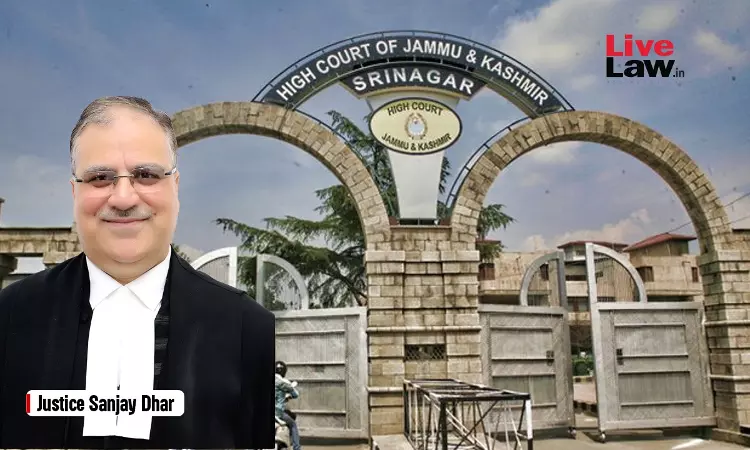
A Single Bench of Justice Sanjay Dhar held,
“...Members of GREF/BRO are subject to a dual disciplinary authority, namely, the authority prescribed under the Army Act and the authority prescribed under the Rules of 1965. Thus, a member of GREF can be proceeded against in the matters of disciplinary issues either under the Army Act and the rules framed thereunder or under the Rules of 1965.
He added,
“…It is entirely the discretion of the Disciplinary Authority to make a choice of the provisions under which a member of the GREF has to be proceeded against. If it is a case of grave disciplinary issue, like commission of an offence in relation to an enemy or an offence while on active service etc. it may warrant action against the delinquent official by a Court Martial but in case of less graver offences, the delinquent official can be proceed against under the Rules of 1965.”
The petitioner, holding a rank equivalent to Major, challenged the Memorandum of Charges issued under Rule 14 of the CCS (CCA) Rules, 1965. The charges alleged that he had entered into financial transactions with a CPL/Mazdoor deployed within the area of responsibility of his unit and had inappropriately received ₹4.50 lakh through cash and digital payments. The alleged conduct was stated to violate Rule 16(4)(i)(a) of the CCS (Conduct) Rules, 1964.
The Memorandum further referred to bank statements obtained from Axis Bank and State Bank of India to verify the alleged transactions. It recorded, among other things, a transfer of ₹1 lakh into the petitioner's bank account and alleged other transactions connected with the CPL/Mazdoor.
The principal challenge before the High Court was that the Court of Inquiry preceding the Memorandum of Charges had allegedly been conducted without complying with Rule 180 of the Army Rules, 1954. The petitioner contended that he had not remained present throughout the proceedings and had not been given an opportunity to cross-examine witnesses.
He further contended that the charges were vague, based on surmises and conjectures and had been served belatedly. The respondents opposed the petition, submitting that the financial transactions were supported by bank statements, cash books and other documents examined by the Board of Officers. They maintained that the Memorandum of Charges was framed after the Court of Inquiry and contended that the writ petition was premature since the departmental inquiry was yet to commence and the petitioner could raise his defence during the inquiry.
Court's Observation:
The Court first examined the statutory position of GREF personnel. It noted that although the Border Roads Organisation is under the control of Army authorities and its work is carried out under their supervision, GREF personnel are not all regular Army personnel. The organisation comprises personnel drawn partly from the Army and partly through direct recruitment.
The Court relied upon the Supreme Court's judgment in R. Viswan v. Union of India (1983), which dealt with the special character of GREF and the application of Army discipline to its personnel. The High Court noted that SRO 329 and SRO 330, both issued in 1960, made specified provisions of the Army Act, 1950 and Army Rules, 1954 applicable to GREF.
The Court further noted that the terms of appointment of directly recruited GREF personnel expressly provide that they are governed by the CCS (CCA) Rules, 1965, while also being subject to specified provisions of the Army Act and Army Rules for purposes of discipline.
The High Court referred to R. Viswan (1983), where the Supreme Court had held that the two disciplinary mechanisms were different in character and that the discretion to proceed under one or the other was not unguided or uncanalised. It also considered Mohammad Ansari v. Union of India (2017), in which the Supreme Court explained the application of the Army Act and the CCS (CCA) Rules to civilian GREF personnel.
Applying that framework to the present case, the Court examined the allegation against the petitioner that he had entered into financial transactions with a person with whom he had official dealings, contrary to Rule 16(4)(i)(a) of the CCS (Conduct) Rules, 1964. The Court observed,
“This appears to be a misconduct which is not of a grave nature and, therefore, the competent authority has decided to proceed against the petitioner in terms of the Rules of 1965 and not under the provisions of the Army Act and the rules framed thereunder.”
The Court also rejected the challenge based on delay. It noted that the transactions forming the basis of the charges related to earlier years and that a Court of Inquiry had been conducted before the Memorandum of Charges was framed to ascertain the veracity of the allegations.
The Court held that there was no undue delay in the circumstances and observed that although an inquiry should ordinarily be initiated without undue delay, “there is no straight-jacket formula laying down that if an inquiry is initiated after a particular period of time, the same would get vitiated.”
The writ petition was accordingly dismissed as devoid of merit, and the interim order was directed to stand vacated.
Case Title: BADAVATH KISHAN v. UNION OF INDIA & ORS.
Citation: 2026 LiveLaw (JKL) 346
Appearances
Petitioner: Tapas Das, Advocate with Syed Faheem Indrabi, Advocate
Respondents: Hakim Aman Ali, Deputy Advocate General


