



- Home
- /
- High Courts
- /
- High Court of J & K and Ladakh
- /
- Guardian & Wards Act | Child...
Guardian & Wards Act | Child Custody Jurisdiction Depends On Minor's 'Ordinary Residence', Not Where Child Ought To Reside: J&K&L High Court
LIVELAW NEWS NETWORK
2 Oct 2026 12:20 PM IST
The place where a minor actually and ordinarily resides, rather than where a parent believes the child ought to reside, determines the territorial jurisdiction of the Court under Section 9 of the Guardians and Wards Act, 1890, the Jammu & Kashmir and Ladakh High Court has held.The Court was hearing an appeal against dismissal of a father's custody petition by the Principal District...
This is a premium content
Available exclusively to
Our subscribers
Subscribe Premium 
INR 1099+GST
Your support helps us to bring you more content at
an affordable subscription scheme !!!
All payment options available
The place where a minor actually and ordinarily resides, rather than where a parent believes the child ought to reside, determines the territorial jurisdiction of the Court under Section 9 of the Guardians and Wards Act, 1890, the Jammu & Kashmir and Ladakh High Court has held.
The Court was hearing an appeal against dismissal of a father's custody petition by the Principal District Judge, Anantnag, on the ground that the minor daughter was ordinarily residing in Srinagar with her mother and was therefore within the jurisdiction of the competent Court there.
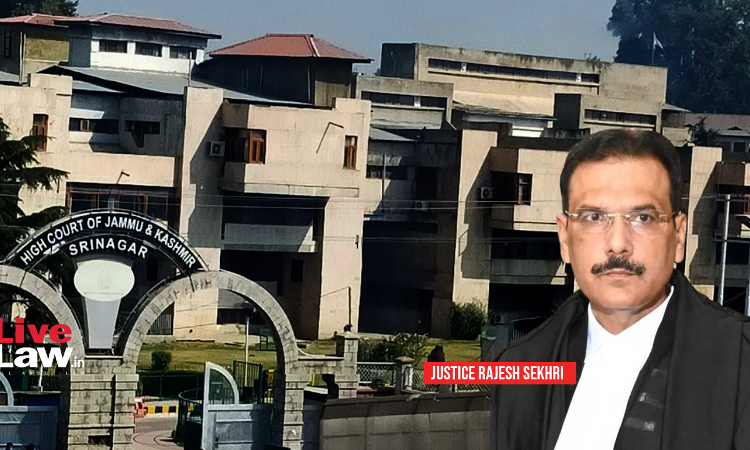
Justice Rajesh Sekhri held that the expression “ordinary residence” under Section 9 cannot be determined merely on the basis of a parent's asserted entitlement to custody. Referring to the Supreme Court's ruling in Ruchi Majoo v. Sanjeev Majoo, the Court observed,
“...the only meaning assigned to the 'ordinary residence' is the residence of the person in whose care and custody the minor is expected to be, not where he or she ought to be.”
The Court further held that where a child has settled at a new place for a considerable period and is receiving education there, that place can constitute the child's ordinary residence for determining jurisdiction under Section 9.
Background:
The parties had a daughter and their marriage was subsequently dissolved through a settlement before the National Lok Adalat. Under the settlement, custody of the minor was entrusted to the mother subject to the conditions recorded therein.
The father later approached the Principal District Judge, Anantnag, seeking custody of the child. The mother opposed the petition on the ground of territorial jurisdiction, stating that after her remarriage she had shifted with the minor to Srinagar, where the child had been residing and receiving education.
The trial Court accepted the objection and dismissed the custody petition, holding that Section 9 of the Guardians and Wards Act requires a petition concerning custody or guardianship to be presented before the District Court having jurisdiction over the place where the minor ordinarily resides.
The father challenged the order before the High Court, contending that the mother's remarriage had terminated her right of Hizanat and that the child's ordinary residence should consequently be treated as the place where the person entitled to custody under personal law resided.
Court's Observation:
Justice Sekhri began by examining Section 9 of the Guardians and Wards Act, which provides that an application concerning guardianship of the person of a minor shall be made to the District Court having jurisdiction in the place where the minor ordinarily resides.
The Court relied upon the Supreme Court's judgment in Ruchi Majoo, which holds that the solitary test for determining jurisdiction under Section 9 is the ordinary residence of the minor. Whether a minor ordinarily resides at a particular place is primarily a question of fact and may involve a mixed question of law and fact.
The High Court clarified that ordinary residence is not necessarily synonymous with the place where the child happens to be present when the petition is filed. At the same time, the Court found that the circumstances in the present case showed that the child had genuinely settled in Srinagar.
The minor had moved to Srinagar with her mother after the dissolution of the marriage and had been residing there for a considerable period. She was also receiving education there. The Court therefore found that the child's residence in Srinagar could not be treated as a recent or temporary removal intended merely to defeat the jurisdiction of the Anantnag Court.
The Court also considered the father's reliance upon a Gauhati High Court judgment concerning removal of a minor from the place of ordinary residence shortly before initiation of custody proceedings. That decision recognised that a recent removal of a child could be ignored for determining jurisdiction and that a new place would ordinarily acquire the character of ordinary residence only after the minor had settled there for a reasonably long period.
Applying that principle, the High Court held that the child's continued residence and education in Srinagar demonstrated that she had settled there. The father's allegation that the mother had deliberately shifted the child to Srinagar to oust the jurisdiction of the Anantnag Court was therefore found to be without merit.
On Hizanat And Welfare Of Child
The Court thereafter considered the father's contention that the mother's remarriage had automatically terminated her right of Hizanat.
Justice Sekhri noted that under Islamic jurisprudence, the mother ordinarily has the first right to physical custody or Hizanat of children during their tender years, while the father is recognised as the natural guardian or Wali. However, the Court emphasised that the doctrine ultimately remains subject to the welfare and best interest of the child.
Referring to Supreme Court judgments including Tejaswini Gaud v. Shekhar Jagdish Prasad Tewari and Vasudha Sethi v. Kiran V. Bhaskar, the Court reiterated that personal law may regulate parental rights, but those rights cannot override the paramount consideration of the welfare of the minor in custody proceedings.
The Court summed up the position by observing that when the welfare of a child is placed against the personal law of the parties or an agreement between the parents, the welfare of the child takes precedence and parental rights take a back seat.
The Court accordingly held that the father's contention regarding loss of the mother's Hizanat upon remarriage concerned the merits of the custody dispute and was required to be considered by the Court competent to entertain the custody petition, with due regard to the welfare and best interest of the minor.
The High Court thus found no illegality or impropriety in the trial Court's order and dismissed the appeal in limine.
Case Title: Nisar Ahmad Bhat v. Rafia Jan
Citation: 2026 LiveLaw (JKL) 432


