



Government Can't Deny Promotion Arrears Merely Because PWD Employee Initially Held Post On In-Charge Basis: J&K&L High Court
LIVELAW NEWS NETWORK
24 Nov 2026 6:35 PM IST
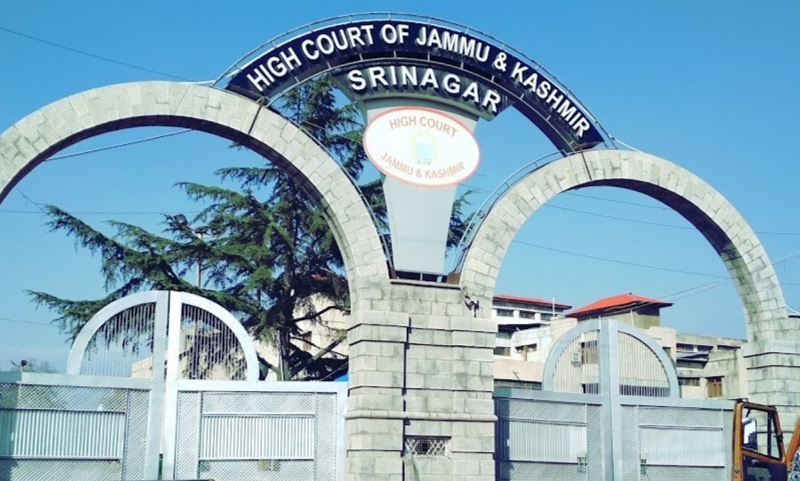
The Jammu & Kashmir and Ladakh High Court has upheld an order of the Central Administrative Tribunal directing the Government to regularise the promotion of a Public Works Department employee as Section Officer from the date he was placed in charge of the post, or the date on which he became eligible for promotion, whichever was later.
A Division Bench comprising Justice Sanjeev Kumar and Justice M.A. Chowdhary dismissed a writ petition filed by the Union Territory challenging the Tribunal's directions in favour of Dev Raj, holding that the Government had failed to demonstrate any violation of the applicable Recruitment Rules or legal infirmity in the Tribunal's decision.
The Court observed that although an in-charge arrangement does not, by itself, confer a right to regular promotion, the employee's eligibility under the governing Recruitment Rules, along with the departmental recommendations and other relevant material, must be duly considered.
The Bench also rejected the Government's attempt to deny consequential monetary benefits merely because the employee had initially been assigned the higher post on an in-charge basis. It held,


“...The mere fact that the respondent was initially assigned the charge of Section Officer on an officiating basis cannot, by itself, be a ground to deny him the arrears that may accrue to him on his regular promotion as Section Officer w.e.f 01.08.2000.”
Background
The dispute originated from Dev Raj's claim for regularisation of his promotion as Section Officer in the Designs, Inspections and Quality Control Wing of the Public Works Department.
He was initially appointed as a Junior Assistant on February 21, 1979, and promoted as Senior Assistant in 1985. Subsequently, he was promoted as Head Assistant through an order dated May 5, 1995, with effect from October 29, 1990.
The recruitment and promotion to various posts in the non-gazetted ministerial establishment of the Public Works Department are governed by the Jammu and Kashmir Engineering Subordinate Service Recruitment Rules, 1997, notified vide SRO 180 of 1997. Schedule-II-B, Class-I, Category-A of these Rules prescribes promotion to the post of Section Officer from amongst eligible Head Assistants possessing the requisite qualifying service of five years.
Dev Raj contended that, having been promoted as Head Assistant with effect from October 29, 1990, he had completed the prescribed five years of qualifying service by October 29, 1995, and had consequently become eligible for consideration for promotion as Section Officer.
Following the superannuation of the then incumbent Section Officer, O.N. Koul, Dev Raj was assigned the charge of Section Officer on an in-charge basis through an order dated July 29, 2000, with effect from August 1, 2000. He was also sanctioned charge allowance with effect from that date pursuant to approval granted by the Departmental Promotion Committee in its meeting held on September 24, 2005.
His case for regularisation was subsequently recommended by the departmental authorities through communications dated June 23, 2006, September 14, 2007, December 17, 2009, June 1, 2011 and September 24, 2012. Despite these recommendations and his continued discharge of the duties of the higher post, the Government did not take a final decision on his claim.
Dev Raj initially approached the Central Administrative Tribunal, which through its judgment directed the authorities to regularise or confirm his promotion as Section Officer from the date he was placed in charge of the post or the date on which he became entitled to promotion, whichever was later.
It further directed the Government to consider his case for subsequent promotion as Administrative Officer after regularisation of his promotion as Section Officer, along with consequential benefits, including arrears of salary, allowances and retiral benefits, including revision of pensionary entitlements.
The Union Territory challenged the Tribunal's decision before the High Court, contending that Dev Raj had acquired eligibility for regular promotion only on November 21, 2011, and that his in-charge arrangement could not confer a vested right to retrospective regularisation from August 1, 2000.
Court's Observation
The Division Bench began by reiterating that promotion to a higher post must be governed by the applicable Recruitment Rules and that an employee does not acquire an automatic right to regular promotion merely because he has been assigned the charge of a higher post.
However, the Court clarified that the employee's claim could not be examined solely on the basis that he had initially been appointed on an in-charge basis. His eligibility under the applicable Rules, coupled with the relevant service record and departmental material, also had to be taken into consideration.
Examining the service particulars, the Bench noted that Dev Raj had been promoted as Head Assistant with effect from October 29, 1990, and was assigned the charge of Section Officer with effect from August 1, 2000.
Under Schedule-II-B, Class-I, Category-A of the 1997 Rules, the prescribed qualifying service for promotion was five years. The Court found that Dev Raj had completed more than nine years of service as Head Assistant when he was placed in charge of the Section Officer post.
The Bench observed,
“The said requirement was completely fulfilled by the respondent. On 01.08.2000, when he was made In-charge S.O, he had more than 09 years of service as Head Assistant.”
It further noted that the Government had not produced any material to demonstrate that Dev Raj lacked the eligibility or qualifications required to hold the post on August 1, 2000.
The Court also took into account the repeated recommendations made by the departmental authorities for regularisation of his promotion. While acknowledging that such recommendations did not, by themselves, confer an indefeasible right to promotion, the Bench held that his claim was nevertheless required to be considered under the applicable Recruitment Rules.
The authorities, the Court observed, had failed to satisfactorily explain their prolonged inaction in taking a final decision on the employee's claim.
“The petitioners have not satisfactorily explained their prolonged failure to take a final decision on the respondent's claim,” the Bench noted.
The Court accordingly found no basis to interfere with the Tribunal's direction that regularisation should take effect from the date Dev Raj was placed as In-charge Section Officer or the date he became entitled to promotion, whichever was later. It clarified that this direction had to be understood in the context of the eligibility requirements under the Recruitment Rules and did not dispense with any statutory condition governing promotion.
The Bench also examined the Government's challenge to the direction requiring consideration of Dev Raj's case for promotion as Administrative Officer.
It clarified that the Tribunal's direction did not confer an automatic right to promotion to that post. His claim would have to be considered by the competent authority in accordance with the applicable Recruitment Rules and other governing provisions.
On the question of consequential monetary benefits, the Court rejected the argument that the initial in-charge nature of the appointment could, by itself, justify denial of arrears accruing upon regularisation.
The Bench held that the consequential benefits directed by the Tribunal would follow in accordance with the terms of its order and the applicable service rules.
It further reiterated that the High Court, while exercising writ jurisdiction, does not ordinarily interfere with factual findings recorded by the Tribunal unless they are shown to be perverse, contrary to statutory provisions or otherwise legally unsustainable. The Government had failed to establish any such infirmity in the present case.
Finding no ground for interference, the Division Bench dismissed the Union Territory's writ petition and upheld the Tribunal's judgment.


