



- Home
- /
- High Courts
- /
- High Court of J & K and Ladakh
- /
- J&K&L High Court Grants Bail To...
J&K&L High Court Grants Bail To Doctor Accused Of Attempting To Commit Rape On Patient During Medical Exam
LIVELAW NEWS NETWORK
16 May 2026 5:25 PM IST
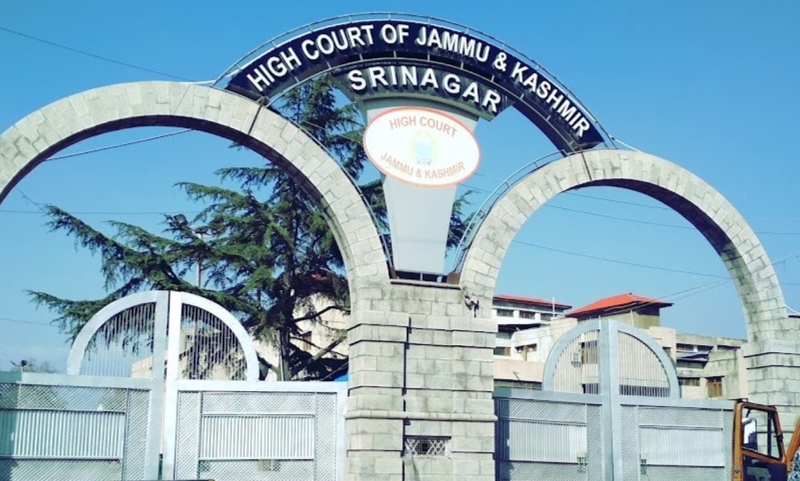
The High Court of Jammu & Kashmir and Ladakh has granted bail to a doctor accused of attempting to rape a woman who had approached him for treatment, reiterating that in non-bailable offences not attracting the statutory embargo under Section 480 of the Bharatiya Nagrik Suraksha Sanhita, 2023, bail is the rule and jail is the exception.The Court was hearing a successive bail application...
This is a premium content
Available exclusively to
Our subscribers
Subscribe Premium 
INR 1099+GST
Your support helps us to bring you more content at
an affordable subscription scheme !!!
All payment options available
The High Court of Jammu & Kashmir and Ladakh has granted bail to a doctor accused of attempting to rape a woman who had approached him for treatment, reiterating that in non-bailable offences not attracting the statutory embargo under Section 480 of the Bharatiya Nagrik Suraksha Sanhita, 2023, bail is the rule and jail is the exception.
The Court was hearing a successive bail application filed under Section 483 BNSS by Dr. Abdul Majeed Bhat in connection with FIR for offences under Sections 62 and 64 of the Bharatiya Nyaya Sanhita, 2023. The petitioner had challenged the rejection of his earlier bail application by the Court of Additional Sessions Judge, Budgam.
A Bench of Justice Mohd Yousuf Wani, while allowing the application, observed, “There appears to be no compelling need for the petitioner/accused in custody. The petitioner/accused is presumed to be innocent till proved guilty at the trial. He also has a constitutional guarantee of his liberty under the provisions of Article 21 of the Constitution of India.”
According to the prosecution, the complainant had visited the Primary Health Centre for treatment of a gynecological ailment. She alleged that during the medical examination, the doctor asked her to enter another room, refused to allow her sister-in-law to accompany her, asked her to remove her clothes, grabbed her breast, and attempted to rape her.
On the basis of the complaint, FIR was registered under Sections 62 and 64 BNS, and the petitioner was arrested on 14 January 2026.
The petitioner through counsel Umar Rashid Wani contended that he was innocent and that the allegations arose out of a bona fide medical examination. He submitted that there were material contradictions between the allegations in the FIR and the subsequent statements recorded during investigation. He further argued that the challan had already been filed, the trial had commenced, and his continued detention amounted to pre-trial punishment.
The prosecution opposed the bail plea on the ground that the petitioner, being a doctor, had abused a position of trust and dominance over a patient who had approached him for treatment. It was submitted that the offence was grave and heinous and that there was a reasonable apprehension that he might influence the complainant and other witnesses if released on bail.
Court's Observations:
The High Court noted that the petitioner had remained in custody since 14 January 2026 and that the final report had already been presented before the trial court. It also observed that the petitioner had been charged under Sections 62 and 64 BNS for attempt to commit rape.
The Court found it significant that while the prosecution in its objections repeatedly asserted that the petitioner was involved in the commission of rape, the challan and the order framing charge showed that he had been charged only with attempt to commit rape.
“… It as such clear from the perusal of the final report/challan that the petitioner/accused is alleged to have attempted the commission of rape punishable under section 64 BNS. However, the respondent/UT in its objections has inter alia pleaded that the petitioner/accused is involved in the commission of rape as defined under Section 63 of the BNS”, Justice Wani remarked.
Reiterating the settled principle governing bail, the Court observed, “Admittedly, in case of non-bailable offences which do not carry a sentence of death or imprisonment for life in alternative, bail is a rule and its denial an exception…”
The Court further held that the two paramount considerations in deciding a bail application are the likelihood of the accused fleeing from justice and the possibility of tampering with prosecution evidence. It emphasised that the object of bail is to secure the appearance of the accused at trial and not to punish him before conviction.
Referring to Sanjay Chandra v. CBI (2012), the Court quoted, “The object of bail is neither punitive nor preventive. Deprivation of liberty must be considered a punishment, unless it can be required to ensure that an accused person will stand his trial when called upon.”
The Court also acknowledged the special role occupied by medical practitioners in society, observing, “There is no second opinion that the doctors are respected and trusted as noble men on the earth and there always is a relationship of trust and confidence between the patient and doctor.”
At the same time, it noted that the petitioner had spent about five months in custody, the trial was already underway, and the statements of some material witnesses, including the complainant, had been recorded. Having regard to his social position as a doctor, the Court held that he was not likely to misuse the concession of bail and that the apprehensions expressed by the prosecution could be adequately addressed by imposing suitable conditions.
The High Court thus allowed the bail application and directed that the petitioner be released on conditional bail. It was however clarified that the trial court would be competent to proceed under Sections 491 and 492 BNSS in the event of violation of any of the bail conditions.
Case Title: Dr. Abdul Majeed Bhat v. Union Territory of J&K
Citation: 2026 LiveLaw (JKL) 209
Appearances
Petitioner: Umar Rashid Wani, Advocate
Respondent: Bikramdeep Singh, Deputy Advocate General


