



- Home
- /
- High Courts
- /
- High Court of J & K and Ladakh
- /
- Roshni Act Being Declared...
Roshni Act Being Declared Unconstitutional Does Not Nullify Cases Under Prevention Of Corruption Act: J&K&L High Court
LIVELAW NEWS NETWORK
5 Feb 2026 2:20 PM IST
The Jammu and Kashmir and Ladakh High Court has ruled that criminal prosecutions launched in connection with irregularities under the Roshni Act can lawfully continue even though the Act itself has been declared unconstitutional and void from its inception.Holding that corruption cannot be legitimised or erased by the invalidation of the statute under which it was committed, the Court made...
This is a premium content
Available exclusively to
Our subscribers
Subscribe Premium 
INR 1099+GST
Your support helps us to bring you more content at
an affordable subscription scheme !!!
All payment options available
The Jammu and Kashmir and Ladakh High Court has ruled that criminal prosecutions launched in connection with irregularities under the Roshni Act can lawfully continue even though the Act itself has been declared unconstitutional and void from its inception.
Holding that corruption cannot be legitimised or erased by the invalidation of the statute under which it was committed, the Court made it clear that public servants and beneficiaries accused of abusing official position cannot escape criminal liability.
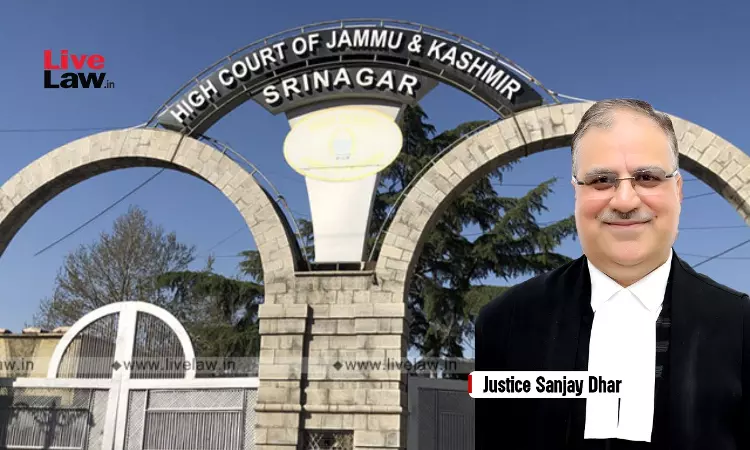
“.. To say that a public servant who has taken bribe or illegal gratification while implementing the Roshni Act would get scotfree because the Roshni Act has been declared unconstitutional would be illogical and preposterous”, remarked Justice Sanjay Dhar
The court made these observations while deciding a batch of eleven petitions challenging CBI prosecutions arising out of alleged illegal vesting of State land under the Jammu and Kashmir State Lands (Vesting of Ownership to the Occupants) Act, 2001, commonly known as the Roshni Act. The petitioners had sought quashing of FIRs and charge-sheets primarily on the ground that once the Roshni Act stood declared void ab initio, all actions taken under it must be treated as non est in the eye of law, thereby nullifying criminal proceedings.
The Court traced the background to the landmark decision of a Division Bench in Professor S.K. Bhalla v. State of J&K (2020), wherein the Roshni Act and the Rules framed under it were struck down as unconstitutional. The Division Bench had recorded scathing findings on the manner in which State land was illegally vested in favour of private individuals through arbitrary pricing, free transfers, misuse of power and official connivance, and had consequently directed a comprehensive investigation by the Central Bureau of Investigation, followed by criminal prosecution of all culpable persons.
Dealing with the principal contention of the accused, Justice Dhar categorically held that the prosecutions in question were not founded on violations of the Roshni Act but on offences punishable under the Jammu and Kashmir Prevention of Corruption Act. The Court observed that even if the Roshni Act is deemed never to have existed, the Prevention of Corruption Act remains very much in force, and any abuse of official position, conspiracy or conferment of undue benefit squarely attracts criminal liability under that statute.
The Court rejected the argument that no loss had been caused to the State since the land vested under the Roshni Act was directed to be retrieved following the Prof. S.K. Bhalla judgment. It stated,
“… Once an offence has been committed by a person, merely because the benefit derived by the said person has been restituted in favour of the person against whom the said offence has been committed, cannot lead to the obliteration of the offences committed”
On the plea based on Article 20(1) of the Constitution, which prohibits conviction for acts not constituting an offence under a law in force at the relevant time, the Court held the argument to be wholly misconceived. It said,
“… the petitioners are being prosecuted not for an offence defined under the Roshni Act, which has been declared unconstitutional, but they are being prosecuted for an offence defined under the P.C. Act, which is in existence.
Justice Dhar explained that at the time when the alleged acts and omissions took place, the Roshni Act was operative, and the offences alleged are under the Prevention of Corruption Act, which continues to be a valid law. Therefore, the constitutional protection against retrospective criminalisation had no application, he maintained.
The Court also underlined that the directions issued by the Division Bench in Prof. S.K. Bhalla for CBI investigation and prosecution were explicit and binding. In light of those directions, it was not open to scuttle prosecutions at the threshold merely because the parent statute had been struck down.
While affirming the maintainability of corruption prosecutions in principle, the Court clarified that each case must ultimately stand or fall on its own facts. Mere implementation of the Roshni Act, by itself, the court said, would not automatically attract criminal liability and public servants who acted bona fide and strictly in accordance with the law as it stood at the relevant time could not be prosecuted.
However, where the material collected by the investigating agency disclosed misuse of official position, conspiracy or conferment of undue benefit, criminal proceedings were justified and could not be quashed in exercise of inherent jurisdiction.
“.. Thus, it is only if the material collected by the Investigating Agency does not make out a case against the petitioners that this Court would be justified in quashing the impugned proceedings”, the court recorded.
With these observations, the High Court upheld the continuation of CBI prosecutions in Roshni-related cases and went on to adjudicate each of the petitions on their individual merit.
Case Title: Mushtaq Ahmad Bakshi
Citation: 2026 LiveLaw (JKL) 38


