



- Home
- /
- High Courts
- /
- High Court of J & K and Ladakh
- /
- J&K&L High Court Declines Bail To...
J&K&L High Court Declines Bail To Juvenile Accused Of Sending Photos Of Security Installations To Pakistan
LIVELAW NEWS NETWORK
28 March 2026 10:35 AM IST
The Jammu & Kashmir and Ladakh High Court has held that a juvenile in conflict with law cannot claim bail as a matter of right under Section 12 of the Juvenile Justice (Care and Protection of Children) Act, 2015, irrespective of the gravity of the charge. The Court clarified that the proviso to Section 12 permits denial of bail if the release would defeat the ends of justice, which...
This is a premium content
Available exclusively to
Our subscribers
Subscribe Premium 
INR 1099+GST
Your support helps us to bring you more content at
an affordable subscription scheme !!!
All payment options available
The Jammu & Kashmir and Ladakh High Court has held that a juvenile in conflict with law cannot claim bail as a matter of right under Section 12 of the Juvenile Justice (Care and Protection of Children) Act, 2015, irrespective of the gravity of the charge. The Court clarified that the proviso to Section 12 permits denial of bail if the release would defeat the ends of justice, which includes consideration of the nature and gravity of the offence.
The Court was hearing a bail application filed by a 19-year-old applicant, who was 16 years old at the time of occurrence, seeking enlargement on bail in an FIR registered under Sections 13 and 39 of the Unlawful Activities (Prevention) Act, 1967, and Sections 120-B, 121 and 122 of the Indian Penal Code. The applicant's plea for bail was earlier declined by the Special Judge designated under the NIA Act, Poonch.
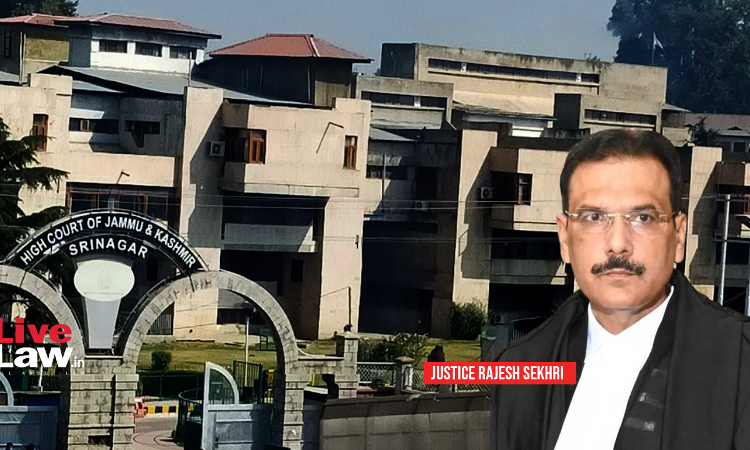
The bench of Justice Rajesh Sekhri observed,
"Though it is manifest from a plain reading of Section 12 that a child in conflict with law, who is alleged to have committed a bailable or a non-bailable offence, is to be released on bail with or without surety notwithstanding anything contained in Cr. P. C. or any other law for the time being in force, however, proviso attached to Section 12 is a caveat that such person shall not be so released, if there are reasonable grounds to believe that his release is likely to bring him into the association of a known criminal or expose him to moral, physical or psychological danger or his release would defeat the ends of justice."
An FIR was registered based on source information that the applicant was in telephonic contact with Pakistan agency ISI and other terrorist outfits, and was motivating youngsters and people of the area to wage war against the country. The investigating agency, along with the Executive Magistrate and Army personnel, raided the applicant's house and arrested him.
During investigation, according to the prosecution, the applicant disclosed that he ran a mobile phone repairing shop and had come into contact with a Pakistani national named Sahil Khan through Facebook, who shared the phone number of another Pakistani national, Haji Mastan and asked the applicant to provide photographs of Mandi area, particularly establishments of security forces, to which the applicant agreed and shared photographs. The applicant was provided phone numbers of terrorists and was motivated to join the terrorist outfit.
The investigation culminated in the presentation of a charge sheet against the applicant for offences under Sections 120-B, 121, 122 IPC and Sections 13, 39 UAPA.
The applicant had earlier preferred a bail application which was dismissed by the trial Court on grounds including that national interest is paramount to personal liberty, there were reasonable grounds to believe that his release would bring him in association with terrorist organisations, and it would defeat the ends of justice.
Court's Observation:
The Court examined the statutory framework of the Juvenile Justice Act, noting that it was legislated with the avowed object of ensuring basic needs of children are met through proper care, protection, development, treatment, and social integration by adopting a child-friendly approach. The Court observed that all decisions regarding a child in conflict with law must be premised on the primary consideration of their best interest and rehabilitation.
The Court noted that the Act classifies offences into three categories: petty offences punishable with maximum imprisonment up to three years; serious offences punishable with imprisonment between three to seven years; and heinous offences for which the minimum punishment is imprisonment for seven years or more. The Court observed that the legislative intent behind this classification is that cases involving heinous offences are required to be dealt with utmost circumspection and sensitivity.
The Court analyzed Section 12 of the Act, which provides for bail to a person who is apparently a child alleged to be in conflict with law. It explained that while the main provision mandates release on bail notwithstanding anything contained in the Code of Criminal Procedure or any other law, the proviso creates an exception where such person shall not be released if there are reasonable grounds to believe that his release is likely to bring him into association with any known criminal, expose him to moral, physical or psychological danger, or defeat the ends of justice.
The Court observed that the proviso makes it clear that the legislature did not intend that a juvenile must be released on bail irrespective of the facts and circumstances of a case. It remarked,
“… the expression “the ends of justice” would encompass factors like the nature of the crime, the gravity of the charge, the methodology adopted by the accused, the manner of the commission of crime by him and impact on the society”
Referring to the Supreme Court judgment in Om Prakash v. State of Rajasthan (2012) 5 SCC 201, the Court noted that the Supreme Court had held that bail to a juvenile can be refused on the ground that releasing the juvenile would defeat the ends of justice, and that the nature and gravity of the offence is a relevant consideration in applying this part of the proviso.
The Court distinguished the case law relied upon by the applicant, noting that the allegations against the applicant were not only serious but against the integrity of the country. The Court pointed out that the applicant was in telephonic contact with Pakistani agency ISI and other terrorist outfits, was motivating youngsters to wage war against the country, and had agreed to provide photographs of vital installations of security forces to his Pakistani handlers.
“…. The methodology adopted by him in sharing photographs of vital installations of security forces to his Pak handlers is sufficient to indicate that his conduct with which he associated with Pakistani agency ISI and Pak based terrorists is that of a matured and a skilled person. Therefore, release of the applicant at this stage would not only expose him to moral, physical and psychological danger but it would defeat the ends of justice”, the court recorded.
Holding that the release of the applicant at this stage would not only expose him to moral, physical and psychological danger but would also defeat the ends of justice the Court was of the view that release of the applicant at this stage would neither be in his best interest nor advance the cause of justice. Accordingly, the bail application was dismissed.
Appearances
Petitioner: Advocate Mr. M. A. Bhat
Respondent: Senior AAG Mrs. Monika Kohli
Case Title: Anjum Mehmood v. Union Territory of J&K
Citation: 2026 LiveLaw (JKL) 120


