



- Home
- /
- High Courts
- /
- High Court of J & K and Ladakh
- /
- Mere Abuse Or Uttering Caste Name...
Mere Abuse Or Uttering Caste Name Not Offence Under SC/ST Act: J&K&L High Court
LIVELAW NEWS NETWORK
3 April 2026 5:33 PM IST
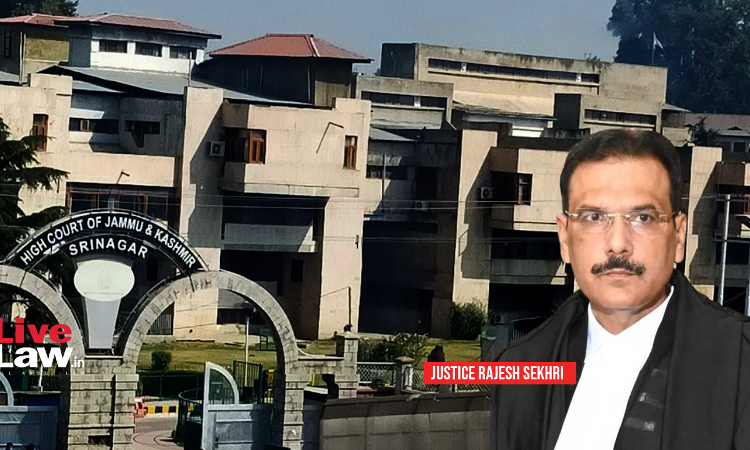
The Jammu & Kashmir and Ladakh High Court has held that for an offence under Section 3(1)(s) of the Scheduled Castes and Scheduled Tribes (Prevention of Atrocities) Act, 1989 to be made out, it is not sufficient that the accused merely abuses a member of a Scheduled Caste or Scheduled Tribe or merely utters a caste name. The Court clarified that the essential requirement is that the...
This is a premium content
Available exclusively to
Our subscribers
Subscribe Premium 
INR 1099+GST
Your support helps us to bring you more content at
an affordable subscription scheme !!!
All payment options available
The Jammu & Kashmir and Ladakh High Court has held that for an offence under Section 3(1)(s) of the Scheduled Castes and Scheduled Tribes (Prevention of Atrocities) Act, 1989 to be made out, it is not sufficient that the accused merely abuses a member of a Scheduled Caste or Scheduled Tribe or merely utters a caste name. The Court clarified that the essential requirement is that the accused abuses such a member “by the caste name” in any place within public view.
The bench of Justice Rajesh Sekhri observed,
“... It is evident from the aforesaid that merely abusing a member of a Scheduled Caste or Scheduled Tribe or merely uttering a caste name by itself would not be sufficient to constitute an offence within the meaning of Section 3(1)(s) of the Act, and it is necessary that accused abuses a member of such community 'by the caste name' in any place within public view.”
The Court was hearing a composite petition under Section 528 of the Bharatiya Nagarik Suraksha Sanhita (BNSS), 2023 read with Section 14A(2) of the SC/ST Act, filed by a member of the District Development Council, Kastigarh, challenging the order passed by the learned Principal Sessions Judge (Special Judge), Bhadewah, which had dismissed her application for pre-arrest bail in connection with FIR registered at Police Station Doda for offences under Sections 126(2), 115(2), 351(2), 352 BNS read with Sections 3(1)(r) and 3(1)(s) of the SC/ST Act.
In January 2026, respondent No. 2 (complainant) lodged a written report with Police Station Doda alleging that during the inauguration of a road at Kastigarh where the MLA Doda, DDC Chairman and DDC Vice Chairperson were present as chief dignitaries, the sons of the petitioner with her connivance and the connivance of their supporters attacked the complainant and others present at the venue.
It was alleged that the petitioner, Santosha Devi, was armed with a sharp edged weapon (a scissor) with which she inflicted injuries upon the complainant party. The complainant specifically alleged that the petitioner publicly abused, humiliated and insulted him by passing a caste-based derogatory slur “chinal”, knowing fully well that he belongs to the 'Megh' community, a Scheduled Caste category.
The trial court had rejected the petitioner's bail plea primarily on the ground that since the word “chinal” was uttered by her to a member of a Scheduled Caste in public view, the prima facie ingredients of offences under the SC/ST Act were made out, thereby attracting the bar under Sections 18 and 18A of the Act.
Court's Observation:
The Court examined the provisions of Sections 3(1)(r) and 3(1)(s) of the SC/ST Act. Section 3(1)(r) punishes intentional insult or intimidation with intent to humiliate a member of a Scheduled Caste or Scheduled Tribe in any place within public view. Section 3(1)(s) punishes abuse of any member of a Scheduled Caste or Scheduled Tribe by caste name in any place within public view.
Referring to the Supreme Court judgment in Shajan Skaria v. The State of Kerala (Criminal Appeal No. 2622 of 2024), the Court noted that the offence under Section 3(1)(r) cannot stand only on the ground that the complainant is a member of a Scheduled Caste or Scheduled Tribe, unless there exists an intention to humiliate him on account of his belonging to such community.
The Supreme Court had held that if the necessary ingredients to constitute the offence are not disclosed on a prima facie reading of the allegations, the bar of Section 18 would not apply and courts would not be absolutely precluded from granting pre-arrest bail, the Court underscored.
The Court also relied upon the Supreme Court judgment in Keshaw Mahto @ Keshaw Kumar Mahato v. State of Bihar & Anr. (SLP (Crl.) No. 12144 of 2025 wherein it was held that to constitute an offence under Section 3(1)(s), it is necessary that the accused abuses a member of a Scheduled Caste or Scheduled Tribe “by the caste name” in any place within public view. The allegations must reveal that abuses were laced with caste name, or the caste name had been hurled as an abuse and the element of humiliation must be gathered from the intentional insult towards the caste, the Court emphasised.
Applying these principles, the Court noted that the threshold for determining whether an offence under the SC/ST Act has been committed is whether essential ingredients are prima facie borne out from the FIR or the complaint. If necessary ingredients are not disclosed on a prima facie reading, the bar under Sections 18 and 18A would not apply, and courts can consider grant of pre-arrest bail. However, if ingredients are coming forth from a plain reading, then the remedy of anticipatory bail is not available, the court explained.
The Court rejected the petitioner's contention that since the term “chinal” does not figure in the Constitution (Jammu and Kashmir) Scheduled Castes Order, 1956, it cannot be termed a caste name. The Court noted that the Lumbardar and Chowkidar had confirmed that “chinal” is locally understood as an abusive caste-based slur linked to “Megh”, which is one of the 13 Scheduled Castes mentioned in the list.
The Court also rejected the argument that a single word abuse cannot constitute an offence under the Act, holding that if the necessary ingredients are made out, whether the abuse consists of a single word or more than one word shall be immaterial.
However, the Court undertook a preliminary enquiry as permitted by Shajan Skaria, examining the video recording of the alleged occurrence and the press conference of the petitioner. The Court observed that although the petitioner could be seen assaulting someone in the video recording, nothing incriminating with respect to offences under Sections 3(1)(r) and 3(1)(s) was discernible, as only commotion was audible.
The Court concluded that there was nothing in the transcript of the video recording or the press conference to even prima facie indicate that the necessary ingredients to constitute offences under Sections 3(1)(r) or 3(1)(s) of the SC/ST Act were made out against the petitioner, though other offences under penal law might be constituted.
Accordingly, the Court allowed the petition and directed that the petitioner, in the event of arrest, be released on bail on furnishing a surety bond.
Case Title: Santosha Devi v. UT of J&K & Ors.
Citation: 2026 LiveLaw (JKL) 132
Appearances
Petitioner: M/s J. P. Gandhi and Nipun Gandhi, Advocates
Respondents: Senior AAG Mrs. Monika Kohli


