



- Home
- /
- High Courts
- /
- High Court of J & K and Ladakh
- /
- Pre-Arrest Bail Not Barred Under...
Pre-Arrest Bail Not Barred Under SC/ST Act If Prima Facie Ingredients Of Offence Are Not Disclosed: J&K&L High Court
LIVELAW NEWS NETWORK
4 April 2026 11:05 AM IST
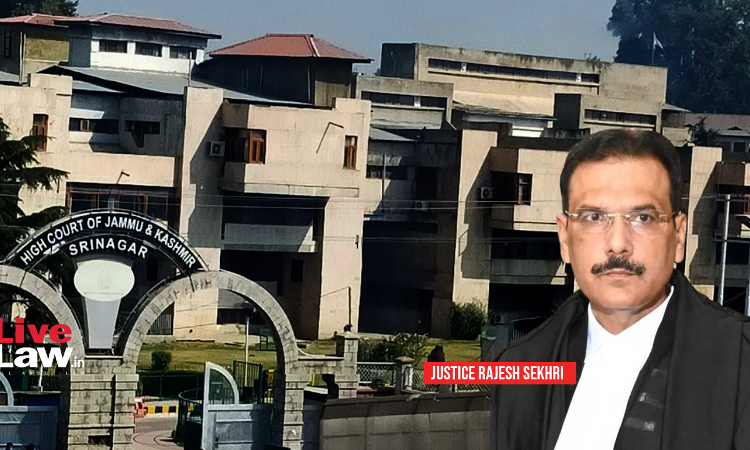
The Jammu & Kashmir and Ladakh High Court has held that the bar against anticipatory bail under Sections 18 and 18A of the Scheduled Castes and Scheduled Tribes (Prevention of Atrocities) Act, 1989 is not absolute. If a prima facie reading of the FIR or complaint does not disclose the essential ingredients constituting an offence under the Act, courts can grant pre-arrest bail.The Court...
This is a premium content
Available exclusively to
Our subscribers
Subscribe Premium 
INR 1099+GST
Your support helps us to bring you more content at
an affordable subscription scheme !!!
All payment options available
The Jammu & Kashmir and Ladakh High Court has held that the bar against anticipatory bail under Sections 18 and 18A of the Scheduled Castes and Scheduled Tribes (Prevention of Atrocities) Act, 1989 is not absolute. If a prima facie reading of the FIR or complaint does not disclose the essential ingredients constituting an offence under the Act, courts can grant pre-arrest bail.
The Court was hearing a petition filed by a member of the District Development Council challenging the dismissal of her anticipatory bail application in an FIR registered under Sections 3(1)(r) and 3(1)(s) of the SC/ST Act along with penal offences.
The bench of Justice Rajesh Sekhri observed,
“If the necessary ingredients to constitute the offence under the Act, 1989 are not disclosed on the prima facie reading of the allegations levelled in the complaint or FIR, then... the bar of Section 18 would not apply and the courts would not be absolutely precluded from granting pre-arrest bail to the accused persons.”
Background:
During a public function, an altercation took place between the petitioner and the complainant. The complainant alleged that the petitioner publicly abused him by uttering a caste-based slur “chinal”, knowing he belongs to the 'Megh' community, a Scheduled Caste. An FIR was registered under penal provisions and Sections 3(1)(r) and 3(1)(s) of the SC/ST Act.
The trial court rejected her pre-arrest bail application, holding that the utterance of the word in public view made out prima facie ingredients of the offence, attracting the bar under Sections 18 and 18A.
Court's Observation:
The Court examined the legal position on anticipatory bail under the SC/ST Act. Referring to the Supreme Court judgment in Shajan Skaria v. The State of Kerala (2024), the Court noted that the only test is whether the allegations in the FIR or complaint disclose the commission of an offence under the Act. If the necessary ingredients are not disclosed on a prima facie reading, the bar of Section 18 would not apply. The Supreme Court held that courts are not absolutely precluded from granting pre-arrest bail in such circumstances, the Court emphasised.
The Court also relied upon Keshaw Mahto v. State of Bihar (2025), where the Supreme Court held that to constitute an offence under Section 3(1)(s) of the Act, it is necessary that the accused abuses a member of a Scheduled Caste or Scheduled Tribe “by the caste name” in any place within public view. The allegations must reveal that abuses were laced with caste name or the caste name itself was hurled as an abuse.
Applying these principles, the Court undertook a preliminary enquiry as permitted by Shajan Skaria, examining the video recording of the incident and the petitioner's press conference.
The Court observed that nothing incriminating with respect to offences under Sections 3(1)(r) and 3(1)(s) was discernible from the video recording; only commotion was audible. In the press conference video, while the petitioner admitted assaulting the complainant party in self-defence, there was no admission that she had abused the complainant by his caste name.
The Court concluded that there was nothing to even prima facie indicate that the necessary ingredients of offences under the SC/ST Act were made out against the petitioner, though other penal offences may be constituted. Consequently, the bar under Sections 18 and 18A was not attracted.
Accordingly the Court allowed the petition and directed that the petitioner be released on bail in the event of arrest on furnishing a surety bond of Rs. 25,000/- and a personal recognizance bond of the like amount, subject to standard conditions. The Court clarified that nothing in the order shall be construed as an expression of opinion on the merits of the case.
Case Title: Santosha Devi v. UT of J&K & Ors.
Citation: 2026 LiveLaw (JKL) 134


