



- Home
- /
- High Courts
- /
- High Court of J & K and Ladakh
- /
- Protection Of Life Prevails Over...
Protection Of Life Prevails Over Reproductive Choice: J&KL High Court Declines Termination Of 27-Week Pregnancy Of Minor Rape Survivor
LIVELAW NEWS NETWORK
21 May 2026 8:45 PM IST
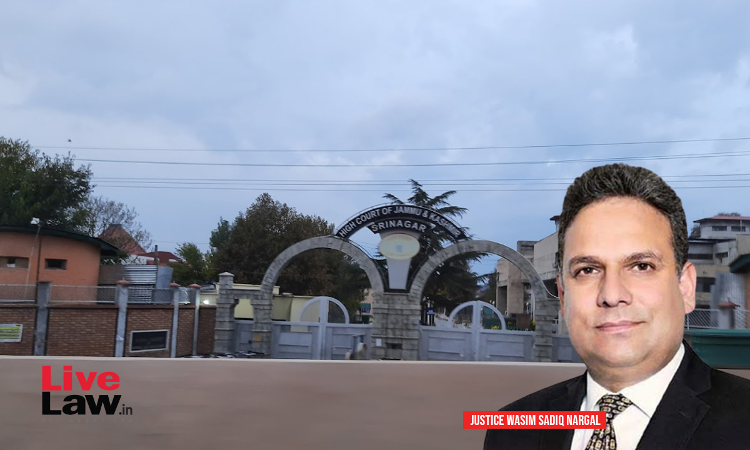
The High Court of Jammu & Kashmir and Ladakh has declined permission for medical termination of a 27-week pregnancy of a minor rape survivor, holding that preservation and protection of life must take precedence where medical experts warn that termination would expose the victim to life-threatening complications and irreversible health consequences.The Court held that while the...
This is a premium content
Available exclusively to
Our subscribers
Subscribe Premium 
INR 1099+GST
Your support helps us to bring you more content at
an affordable subscription scheme !!!
All payment options available
The High Court of Jammu & Kashmir and Ladakh has declined permission for medical termination of a 27-week pregnancy of a minor rape survivor, holding that preservation and protection of life must take precedence where medical experts warn that termination would expose the victim to life-threatening complications and irreversible health consequences.
The Court held that while the pregnancy arose from sexual assault, the constitutional guarantee under Article 21 encompasses not merely reproductive autonomy but also the right to life and survival of the pregnant woman.
The Court was dealing with a petition filed on behalf of a minor girl, aged about 14 years, who had conceived as a result of an alleged sexual assault. The petitioner sought judicial permission for medical termination of pregnancy beyond the statutory gestational limit prescribed under the Medical Termination of Pregnancy Act, 1971, contending that continuation of the pregnancy would inflict grave physical, psychological and emotional trauma upon the child.
Justice Wasim Sadiq Nargal, while dismissing the plea for termination, observed,
“... The paramount consideration in such cases has to be the preservation of life and the minimization of risk to the health of the minor.”
The Court further emphasized that “Once the expert body in the form of Medical Board duly constituted has opined that termination at the present stage poses a serious and imminent threat to the life of the victim-X, this Court cannot ignore or brush aside such expert medical opinion merely on sympathetic considerations.”
The petition arose from an incident of alleged sexual assault against a minor girl, leading to registration of FIR. . The accused had already been arrested and the investigation was in progress.
According to the medical records placed before the Court, the pregnancy had advanced to approximately 25 weeks and 5 days at the time the petition was filed. The Child Welfare Committee (CWC), declared the victim a child in need of care and protection and recommended immediate legal, medical and psychological intervention. However, the health authorities informed the Committee that termination could not be undertaken without orders from a competent court because the gestational period had crossed the statutory limit.
The petitioner argued that forcing a fourteen-year-old rape survivor to continue an unwanted pregnancy would violate her dignity, bodily integrity and right to life under Article 21 of the Constitution. It was also contended that continuation of the pregnancy would adversely affect her education, rehabilitation, emotional recovery and future prospects. Reliance was placed upon a recent Supreme Court judgment permitting termination of a pregnancy at twenty-eight weeks of gestation.
In view of the sensitive nature of the matter, the High Court directed the constitution of a Medical Board and further ordered that the victim's privacy, identity and confidentiality be strictly protected. Subsequently, detailed in-camera proceedings were conducted in the presence of the Medical Board, health authorities, the victim and her parents.
Court's Observations:
The Court first considered the reports of the Medical Board and subsequent radiological and dental assessments, which confirmed that the victim was a minor. It then proceeded to examine whether termination could be permitted despite the medical opinion cautioning against it.
The Medical Board unequivocally opined that termination at the existing stage of gestation would expose the victim to serious obstetric risks, including prolonged and failed induction, postpartum haemorrhage, hysterectomy, puerperal sepsis, need for intensive care, multiple blood transfusions and secondary infertility. The Board also warned of severe complications for the fetus, including respiratory distress syndrome, prematurity-related morbidities and neonatal demise.
Referring to the Medical Board's findings, the Court reproduced the observation that termination at the advanced gestational stage could entail “need for operative interventions like Hysterectomy, postpartum hemorrhage, operative vaginal delivery, puerperal sepsis, need for intensive care and multiple blood transfusions and secondary infertility as a long terms sequel.”
The Court distinguished the Supreme Court judgment relied upon by the petitioner on the ground that, in that case, the Medical Board had specifically found the minor fit for termination. In the present matter, however, the Medical Board had reached the exact opposite conclusion and warned that termination posed grave danger to the victim's life and health.
Justice Nargal held that constitutional courts cannot substitute their own views for the expert opinion of medical specialists in matters involving complex medical questions. The Court observed, “This Court cannot, in exercise of its writ jurisdiction, disregard or sit in appeal over the expert medical opinion rendered by a duly constituted Medical Board.”
The Court further held that although the psychological trauma suffered by a rape survivor is a relevant consideration, the right to seek termination cannot be treated as absolute when weighed against a serious threat to life.
In a significant observation, the Court stated,
“… The right to seek termination cannot be construed as an absolute right divorced from medical realities and expert assessment. Once the competent Medical Board has opined against termination due to serious danger to the life of the victim, the Court would be acting contrary to medical prudence if it still directs termination of pregnancy”
Invoking the doctrine of parens patriae, the Court held that where psychological distress arising from continuation of pregnancy competes with an imminent medical danger resulting from termination, the Court is duty-bound to prioritize preservation of life, which occupies the highest pedestal under Article 21 of the Constitution.
Welfare and Rehabilitation of the Victim:
While declining the request for medical termination, the Court underscored that the victim's welfare, rehabilitation and dignity remained paramount concerns. The Court examined the provisions of the Juvenile Justice (Care and Protection of Children) Act, 2015 and held that a minor victim of sexual assault clearly falls within the definition of a “child in need of care and protection”, thereby becoming entitled to statutory care, protection and rehabilitation mechanisms.
Recognising the need for continued institutional support, the Court directed all concerned authorities to ensure comprehensive medical treatment, counselling, security, confidentiality and rehabilitation for the victim. Government Lalla Ded Hospital, Srinagar, undertook to provide free medical treatment, hospitalization, investigations, delivery-related care and post-delivery assistance, while maintaining complete confidentiality regarding the victim's identity and medical condition.
The Court also directed that adoption-related procedures, if required, be undertaken strictly in accordance with the Juvenile Justice Act through the Child Welfare Committee and the Specialized Adoption Agency.
The High Court held that despite the unfortunate circumstances in which the pregnancy arose, judicial permission for termination could not be granted because the Medical Board had categorically warned that the procedure would expose the minor rape survivor to grave and potentially irreversible medical consequences.
Accordingly, the Court dismissed the writ petition insofar as it sought medical termination of pregnancy. At the same time, it directed strict implementation of measures relating to the victim's medical care, protection, confidentiality, rehabilitation and welfare, and ordered periodic compliance reports from the concerned authorities regarding the condition of the victim and the prospective child.
Case Title: Minor Victim “X” Through Her Father v. Union Territory of J&K & Ors.
Citation: 2026 LiveLaw (JKL) 220
Appearances
Petitioner: Ms. Asifa Rashid, Advocate
Respondents: Mr. Faheem Nisar Shah, GA and Mr. Waseem Gul, GA


