



- Home
- /
- High Courts
- /
- High Court of J & K and Ladakh
- /
- Re-Testing Of NDPS Samples Cannot...
Re-Testing Of NDPS Samples Cannot Be Allowed Routinely, Haphazardly Importing Rights From Other Statutes Impermissible: J&K&L High Court
LIVELAW NEWS NETWORK
25 Feb 2026 6:15 PM IST
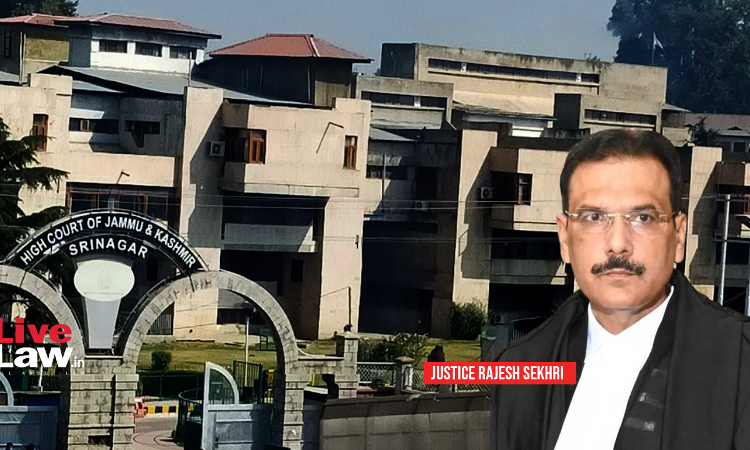
The Jammu and Kashmir and Ladakh High Court has held that Re-testing may be an important right of an accused, but its mechanical and haphazard import from other legislations without the accompanying statutory restrictions is impermissible.The court underscored that under the NDPS Act, re-testing cannot be permitted as a matter of routine and is strictly barred in the absence of compelling...
This is a premium content
Available exclusively to
Our subscribers
Subscribe Premium 
INR 1099+GST
Your support helps us to bring you more content at
an affordable subscription scheme !!!
All payment options available
The Jammu and Kashmir and Ladakh High Court has held that Re-testing may be an important right of an accused, but its mechanical and haphazard import from other legislations without the accompanying statutory restrictions is impermissible.
The court underscored that under the NDPS Act, re-testing cannot be permitted as a matter of routine and is strictly barred in the absence of compelling and exceptional circumstances:
Delivering a judgment on the subject Justice Rajesh Sekhri added that re-testing or re-sampling under the NDPS Act may be permitted only in extremely exceptional circumstances, for cogent reasons to be recorded by the presiding judge, and that too upon an application filed within 15 days of receipt of the test report. In the absence of such compelling circumstances, any form of re-testing is strictly prohibited.
The Court was dealing with a Bail Application and a petition seeking quashment of proceedings arising out of Case registered by the Narcotics Control Bureau (NCB), Jammu. Acting on source information, the NCB intercepted two vehicles and claimed recovery of 870 grams of suspected contraband from the petitioners. Field testing allegedly indicated heroin, leading to seizure of the substance and registration of offences under Sections 8, 21, 25, 29 and 60 of the NDPS Act.
A sample of the seized substance was sent to CRCL, New Delhi, for chemical analysis. The laboratory report, however, categorically ruled out the presence of heroin or any other narcotic drug or psychotropic substance, though it indicated the presence of Viagra. On the basis of this report, the trial court granted interim bail to the accused.
Despite the negative laboratory report, the prosecution moved an application seeking re-testing of the second sample, which was allowed by the trial court on the same day without recording any reasons. The second report from CFSL, Chandigarh, detected Tramadol, Caffeine and Dextromethorphan. Relying upon this report, the trial court recalled interim bail and remanded the petitioners to judicial custody, prompting the present challenge.
Counsel for the petitioners argued that the NDPS Act does not permit re-testing of samples once a competent laboratory has returned a clear and categorical report. Relying on the Supreme Court decision in Thana Singh v. Central Bureau of Narcotics, it was contended that re-testing can be ordered only in rare and exceptional circumstances, none of which existed in the present case.
Opposing the plea, counsel for the NCB submitted that a commercial quantity was recovered from the conscious possession of the accused and that the rigours of Section 37 of the NDPS Act were attracted. It was argued that the charge-sheet disclosed prima facie involvement of the petitioners and warranted continuation of proceedings.
Court's Observations:
After hearing the parties and perusing the record, the High Court found the approach of the prosecution as well as the trial court to be wholly contrary to settled law.
The Court noted that the NDPS Act consciously omits any provision permitting routine re-testing or re-sampling, unlike other statutes such as the Drugs and Cosmetics Act or the Prevention of Food Adulteration Act, which expressly provide timelines and safeguards for such a course.
Referring to Thana Singh, the Court reiterated that the Supreme Court had deprecated the growing tendency of NDPS courts to mechanically allow re-testing applications, leading to delay and abuse of process.
“Re-testing may be an important right of an accused, but the haphazard manner in which such right is imported from other legislations without its accompanying restrictions is not permissible,” the Court observed.
The court emphasized that re-testing under the NDPS Act cannot be entertained as a matter of course and may be permitted only in extremely exceptional circumstances, such as loss, damage or deterioration of the sample—circumstances which must be specifically pleaded and established.
Examining the prosecution's application, the Court found that the sole reason for seeking re-testing was that the CRCL, Delhi report did not detect heroin. No exceptional circumstance was pleaded, nor was any justification offered.
Equally, the trial court allowed re-testing merely because the first report was adverse to the prosecution, without assigning any reasons, the court noted.
“Since the report of CRCL, Delhi was inconvenient to the prosecution, an application for re-testing was filed and allowed on mere asking. Such an approach is not permissible in law,” the Court held.
Justice Sekhri observed that once a competent laboratory had given a clear, categorical and specific opinion ruling out the presence of narcotic drugs, the same could not be brushed aside in a routine and casual manner.
Holding that the re-testing was ordered in complete disregard of statutory framework and binding precedent, the High Court concluded that the subsequent proceedings stood vitiated. The allegations in the charge-sheet, therefore, did not prima facie disclose the commission of any cognizable offence.
Accordingly, the Court allowed the petitions and quashed the charge-sheet along with all consequential proceedings. “In the absence of any compelling circumstance, any form of re-testing or re-sampling is strictly prohibited under the NDPS Act,” the Court concluded.
Case Title: Mohd Mansha & Ors Vs Union of India
Citation: 2026 LiveLaw (JKL) 69


