



- Home
- /
- High Courts
- /
- High Court of J & K and Ladakh
- /
- AFT Cannot Insist On Certified...
AFT Cannot Insist On Certified Court-Martial Copies When Disclosure Barred On Security Grounds: J&K&L High Court
LIVELAW NEWS NETWORK
16 May 2026 12:15 PM IST
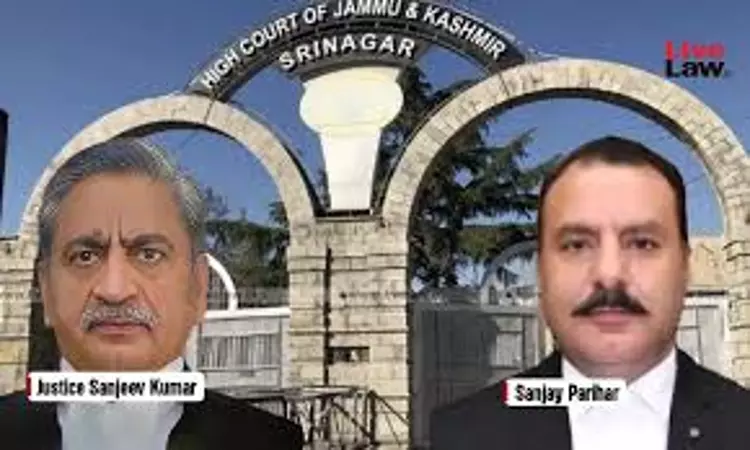
The High Court of Jammu & Kashmir and Ladakh has held that Rule 147-A of the Army Rules, 1954, which permits the Central Government to deny a certified copy of court-martial proceedings on grounds of security of the State or friendly relations with foreign States, is constitutionally valid and protected by Article 33 of the Constitution of India.However, the Court set aside the order of...
This is a premium content
Available exclusively to
Our subscribers
Subscribe Premium 
INR 1099+GST
Your support helps us to bring you more content at
an affordable subscription scheme !!!
All payment options available
The High Court of Jammu & Kashmir and Ladakh has held that Rule 147-A of the Army Rules, 1954, which permits the Central Government to deny a certified copy of court-martial proceedings on grounds of security of the State or friendly relations with foreign States, is constitutionally valid and protected by Article 33 of the Constitution of India.
However, the Court set aside the order of the Armed Forces Tribunal, which had dismissed the petitioner's appeal solely for want of a certified copy of the conviction and sentence, and directed the Tribunal to consider the appeal on merits after summoning the record in a sealed cover.
The Court was hearing a writ petition filed by Mushtaq Ahmad Malik, who was tried and convicted by a Summary General Court Martial. The petitioner challenged the order and judgment passed by the Armed Forces Tribunal, Regional Bench, Srinagar, primarily on the ground that the proceedings of the Summary General Court Martial were not supplied to him by the respondents taking shelter under Rule 147 of the Army Rules, 1954.
The petitioner also challenged the constitutional validity of Rule 147-A on the ground that its provisions violate Articles 14 and 21 of the Constitution of India, and that the protection available under Article 33 is available only to Acts of the legislature and does not extend to subordinate legislation or rules framed under the Army Act, 1950.
A Bench of Justice Sanjeev Kumar and Justice Sanjay Parihar, while examining the provisions of Rule 147 and Rule 147-A, observed,
“... Rule 147-A framed by the Central Government under Section 191 of the Army Act is indisputably a law made by the Parliament and, therefore, protected by Article 33 of the Constitution of India.” The Court held that the Tribunal ought not to have insisted on a certified copy of the order of conviction and sentence when the petitioner was legitimately denied the same under Rule 147-A.
Background
The petitioner, Mushtaq Ahmad Malik, was tried by a Summary General Court Martial on 5th October 2022. The father of the petitioner was intimated about the trial, the offence for which sentence was awarded, and the punishment awarded.
However, when the petitioner requested copies of the court-martial proceedings, the respondents denied the same relying on Rule 147-A of the Army Rules, 1954, read with a certificate issued by the Central Government stating that supplying a copy of the proceedings would be against the interest of the security of the State. The copy of the certificate was supplied to the petitioner vide communication dated 31st May 2023.
The petitioner challenged his conviction and sentence before the Armed Forces Tribunal. The Tribunal dismissed the appeal on the ground that the petitioner did not accompany the appeal with certified copies of the order of conviction and sentence passed by the Summary General Court Martial.
Aggrieved, the petitioner approached the High Court, contending that the Tribunal could not have insisted for certified copies when the same were never supplied to him. He also challenged the constitutional validity of Rule 147-A as being violative of Articles 14 and 21, arguing that Article 33 protection does not extend to subordinate legislation.
The respondents defended the validity of Rule 147-A, relying on Article 33 of the Constitution, and submitted that in view of the certificate issued by the Central Government, the petitioner was legitimately denied copies of the proceedings.
Court's Observation:
The Court first set out Rule 147 and Rule 147-A of the Army Rules, 1954. The Court observed Rule 147 entitles every person tried by a court-martial (other than summary court-martial) to a copy of the proceedings on request and Rule 147-A provides that if the Central Government certifies that supplying a copy would be against the interests of the security of the State or friendly relations with foreign States, such copy shall not be furnished.
However, the court added that the proviso permits inspection of the proceedings to the person or his legal adviser for the purpose of submitting a petition or instituting legal action, subject to conditions including an undertaking not to make copies and awareness of prosecution under the Official Secrets Act, 1923.
The Court framed the key question as to whether Rule 147-A, which prima facie tramples the right to fair trial and recourse to legal proceedings and offends Articles 14 and 21, is saved by Article 33 of the Constitution. The Court examined Article 33, which empowers Parliament to modify or restrict fundamental rights in their application to the Armed Forces by law.
The Court rejected the argument that fundamental rights can be restricted only by an Act of Parliament and not by rules framed as subordinate legislation. It observed,
“... From a careful reading of Article 33, it would become evident that the provision talks about the law made by the Parliament and not the act of Parliament. The rules framed by the Government under the authority delegated under the Act is nothing but a law made by the Parliament.” It noted that the Central Government framed the Army Rules in exercise of power conferred by Section 191 of the Army Act, 1950, and therefore Rule 147-A is a “law” within the meaning of Article 33.
Drawing support from Article 13(3)(a) of the Constitution, which defines “law” to include rules, regulations, bye-laws, and orders having the force of law, the Court held that no different meaning to the term “law” in Article 33 is called for. The Court also referred to its earlier Single Bench decision in Mulkh Raj v. Union of India & Ors. (1983) CRILJ 1794, which upheld the constitutional validity of Rule 147-A, and expressed full concurrence with that view.
The Court further held that Article 21 is not offended by Rule 147-A, as the procedure established by law must be just, fair, and reasonable. Citing Maneka Gandhi v. Union of India (1978) AIR 1978 SC 597, the Court observed that Rule 147-A provides sufficient inbuilt safeguards, including the right to inspect proceedings for the purpose of filing a petition or instituting legal action.
“The person like petitioner who has been tried by the court-martial cannot feign ignorance about the proceedings conducted by the Court Martial, for, not only he is given full opportunity to participate in such proceedings, but is also ensured all the safeguards so as to enable such person to contest the proceedings and put up his defense,” the Court stated.
Having upheld the constitutional validity of Rule 147-A, the Court examined the impugned order of the Tribunal. It found that the Tribunal had dismissed the appeal solely on the ground that the petitioner did not accompany the appeal with certified copies of the conviction and sentence. The Court held,
“... The tribunal ought to have summoned the record of the General Court Martial Proceedings in a sealed cover and examined the appeal of the petitioner on merits.” The Court concluded that the Tribunal had avoided its statutory obligation and that the impugned order was not sustainable in law.
The Court thus set aside the order passed by the Armed Forces Tribunal and restored the petitioner's appeal to its original number. The Tribunal was directed to consider the appeal on merits after summoning the record of the Summary General Court Martial.
The Court further directed the Tribunal to provide an opportunity to the petitioner or his counsel to inspect the proceedings in strict compliance with Rule 147-A of the Army Rules, subject to the conditions laid down therein, and to decide the appeal as expeditiously as possible. The writ petition was thus allowed.
Case Title: Mushtaq Ahmad Malik v. Union of India & Ors.
Citation: 2026 LiveLaw (JKL) 206
Appearances
Petitioner: Ms. Nida Nazir, Adv.
Respondents: Mr. Tahir Majid Shamsi, DSGI with Mr. Faizan Ahmad Ganie, CGSC, Ms. Rehana Qayoom, Adv., Mr. Pawandeep Singh, Officer Incharge, Legal Cell (Army)


