



- Home
- /
- High Courts
- /
- High Court of J & K and Ladakh
- /
- Historical Books Can't Prove...
Historical Books Can't Prove Private Property Title; S.57 Evidence Act Limited To Matters Of Public History: J&K&L High Court
LIVELAW NEWS NETWORK
6 April 2026 2:35 PM IST
The Jammu & Kashmir and Ladakh High Court has held that while courts may, under Section 57 of the Evidence Act, resort to appropriate books or documents of reference on matters of public history, the question whether a person holds title to a particular property cannot be treated as a matter of public history. Historical works cannot be used to establish title to property, as such...
This is a premium content
Available exclusively to
Our subscribers
Subscribe Premium 
INR 1099+GST
Your support helps us to bring you more content at
an affordable subscription scheme !!!
All payment options available
The Jammu & Kashmir and Ladakh High Court has held that while courts may, under Section 57 of the Evidence Act, resort to appropriate books or documents of reference on matters of public history, the question whether a person holds title to a particular property cannot be treated as a matter of public history. Historical works cannot be used to establish title to property, as such questions are of a private or local nature, the Court underscored.
The Court was hearing two writ petitions arising out of a long-standing dispute regarding the management and entitlement to properties pertaining to two shrines in Kishtwar, Ziarat Farid-ud-Din Sahib and Ziarat Assrar-ud-Din Sahib. The petitioners, claiming to be Sajjada Nasheens, contended that the properties were their personal properties and not wakaf, relying upon historical books and documents such as Ahadnama and Patanamas.
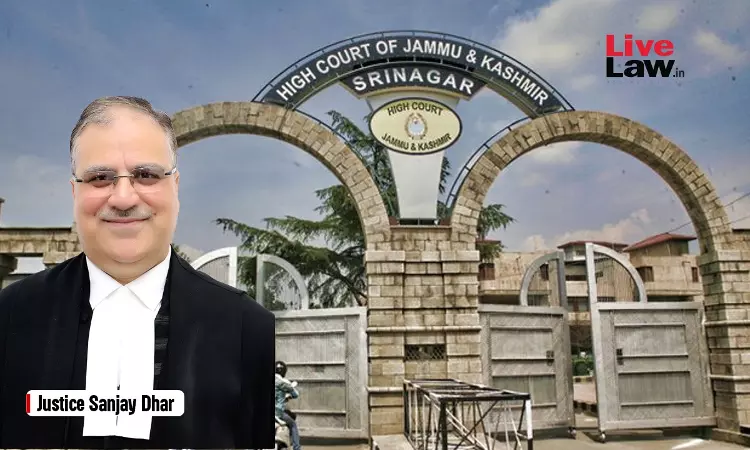
The bench of Justice Sanjay Dhar observed,
“Section 57 of the Evidence Act permits resort to appropriate books or documents of reference on matters of public history but not of a private or local nature. These history books or references cannot be used for proof of any fact relating to title of a property. The question of title between the Ziarats, though old and historical institutions and private person, the petitioners, herein cannot be deemed 'matter of public history' and historical works cannot be used to establish title to such property.”
The petitioners claimed that the two shrines and attached properties were their personal properties, having devolved upon them from their forefathers. They relied upon documents such as khilafatnama, Ahadnama, and various history books including Tareekh Kishtwar written by different historians to assert that the land was granted to their ancestors by the then rulers.
The respondents contended that the properties were wakaf properties, as reflected in the revenue records where the owner was shown as the ziarat and not the petitioners.
The dispute had a chequered history, including earlier writ petitions, an LPA, and a Supreme Court order that remanded the matter for fresh consideration. During the proceedings, the petitioners placed reliance on the history books to prove their title.
Court's Observation:
The Court examined the provisions of Section 57 of the Evidence Act, which provides that in matters of public history, literature, science or art, the Court may resort for its aid to appropriate books or documents of reference. The Court noted that while the petitioners had relied upon various history books, the authenticity of the documents alleged to have been executed by the then rulers in favour of their ancestors was denied by the respondents, and the copies placed on record were illegible.
The Court held that the question of title between the shrines (historical institutions) and private persons cannot be deemed a “matter of public history.” The Court clarified that historical works can only be resorted to for matters of public history, not for proof of any fact relating to title of a property. It remarked,
“…. even if it is assumed that the history books to which reference has been made by learned Senior counsel for the petitioners have been authored by reputed historians still then the facts relating to title of the property in question mentioned in those history books cannot be used to prove the title of the petitioners to the properties in question”
The Court further noted that the revenue records (jamabandi extracts) showed the owner as the ziarat and not the petitioners or their ancestors. While entries in the Record of Rights are not conclusive evidence of title, they provide strong evidence, and the petitioners had failed to place on record any cogent and convincing material to rebut the presumption attached to those entries, the bench underscored.
The Court dismissed the writ petitions, holding that the petitioners had not succeeded in showing that the two shrines and attached properties were their personal property. The Court affirmed that the properties qualify as wakaf property.
However, the Court permitted the petitioners to occupy the residential houses they had constructed upon the land as lessees of wakaf property, in accordance with the directions of the appellate authority dated April 30, 1982, which had attained finality. The challenge to the vires of the repealed Wakaf Acts was rendered infructuous.
Case Title: Syed Lutfullah Shah & Anr. v. A.W. Kirpak Supdt. Engineer & Ors.
Citation: 2026 LiveLaw (JKL) 136
Appearances
Petitioners: Senior Advocate Mr. Altaf Haqani with Mr. Aasif Wani, Mr. Dinesh Singh Chauhan, Ms. Damini Chauhan
Respondents: Senior Advocate Mr. P.N. Raina with Mr. J.A. Hamal, Mr. A.A. Hamal, Mr. Ayjaz Lone


