



- Home
- /
- High Courts
- /
- High Court of J & K and Ladakh
- /
- Undenied Pleadings Are Deemed...
Undenied Pleadings Are Deemed Admitted By Implication Under CPC: J&K&L High Court
LIVELAW NEWS NETWORK
13 Feb 2026 7:00 PM IST
Holding that undisputed pleadings amount to admission in law, the High Court of Jammu & Kashmir and Ladakh has ruled that where a respondent fails to specifically deny material factual assertions made in a plaint or writ petition, such facts are deemed to be admitted by implication in terms of Order VIII Rules 3 and 5 of the Code of Civil Procedure.Applying this principle, the Court...
This is a premium content
Available exclusively to
Our subscribers
Subscribe Premium 
INR 1099+GST
Your support helps us to bring you more content at
an affordable subscription scheme !!!
All payment options available
Holding that undisputed pleadings amount to admission in law, the High Court of Jammu & Kashmir and Ladakh has ruled that where a respondent fails to specifically deny material factual assertions made in a plaint or writ petition, such facts are deemed to be admitted by implication in terms of Order VIII Rules 3 and 5 of the Code of Civil Procedure.
Applying this principle, the Court directed the Union Territory administration to liquidate long-pending dues of a Srinagar-based hotel, after finding the State's attempt to defeat the claim through an ex parte bill verification exercise legally unsustainable.
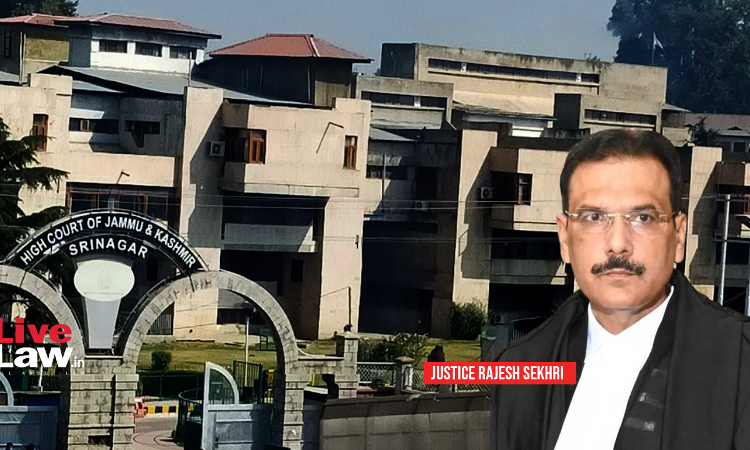
The judgment was delivered by Justice Rajesh Sekhri in a writ petition filed by Hotel New Metro, which had approached the Court alleging arbitrary non-payment of hiring charges despite official requisitions, verified bills, and continuous occupation of its premises by protected persons under State security.
The petition arose out of a security-driven arrangement initiated in the aftermath of heightened threat perceptions to elected representatives and political workers in Kashmir. Pursuant to a circular and a subsequent communication issued by the Divisional Commissioner, Kashmir, several private hotels, including the petitioner hotel, were requisitioned to provide accommodation on a sharing basis to protected persons.
Appearing for the petitioner, Mr. Jahangir Iqbal Ganai, Senior Advocate, assisted by Mr. Sohail Mehraj, Advocate claimed that it raised bills strictly as per rates fixed by the competent authorities, that the bills were verified by the accounts section, and that funds had also been released by the Government, yet a substantial portion of its legitimate dues remained unpaid.
It was argued that keys of the rooms remained with the occupants and security personnel, making it impossible for the hotel to put the premises to any other use. The petitioner assailed the constitution of a Bill Verification Committee much after the de-hiring of the hotel, terming it a colourable exercise of power aimed solely at reducing the State's financial liability. The ex parte report of the committee, it was argued, was in flagrant violation of principles of natural justice.
On the other hand, the Union Territory of J&K and its officers, represented by Mr. Mohsin Qadri, Senior AAG, assisted by Mr. Illyas Laway, GA, admitted the hiring of the hotel both at the divisional and district levels but disputed the quantum of the claim.
After hearing the parties and examining the record, the Court undertook a detailed analysis of the pleadings and the admitted factual position. The Court noted that while the respondents admitted the second phase of hiring at the district level, they conspicuously failed to deal with or specifically deny the petitioner's first claim relating to the period from 18 November 2020 to 5 October 2021, when the hotel was hired pursuant to the Divisional Commissioner's orders.
In a crucial observation shaping the outcome of the case, the Court held that under the law of pleadings, a party cannot escape the consequences of silence. It reiterated that a general or evasive denial is no denial in the eye of law.
“It is not sufficient for a defendant to make a general denial. Each allegation of fact which is not specifically denied shall be taken to be admitted,” the Court observed, invoking Order VIII Rules 3 and 5 CPC.
The Court further held that such admission need not be express and can be inferred from the facts and circumstances of the case, adding that admitted facts require no proof under Section 58 of the Evidence Act and that an admission constitutes substantive evidence by itself.
Applying this principle, the Court held that the petitioner's first claim, having gone uncontroverted, stood admitted, entitling the hotel to relief on that count alone.
Turning to the second phase of the claim, the Court rejected the State's reliance on the Bill Verification Committee's report. It recorded that once accommodation was provided on the strength of official hiring orders and placed under security cover, the hotel was bound to reserve the rooms exclusively for the protectees identified by the Government.
“After accommodation was provided by the petitioner on the strength of various orders issued by the authorities, it is not open to the respondents to contend, at a later stage, that the rooms were not in actual occupation of the protectees.”, the court remarked.
The Court found it significant that the hotel premises were guarded round the clock by security forces and that even after formal de-hiring, security personnel were redeployed on directions of the authorities, clearly indicating continued occupation. These facts, the Court noted, were not denied by the respondents in their pleadings.
On the legality of the Bill Verification Committee, the Court drew a sharp distinction between a fact-finding committee and a bill verification body, holding that even a verification committee is bound by the principles of natural justice when it proposes to reject or substantially reduce a claim.
“The principle of audi alteram partem applies with full force where rejection of a bill is based on allegations that the claim is inflated or unjustified,” the Court declared.
Concluding that the committee's report was legally untenable and that the State's action amounted to an arbitrary denial of a legitimate claim, the Court allowed the writ petition. It quashed the order constituting the Bill Verification Committee as well as the ex parte report. The respondents were thus directed to liquidate the petitioner's claims within eight weeks, failing which the outstanding amount would carry interest at the rate of 6% per annum.
Case Title: Hotel New Metro Vs UT Of J&K
Citation: 2026 LiveLaw (JKL) 45
Click Here To Read/Download Judgment


