



- Home
- /
- High Courts
- /
- High Court of J & K and Ladakh
- /
- 'Transport & Infrastructure Issues...
'Transport & Infrastructure Issues Cannot Justify Absence From Duty': J&K&L High Court Declines Plea Of Terminated NHM Worker
LIVELAW NEWS NETWORK
18 Feb 2026 6:40 PM IST
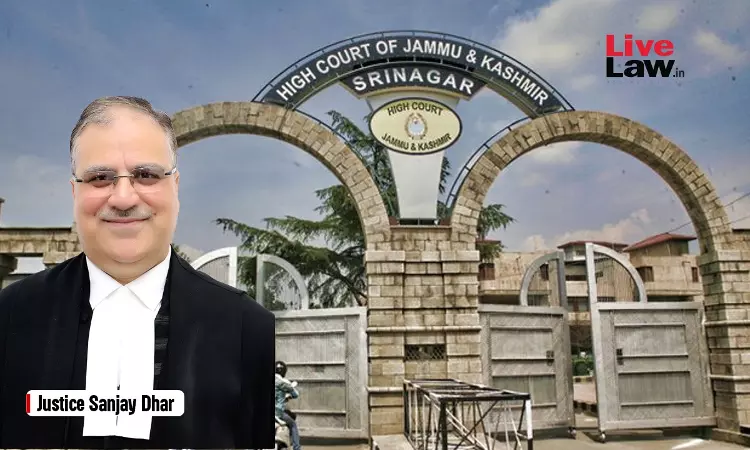
Underscoring discipline and accountability in public service, the High Court of Jammu & Kashmir and Ladakh has categorically held that issues relating to transport and infrastructure can never form a justified ground for not attending the duties. The Court made this observation while dismissing a writ petition filed by a contractual Mid-Level Health Provider (MLHP) challenging the...
This is a premium content
Available exclusively to
Our subscribers
Subscribe Premium 
INR 1099+GST
Your support helps us to bring you more content at
an affordable subscription scheme !!!
All payment options available
Underscoring discipline and accountability in public service, the High Court of Jammu & Kashmir and Ladakh has categorically held that issues relating to transport and infrastructure can never form a justified ground for not attending the duties. The Court made this observation while dismissing a writ petition filed by a contractual Mid-Level Health Provider (MLHP) challenging the termination of her services under the National Health Mission (NHM).
Justice Dhar thus upheld the action of the authorities, finding no illegality or violation of principles of natural justice in terminating the petitioner's contractual engagement.
The petitioner, Himani Sharma, was engaged as a Mid-Level Health Provider under the National Health Mission. Soon after joining, she lodged complaints before the Deputy Commissioner, Kathua, alleging lack of infrastructure and non-cooperation by staff at her place of posting.
However, over time, multiple complaints were raised by the department regarding her repeated unauthorized absence from duty, failure to attend official meetings, non-reporting on the NCD portal, alleged tampering with attendance records, and unprofessional behaviour towards staff and the public. Several explanations were sought from her, and multiple enquiry committees were constituted to examine her conduct.
Eventually, based on repeated adverse reports and continued unsatisfactory performance, the competent authority terminated her contractual services vide order dated January 12, 2024, prompting the petitioner to approach the High Court.
Appearing for the petitioner, Advocate Antriksh Sharma argued that the termination order was illegal, stigmatic, and punitive in nature. It was contended that no proper departmental enquiry was conducted, the petitioner was not allowed to cross-examine witnesses, and she was denied a fair opportunity to defend herself. The petitioner also relied upon medical grounds, transport difficulties, and infrastructural shortcomings to justify her absence, while alleging harassment through repeated show cause notices.
Court's Analysis and Observations:
After examining the record, the Court noted that the petitioner had been served with repeated show cause notices and that three separate enquiry committees had consistently found her guilty of habitual unauthorized absence, poor performance, non-reporting on the NCD portal, and unprofessional conduct.
While acknowledging that the petitioner was not afforded the opportunity to cross-examine witnesses, the Court held that such a right is not automatically available to a contractual employee, particularly when the engagement is governed strictly by the terms of the contract.
In a crucial and strongly worded observation, the Court held,
“Issues relating to transport and infrastructure can never form a justified ground for not attending the duties.”
The Court further observed that although illness could, in certain circumstances, justify absence, such absence must be properly intimated to superior officers. In the present case, the petitioner failed even to inform her superiors before remaining absent from duty on multiple occasions.
Significantly, the Court noted that from her own reply to the show cause notice, the petitioner had effectively admitted unauthorized absence from duty, though she sought to justify it on untenable grounds.
The Court went on to hold that the petitioner, being a contractual employee, did not enjoy the protection of Article 311 of the Constitution of India or the safeguards applicable to holders of civil posts. Her engagement was governed by a service agreement, which expressly permitted termination in cases of unsatisfactory performance, negligence, inefficiency, misconduct, or unauthorized absence.
The Court observed that the authorities had more than adequately complied with the principles of natural justice by issuing repeated notices, constituting multiple enquiry committees, and giving the petitioner opportunities to improve her conduct.
Rejecting the petitioner's reliance on earlier judgments, the Court clarified that those cases involved clear violations of natural justice, unlike the present case where the respondents had acted fairly and within the contractual framework.
Upholding the termination order, the High Court concluded that the action against the petitioner was lawful, justified, and strictly in accordance with the terms of her contractual engagement. The writ petition was accordingly dismissed.
Case Title: Himani Sharma Vs UT Of J&K
Citation: 2026 LiveLaw (JKL) 51
Click Here To Read/Download Judgment
Tags


