



- Home
- /
- High Courts
- /
- High Court of J & K and Ladakh
- /
- Claims Under 'Roshni Act' Void...
Claims Under 'Roshni Act' Void Ab-Initio, Any Vesting Of Ownership Rights Extinguished From Inception: J&K&L High Court
LIVELAW NEWS NETWORK
14 Nov 2025 3:45 PM IST
The Jammu & Kashmir and Ladakh High Court has held that the Jammu and Kashmir State Lands (Vesting of Ownership to Occupants) Act, 2001 (“Roshni Act”) having been declared unconstitutional, contrary to law, and void ab initio cannot form the basis of any legal right, title, or claim. The Court ruled that all actions, applications, and entitlements sought under the Roshni Act stand...
This is a premium content
Available exclusively to
Our subscribers
Subscribe Premium 
INR 1099+GST
Your support helps us to bring you more content at
an affordable subscription scheme !!!
All payment options available
The Jammu & Kashmir and Ladakh High Court has held that the Jammu and Kashmir State Lands (Vesting of Ownership to Occupants) Act, 2001 (“Roshni Act”) having been declared unconstitutional, contrary to law, and void ab initio cannot form the basis of any legal right, title, or claim. The Court ruled that all actions, applications, and entitlements sought under the Roshni Act stand wiped out from their very inception, leaving no legal foundation for any claim of ownership over State.
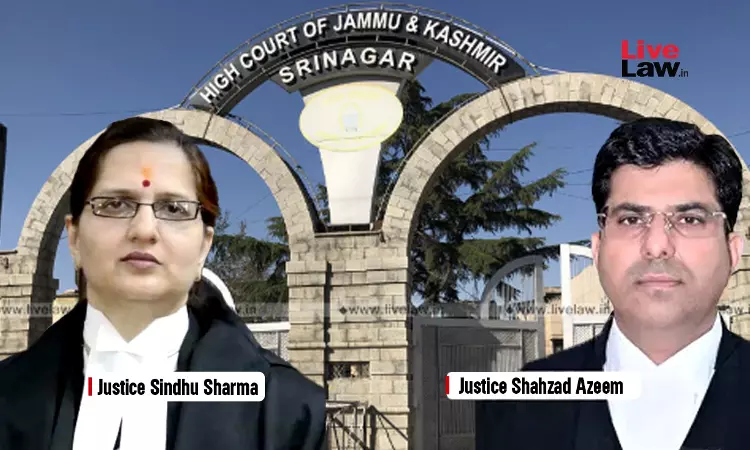
“In all the appeals, the sole legal foundation for every asserted right of ownership rests on the benevolence of Roshni Act that has been declared as completely unconstitutional and void ab-initio, therefore, once foundation crumbled into constitutional nullity, in that event, the claimants could not derive even iota of benefit from a void ab initio statute, as every superstructure erected thereon is wiped clean ab-initio.”, observed Justices Sindhu Sharma and Shahzad Azeem.
The Court was hearing a batch of Letters Patent Appeals challenging a common judgment of A Single Judge Bench that had dismissed writ petitions seeking ownership rights under the Jammu and Kashmir State Lands (Vesting of Ownership to Occupants) Act, 2001, commonly known as the Roshni Act.
The appellants had approached the Court seeking ownership of certain parcels of land, asserting possession under relinquishment deeds and claiming entitlement to vesting of ownership under the Roshni Act.
Their writ petitions were dismissed by the Single Judge, who held that the land in question had already been acquired by the State and its possession transferred to the Srinagar Municipal Corporation.
The land in question was acquired in 1989, and possession was formally handed over to the Corporation in 1992. The appellants nonetheless continued to claim ownership based on the provisions of the Roshni Act.
The Division Bench, upon hearing the matter, noted that the appellants had engaged in repetitive litigation before multiple forums, characterising the conduct as “re-litigation and multiplicity of litigation, which practice needs to be discouraged.”
The Bench examined the foundation of the appellants' claims and observed that it rested entirely on the Roshni Act, which had been declared unconstitutional in Prof. S.K. Bhalla v. State of J&K (2020). The Court held that the legal consequence of such a declaration was that all claims arising from the statute ceased to exist from inception.
The Bench added that the appellants could not seek parity with others who may have obtained benefits under the same enactment, observing that “the principle of parity is based on the guarantee of positive equality before law and if any illegality or irregularity has been committed by any forum, others cannot invoke the jurisdiction of the Court for repeating or multiplying the same illegality or irregularity.”
Referring to the Supreme Court's decision in K.K. Modi v. K.N. Modi 1998), the Court reiterated that repeated litigation constitutes an abuse of process and that judicial time should not be consumed by attempts to reopen issues already settled.
The Bench also noted that the appellants' possession was without lawful title and that ownership had already vested in the Srinagar Municipal Corporation through acquisition proceedings duly reflected in the revenue record.
Holding that the very foundation of the appellants' claim was a statute declared unconstitutional and void from inception, the Court upheld the order of the Single Judge and dismissed all three appeals.
The Court concluded that “once foundation crumbled into constitutional nullity, in that event, the claimants could not derive even iota of benefit from a void ab-initio statute, as every superstructure erected thereon is wiped clean ab-initio.”
Accordingly, the appeals and connected applications were dismissed.
Case Title: Ghulam Rasool Mistri & Others v. State of J&K & Others
Citation: 2025 LiveLaw (JKL)


