



- Home
- /
- High Courts
- /
- High Court of J & K and Ladakh
- /
- 'Child's Continued Stay in Jail May...
'Child's Continued Stay in Jail May Prejudice Personality Development': J&K&L High Court Grants Bail To Mother After 12 Years' Custody
LIVELAW NEWS NETWORKS
18 Feb 2026 7:25 PM IST
The Jammu & Kashmir and Ladakh High Court granted bail to a woman accused in a kidnapping and murder case after she remained in custody for more than twelve years, holding that continued incarceration was unjustified in light of trial delay and the circumstance that her minor child had been living with her inside jail. The Court, while considering the bail application, observed that...
This is a premium content
Available exclusively to
Our subscribers
Subscribe Premium 
INR 1099+GST
Your support helps us to bring you more content at
an affordable subscription scheme !!!
All payment options available
The Jammu & Kashmir and Ladakh High Court granted bail to a woman accused in a kidnapping and murder case after she remained in custody for more than twelve years, holding that continued incarceration was unjustified in light of trial delay and the circumstance that her minor child had been living with her inside jail.
The Court, while considering the bail application, observed that the continued stay of the child in prison may be prejudicial to his personality development and therefore constituted an additional ground for granting bail.
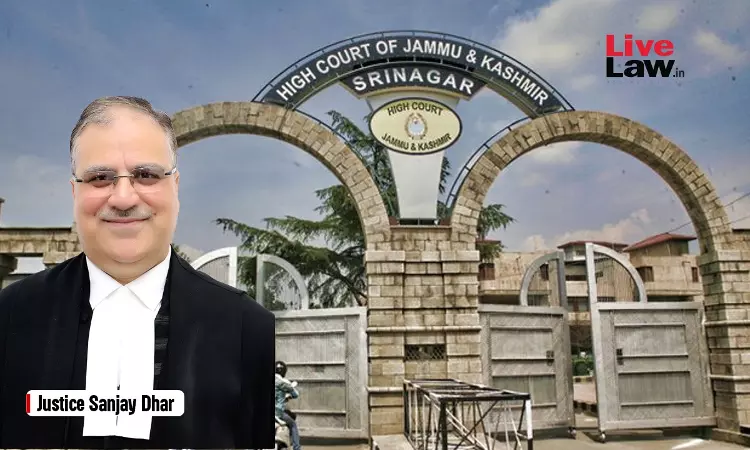
A Single Judge Bench of Justice Sanjay Dhar, upon hearing the matter, observed: “…the petitioner happens to be the mother of a small child who, in fact, due to the incarceration of her mother, was forced to stay with her in the jail, …By now the child must have reached the age of discretion and, as such, if the child continues to remain with her mother inside the jail, the same may be prejudicial to the growth of his personality, …On this ground also, the petitioner deserves the concession of bail at this stage”.
The matter arose after the co-accused, who was the husband of the petitioner, allegedly kidnapped a nine-year-old boy and confined him with the intention of extracting ransom. The prosecution alleged that when police activity intensified, the accused persons panicked, strangulated the child, and disposed of the body before fleeing. The petitioner was arrested shortly thereafter and has remained in custody ever since.
Charges were framed in June 2014. Although the trial commenced thereafter, its progress was slow. Out of eighty-one prosecution witnesses, seventy had been examined by the time the bail application was considered. The co-accused, who was alleged to be the principal offender, had already been granted bail in July 2024.
An earlier bail application filed by the petitioner had been rejected in 2018 when the trial had only recently begun. She renewed her request for bail, citing prolonged incarceration, delay in trial, parity with the co-accused, and personal circumstances, including the fact that her minor child had been compelled to reside with her in jail.
The State and complainant opposed the plea, contending that the delay in trial was partly attributable to defence proceedings such as a transfer petition and other applications, and that only a few witnesses remained to be examined.
The J&K and Ladakh High Court, upon examining the material placed on record, reiterated settled principles governing the grant of bail in cases involving prolonged detention. Referring to precedents including Hussainara Khatoon v. State of Bihar (1980), Union of India v. K.A. Najeeb (2021), and related decisions, the Bench observed that the right to speedy trial is a fundamental right and that delay in trial may justify bail even where accusations are grave.
The Court found that the petitioner had been continuously in custody for more than twelve years. Although the prosecution had examined a substantial number of witnesses, the trial was still incomplete, and there was no immediate likelihood of its conclusion. The order sheets revealed repeated adjournments caused by the failure of the prosecution to produce witnesses despite opportunities granted by the trial court. The Bench therefore concluded that the delay was primarily attributable to the prosecuting agency's inability to proceed expeditiously.
The Court rejected the argument that the delay was caused by the defence's conduct. It noted that although a transfer petition had stayed proceedings for about a year, evidence continued to be recorded even during other proceedings, and the majority of adjournments were due to non-production of witnesses by the prosecution. Consequently, the Court held that the prosecution could not rely on delay as a ground to oppose bail.
The Bench also addressed the earlier rejection of bail in 2018 and clarified that such rejection did not preclude reconsideration. Circumstances, the Court stated, had materially changed since then, particularly the passage of several additional years of incarceration and the slow pace of the trial.
Parity with the co-accused was another relevant factor considered by the Court. Since the co-accused, alleged to be the principal offender, had already been granted bail, the Court found no justification to continue detention of the petitioner indefinitely unless distinguishing circumstances existed.
Importantly, the Court attached weight to the petitioner's personal circumstances. It recorded that she was the mother of a minor child who had been compelled to stay with her inside jail due to her incarceration. The Court observed that by now the child had reached an age of discretion and that continued residence in prison could adversely affect his personality development. This humanitarian consideration was treated as an additional ground reinforcing the case for bail.
Upon a cumulative assessment, the Court held that continued detention would amount to a violation of the petitioner's constitutional right to a speedy trial and that the balance of factors weighed in favour of release.
Consequently, the High Court allowed the bail application and directed that the petitioner be released subject to conditions, including furnishing bonds and sureties, surrender of passport, restriction on travel outside the Union Territory without permission, non-tampering with evidence, and mandatory appearance before the trial court on each hearing date.
The Court clarified that observations made in the order were confined to the adjudication of bail and would not influence the merits of the trial.
The petitioner was represented by Akeel Ahmed Wani, while Bhanu Jasrotia, Government Advocate, appeared for the Union Territory, and P.N. Raina, Senior Advocate, with J.A. Hamal and Intikhab Hussain Shah appeared for the complainant.
Case Title: Shareen Gani v. UT of J&K & Anr.
Citation: 2026 LiveLaw (JKL) 52
Click here to read/download Judgment


