



- Home
- /
- High Courts
- /
- High Court of J & K and Ladakh
- /
- Civil Courts Cannot Interfere In...
Civil Courts Cannot Interfere In Agrarian Resumption Cases, Only Revenue Authorities Have Jurisdiction: J&K&L High Court
LIVELAW NEWS NETWORK
7 Dec 2025 12:30 PM IST
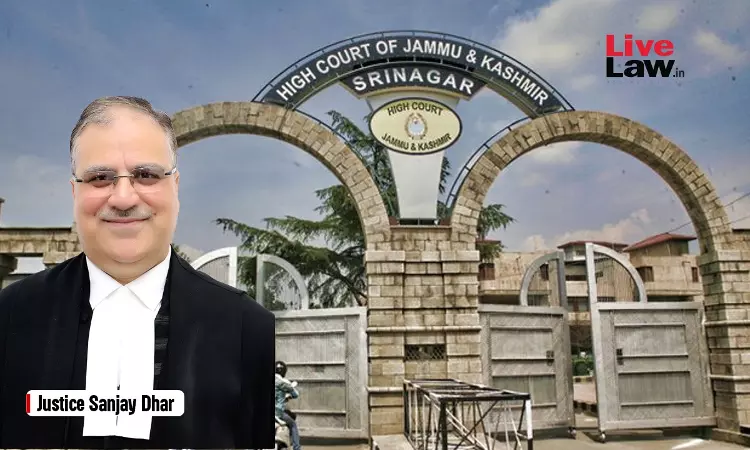
“Matters arising out of the Agrarian Reforms Act especially resumption proceedings fall exclusively within the domain of Revenue Authorities, and civil courts lack jurisdiction to interfere, even at the injunction stage,” held the High Court of Jammu & Kashmir and Ladakh while dismissing a petition filed by two litigants challenging concurrent findings of the courts below.Reaffirming...
This is a premium content
Available exclusively to
Our subscribers
Subscribe Premium 
INR 1099+GST
Your support helps us to bring you more content at
an affordable subscription scheme !!!
All payment options available
“Matters arising out of the Agrarian Reforms Act especially resumption proceedings fall exclusively within the domain of Revenue Authorities, and civil courts lack jurisdiction to interfere, even at the injunction stage,” held the High Court of Jammu & Kashmir and Ladakh while dismissing a petition filed by two litigants challenging concurrent findings of the courts below.
Reaffirming of the statutory jurisdictional bar created by Section 25 of the Jammu & Kashmir Agrarian Reforms Act, 1976, Justice Sanjay Dhar observed that disputes rooted in resumption rights, mutation under Section 7, and claims of possession arising from agrarian reforms fall strictly within the statutory domain of the Revenue Authorities.
The case arose when the petitioners Ghulam Mohammad Reshi @ Gulla and another approached the High Court challenging two orders, one passed by the Sub Judge (Special Mobile Magistrate) Anantnag dismissing their application under Order 39 Rules 1 and 2 CPC, and the other passed by the District Judge Anantnag affirming the dismissal. The petitioners had filed a suit for permanent prohibitory injunction claiming that they were tenants and later prospective owners of land by virtue of a mutation under Section 4 of the Act.
They alleged that they had been in cultivating possession for over 50 years and that the original defendant, a government employee was seeking to forcibly enter the land by misusing his official position.
The defendant, however, asserted that his father was the ex-owner of the said land and that mutation under Section 7 had been validly attested in his favour as early in 1987, entitling him to resume possession. He accused the plaintiffs of manipulating revenue records, suppressing material facts, and even fabricating a fraudulent mutation under Section 12 of the Act. He argued that the suit itself was barred under Section 25 of the Agrarian Reforms Act read with Rule 58 of the Rules.
Justice Dhar examined these rival claims and noted that the core controversy revolved around the defendant's right to resume land under a Section 7 mutation and the petitioners' resistance based on their long possession. The Court held that such questions fall squarely within the exclusive domain of the Agrarian Reforms Authorities, reiterating that Section 25 of the Act creates a bar to the jurisdiction of the civil court to settle, decide or deal with any question or to determine any matter arising out of the Act or the rules made thereunder.
Referring to the statutory scheme, the Court highlighted that Rule 21 of the Agrarian Reforms Rules provides an elaborate mechanism for resumption proceedings. It mandates a full enquiry by the Revenue Officer, opportunity of hearing to both sides, a determination of eligibility, and the power to place the entitled party in possession of the resumed land.
Justice Dhar underscored that all these proceedings are to be conducted by a Revenue Officer in exercise of his powers under the provisions of the Act, making it clear that such matters cannot be diverted into civil litigation.
“… All these proceedings are to be conducted by a Revenue Officer in exercise of his powers under the provisions of the Act. Therefore, prima facie, it appears that the civil court does not have jurisdiction to deal with the issues which were raised by the parties in the suit, which, primarily, pertain to entitlement of the defendant to resume the suit land”, the court remarked.
The petitioners had contended that deletion of Section 19(3) of the Act by the 2020 Adaptation Order revived civil court jurisdiction. Rejecting this argument, the Court held that this deletion had no bearing on the present case because the dispute did not fall within any of the categories formerly covered by the deleted subsection. The bar under Section 25 therefore remained fully operative, the court reasoned.
Finding no illegality or perversity in the concurrent findings of the trial and appellate courts, Justice Dhar concluded that both courts were justified in holding that the suit was not cognizable by a civil court. He remarked that the dispute primarily pertains to entitlement of the defendant to resume the suit land and must therefore be adjudicated exclusively by the Revenue Authorities under the Agrarian Reforms framework.
Holding that interference under Article 227 was unwarranted, the Court dismissed the petition, vacating any interim directions.
Case Title: Ghulam Mohammad Reshi @Gulla Vs Smt Kamla Ji & Ors
Citation: 2025 LiveLaw (JKL) 304
Click Here To Read/Download Judgment


